
Giulia Rhodes moved to a small Italian village to apprentice at a leather workshop
Credit: Giulia Rhodes
NEED TO KNOW
- Giulia Rhodes moved to a small Italian village to apprentice at a leather workshop after a visa issue derailed her plans
- She learned traditional shoemaking techniques from artisans, creating her first pair of shoes during her first week
- A TikTok about her experience went viral, inspiring her to pursue shoemaking alongside styling and freelance design in Canada
After graduating from the London College of Fashion, Giulia Rhodes planned to begin her career in the United States. But when the Canadian citizen struggled to secure a work visa because of her limited professional experience, those plans came to an abrupt halt.
Suddenly in need of a new plan, the 23-year-old Canadian sat down for dinner with her uncle, a doctor who lives and works in Italy. As they discussed her next steps, Rhodes mentioned that she’d always dreamed of learning the art of traditional shoemaking.
The dream had been quietly taking shape for years. While studying at the London College of Fashion, Rhodes gravitated toward working with leather and fur, eventually falling in love with the craftsmanship and possibilities of the material.
Her mother’s family is from a small town in Italy’s Campania region, where her uncle also grew up. Without hesitation, he called a longtime family friend whose family owned a bottega, or leather workshop, and had spent generations making shoes.
“Within the minute he had told me to come and be an apprentice. I moved in the new year, where I lived with my uncle’s best friend from childhood,” Rhodes tells PEOPLE exclusively.
Credit: Giulia Rhodes
By the start of the new year, Rhodes had packed her bags, moved to a tiny village outside Naples, and immersed herself in learning the centuries-old craft.
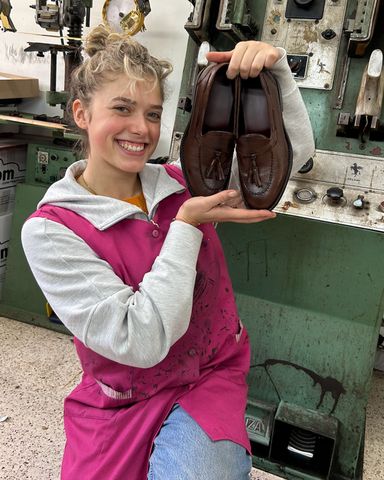
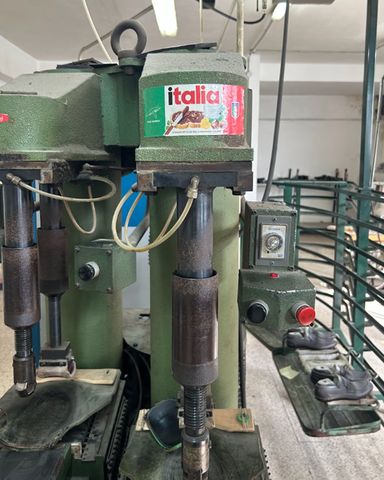
Before long, she settled into the rhythm of life at the workshop. Although Rhodes was free to set her own schedule, she typically spent her days working alongside the studio’s artisans from 8 a.m. to 5 p.m., learning every stage of the shoemaking process. She spent much of her time preparing the base of each shoe — stitching, shaping, lining and perfecting the details — while making it a point to learn from each of the six artisans in the workshop.
“I wanted to learn every step,” she says.
“The cobbler I worked alongside the most is Maria, the most loving and generous woman I’ve ever met,” Rhodes adds. “She’d bring me homemade lunch every day, we’d share pastries on our breaks with an espresso (still like Canadian coffee better), get back to work, and by 5, we’d shut off the machines and I’d walk home.”
Credit: Giulia Rhodes
But while life inside the workshop quickly became familiar, adjusting to life outside of it proved far more difficult.
“I’d say the hardest part was all mental,” she says. “When I first moved to the town, more like a village, I felt super alone. Though my family is amazing and so are the people in the studio that I now call family, I felt isolated but also like everyone knew I wasn’t supposed to be there.”
Despite holding dual citizenship and speaking Italian, Rhodes says the close-knit village felt worlds away from the fast-paced cities she’d always called home.
Adjusting to village life wasn’t the only challenge. Rhodes also had to rethink what it meant to master a centuries-old craft.
“On a technical level, I think the hardest part I had to realize was that I wasn’t going to finish learning,” she says. “I wasn’t going to be a master. I wasn’t going to know close to everything.”
“My studio has its ways of working, but that’s one of thousands of methods,” Rhodes adds. “I think a big problem we have nowadays is that everyone wants things and they want them fast. I felt like I was rushing and pressuring myself to be perfect when the people I was learning from have been working at the same studio for over 30 to 50 years.”
@gggggggrhodes
First pair of many 💌💌💌 #italianleather #leather #shoemaker#craftsmanship
♬ Wes Anderson-esque Cute Acoustic – Kenji Ueda
As her confidence grew, Rhodes couldn’t wait to begin making shoes herself. In fact, she completed her first pair during her very first week at the workshop.
“It was a huge accomplishment for me,” she says. “Being able to hold a pair of shoes I made felt surreal.”
Although she’s accustomed to making clothing, Rhodes says footwear carried a different kind of satisfaction.
“I’m used to making clothes, but something felt different with holding a shoe that came from my work,” she adds. “I’d say my first original design happened after the first month.”
@gggggggrhodes
How I made my laced ballerina flats! 🩰✨🧚♀️🩵#ballerina#flatshoes#shoemaker
♬ original sound – Xivnyu
The experience also gave Rhodes a newfound appreciation for the time and craftsmanship behind every handmade pair.
When asked how long it takes to craft a pair of shoes, Rhodes jokes that it depends on how much sleep and coffee she’s had.
“If the design’s simple, a day,” she says. “If I decided to make the most insane design and not test it 9172818 times, a week and a week of insanity haha.”
That attention to detail is reflected in the finished product. Rhodes says the handmade shoes produced by the studio typically sold for between €500 and €800.
“It sounds like a lot, but everything is done by hand, by people who have dedicated their lives to one step of the process,” Rhodes explains. “What I mean is that there’s one person per stage of the shoe-making process.”
Credit: Giulia Rhodes
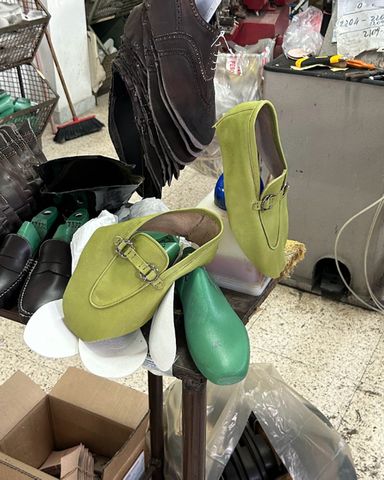
Each artisan specialized in a different stage of production, from selecting and cutting the leather to stitching, shaping, mounting, polishing and adding the finishing touches. Despite making numerous pairs during her apprenticeship, one remains especially meaningful.
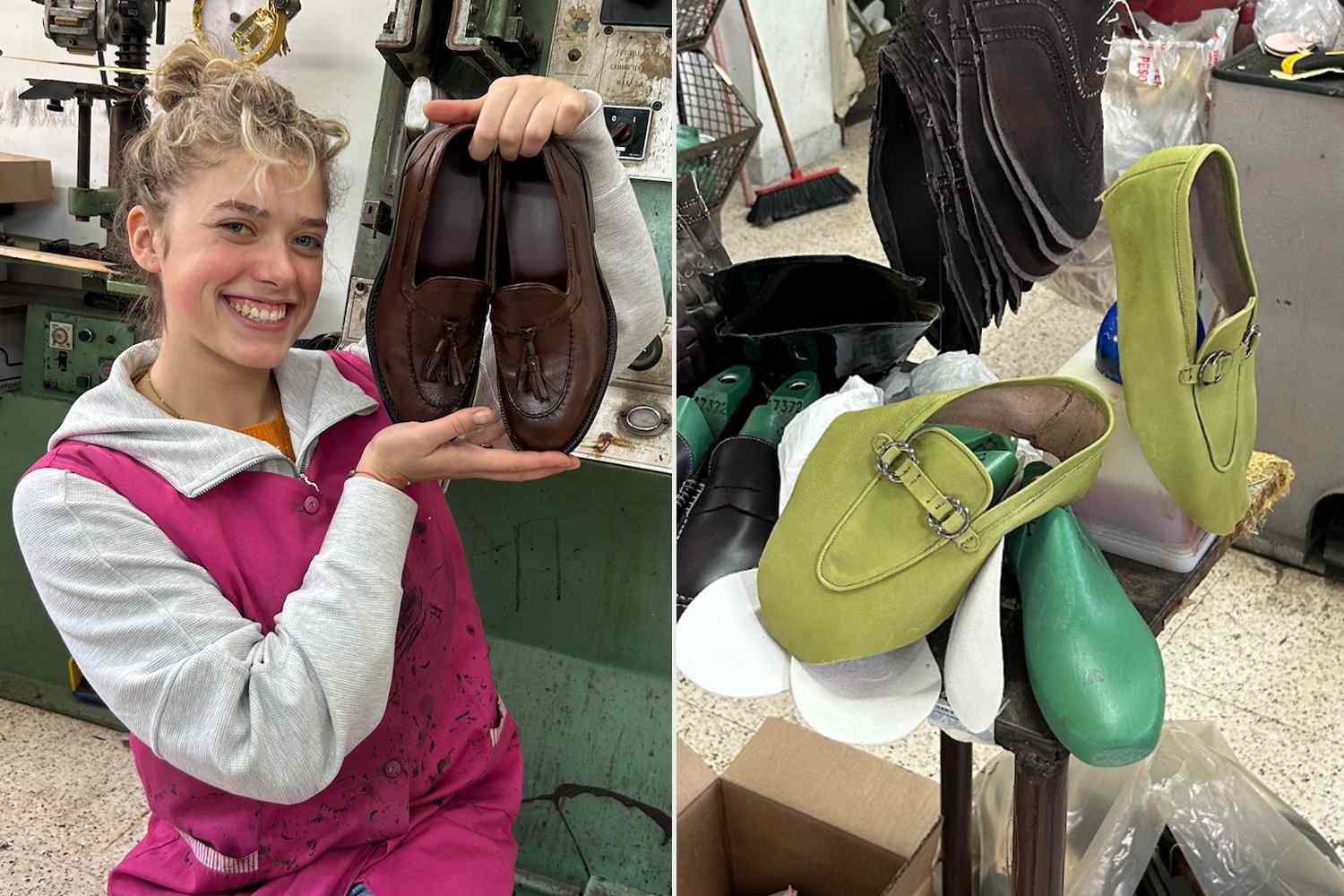
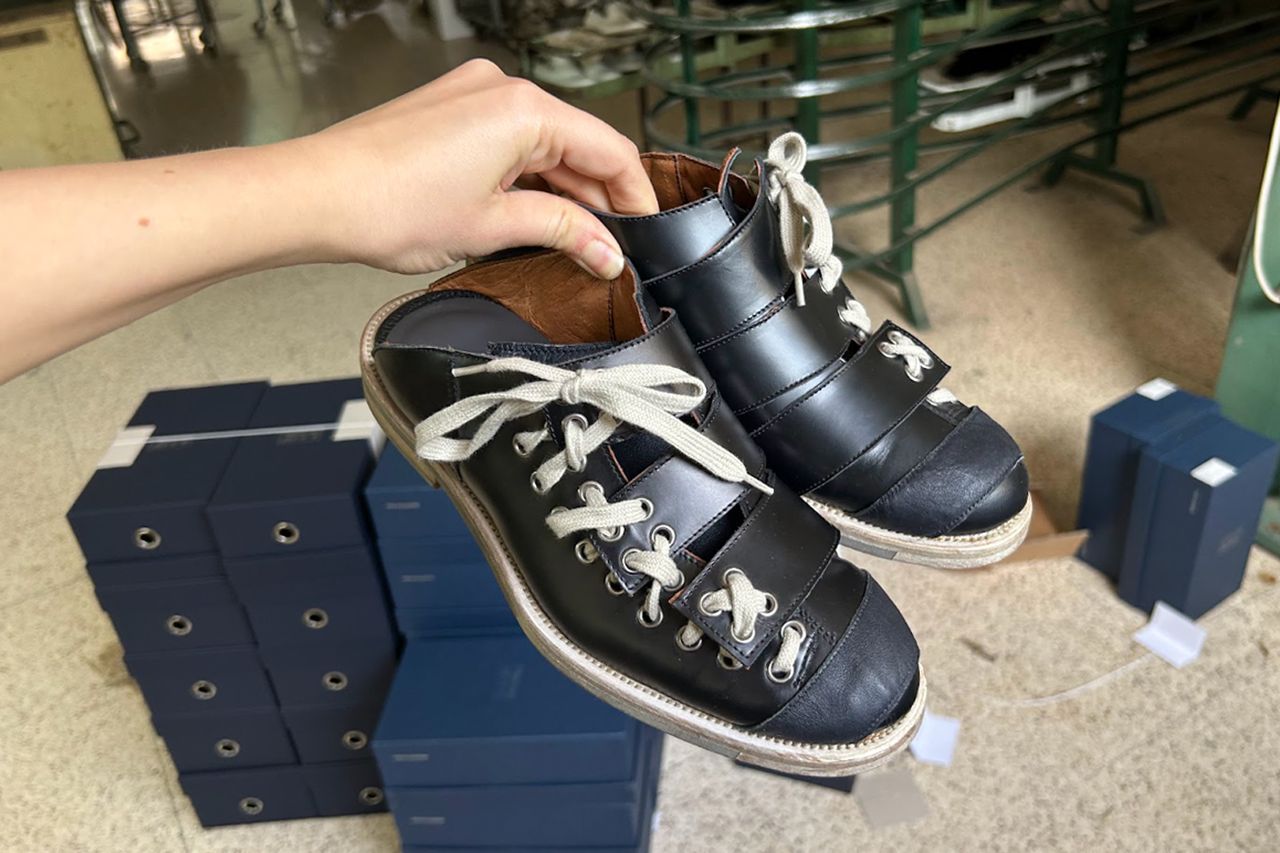
“I think the green loafers I made for my mom are classic and beautiful, but I do love a wacky design,” she says. “The most special shoe is definitely the first loafer I made. It was made with so much love and attention. I was so scared to mess up haha.”
Credit: Giulia Rhodes
As her apprenticeship came to an end, Rhodes decided to document the experience. Before packing away the shoes she’d spent months making, she filmed one final TikTok.
She never expected what happened next. The video quickly surpassed 500,000 views, and the overwhelmingly positive response left Rhodes emotional.
“I never would have thought how much positivity I would receive,” Rhodes says. “It made me quite emotional seeing so many strangers wish me success and how amazed they were with what I made.”
“In a sad way it finally allowed me to be proud of myself, my work, and my decision to ‘put my life on pause,’” she adds. “I thought I’d have to leave my passion for making shoes behind once I received a new job in Canada, but now I have a following of people who truly want to buy and invest in my work. It’s unbelievable.”
@gggggggrhodes
Shoes I’ve made!! Which ones are your favourite?!! 🩰🐄 #balletflats#leathershoes#shoemaker
♬ sonido original – Syd Barrett
Now back in Canada, Rhodes is preparing for her next chapter. She’ll be working as a stylist, model and freelance designer while building her own shoemaking studio.
“It’s going to take time and lots of tool searching and sourcing,” she says, “but I can’t wait to bring more of my designs to life and have shoes that are a bit crazy, while still well made and designed into this world.”
“If one path or opportunity doesn’t work out, there’s always another direction you can go!” she continues. “If that visa worked out, I would have probably never bit the bullet, moved, and made my first shoe.”
Read the full article here