

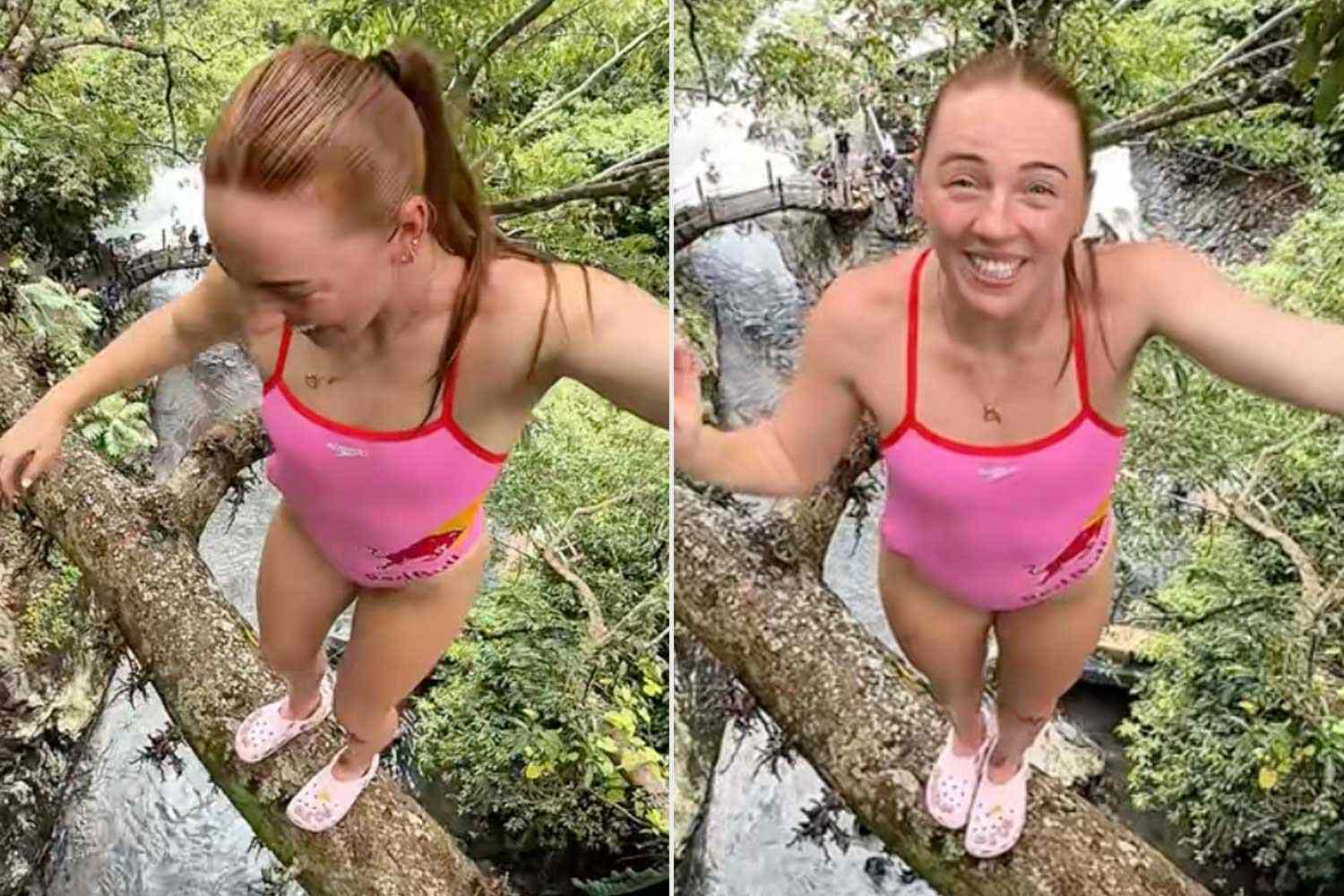
Molly Carlson video went viral explaining the choice earning over 3 million views
Credit: Molly Carlson
NEED TO KNOW
- Molly Carlson decided not to dive from a 20-meter tree branch due to safety concerns and personal limits
- Heavy rain reduced the water depth below Red Bull Cliff Diving’s standard, making conditions riskier for competitors
- Carlson’s decision to walk away resonated online, with her video explaining the choice earning over 3 million views
When Molly Carlson arrived in Bali for a Red Bull Cliff Diving event, she expected to compete from the series’ standard 20-meter height. What the Canadian cliff diver and content creator didn’t expect was that the takeoff point would be a tree branch.
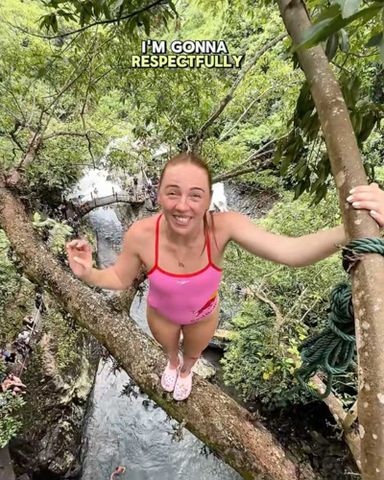
At first, the idea sounded more terrifying than exciting. Unlike a traditional platform, the branch was rounded, exposed and suspended 20 meters above the water. But after learning the planned dive would be relatively simple, Carlson found herself warming to the challenge.
“My first reaction was, ‘Hell no. That sounds insane,’ ” Carlson tells PEOPLE exclusively. “I was thinking, ‘What if the branch snaps underneath me?’ But then I actually got super excited to go out there and dive off this branch.”
Credit: Molly Carlson
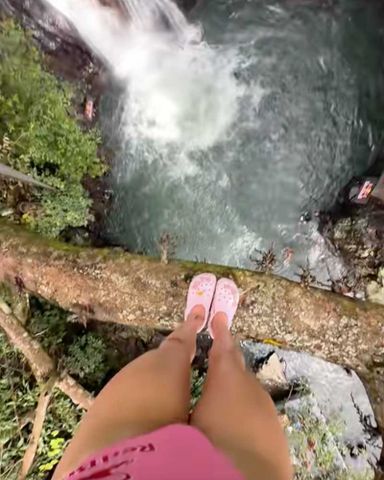
Before anyone could dive, however, conditions changed. Heavy rainstorms shifted rocks beneath the landing area, reducing the water depth to approximately 3.5 to 4 meters—well below the more than 5.5 meters typically used for Red Bull Cliff Diving competitions.
Rather than canceling the opportunity altogether, organizers gave athletes a choice. Divers who regularly train in shallower water, including many show divers, could still jump, while those who weren’t comfortable were encouraged to sit it out.
“For me, I knew it was safer not to jump,” Carlson says. “We train in about 4.5 meters of water in Montreal. I don’t have the skill set to land safely in water that shallow.”
Carlson still climbed the tree and made her way onto the branch to see what the takeoff would feel like. Unlike the flat, stable platforms she competes from, the branch offered little traction or room to establish a secure starting position. Its surface was slippery, uneven and rounded beneath her feet.
“There was no grip,” she says. “It wasn’t flat; it was rounded. There was just no way to feel comfortable and get a nice, solid takeoff position.”
@mollycarlson
Diving off a tree in Bali 😳 DO NOT ATTEMPT, we are professionals ❤️ #bravegang
♬ original sound – Molly Carlson
She also emphasizes that organizers took extensive safety precautions before allowing any athletes onto the branch. The branch was thoroughly weight-tested, officials measured the water depth and identified the deepest landing areas, and five scuba divers were stationed below in case of an emergency.
Even with those precautions in place, standing on the branch sent Carlson’s heart racing. The slippery surface also brought back memories of a frightening accident the previous year, when she slipped from a 72-foot platform—an experience that left her with lingering anxiety about unstable takeoff surfaces.
“As soon as I stood on that slippery branch, I knew it wasn’t for me because of the PTSD I had from slipping,” she says. “The more I could be in control of not slipping, the better. I knew it just wasn’t my day.”
Rather than diving, Carlson climbed back down and watched as athletes with more experience landing in shallow water took their turns.
“I think sometimes it’s okay to say no,” Carlson adds. “In that moment, I just didn’t have the skill set to land in shallow water. I knew it was braver to say no because you have to respect your skill set. I just wasn’t prepared to do a dive like that into extremely shallow water.”
Credit: Molly Carlson
Ironically, the moment that resonated with millions online wasn’t a gravity-defying dive — it was Carlson’s decision to walk away. Within days, a video she posted explaining why she backed out amassed more than 3 million views across her social media platforms, with commenters applauding her for recognizing her limits instead of giving in to pressure.
“Knowing when to say NO is a beautiful thing,” one person commented.
“I LOVE that you listened to your instincts and said no,” another user wrote.
Someone else replied, “I’m glad you know your boundaries and respectfully declined. You[‘re] awesome!”
“I can’t imagine how many views I would’ve had if I actually jumped,” Carlson says. “But what was really cool was seeing people understand why I said no.”
Read the full article here