

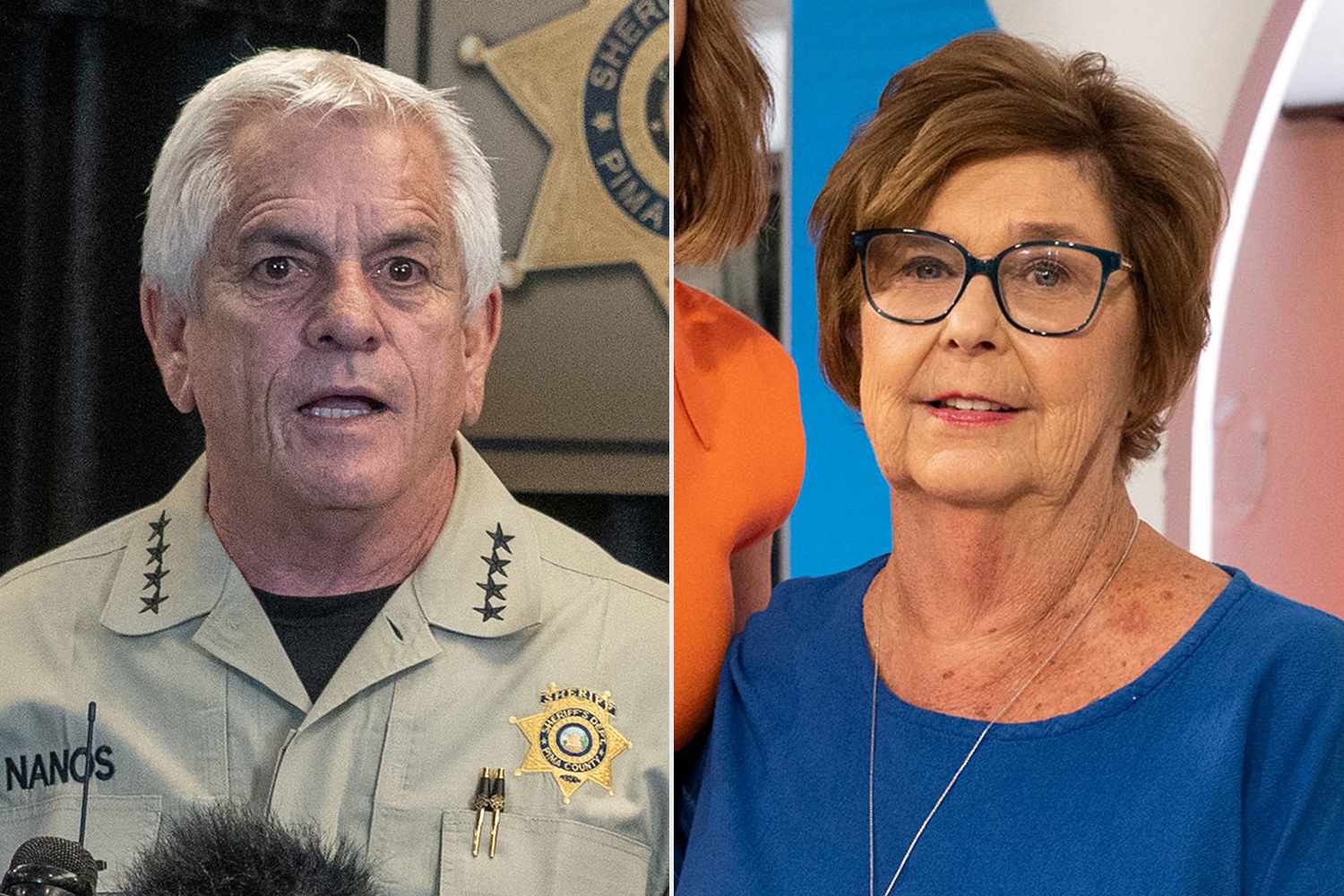
Sheriff Chris Nanos provides PEOPLE with an exclusive update on the investigation more than 100 days after Nancy Guthrie's disappearance
Credit: Jan Sonnenmair/Getty; Nathan Congleton/NBC via Getty
NEED TO KNOW
- Pima County Sheriff Chris Nanos tells PEOPLE investigators are focused on analyzing digital evidence
- Nanos says they are getting closer to solving the case as they continue to rely on data, surveillance footage and forensic science
- No suspects have been identified, and Nancy Guthrie’s whereabouts remain unknown more than 100 days after authorities believe she was taken against her will from her Tucson, Ariz., home
Authorities investigating the kidnapping of Nancy Guthrie in Arizona are turning to a growing web of digital clues in the case.
This includes “thousands and thousands” of videos, according to Pima County Sheriff Chris Nanos, who tells PEOPLE that investigators are focused on analyzing digital evidence, DNA and tips in hopes of identifying a suspect.
"Right now, I think our focus is on the tips, the leads and the evidence we have in front of us," he says. "Digitally — the camera footages as well as biological, the DNA and those types of things.”

Credit: Nathan Congleton/NBC via Getty
Guthrie, 84, disappeared from her Tucson, Ariz. home on Feb. 1. She was last seen on Jan. 31 and is believed to have been taken from her home against her will, as the FBI previously released photos of a masked assailant approaching her front door in the middle of the night.
The Guthrie family has since offered a $1 million reward in hopes of getting information about their mother's whereabouts.
More than 100 days after Guthrie vanished, authorities have not publicly identified a suspect or announced an arrest, but Nanos says investigators remain convinced the case can still be solved.
“My team, I’ve said all along, they’re gonna solve this,” he says. “I fully 100% believe that.”
At the center of the investigation now is an enormous catalog of surveillance footage gathered from intersections, neighborhoods, businesses and home security systems across the area.
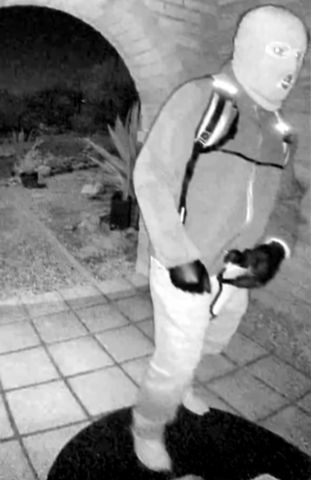
Credit: Pima County Sheriff’s Department;
“There’s thousands and thousands of video out there from intersections and Ring cameras that we have to catalog,” Nanos explains. “Maybe it’s all the white trucks are over here, all the red sedans are over here; you’ve gotta have it so that when you do find a suspect … ‘Hey, the suspect is John Doe, we got him,’ now we go and say, ‘Well, what else do we know about John Doe?’”
The process, he says, is methodical: build the digital map first, then work backward once investigators have someone in which to compare.
“‘Oh, he drives a white truck. Were there any white trucks in the area at that time?’” Nanos continues. “‘Oh, John Doe has this cellphone number.’ You back up to those pieces of evidence that you gathered early on to try to make your case.”
At the same time, investigators continue to wait on advances in DNA analysis that could prove critical to the case.
“I know we have DNA that is unknown who the contributor or depositor is, but I think they’re getting closer to finding out who that was,” Nanos tells PEOPLE, adding that he has “confidence in our labs."
"When the labs tell us, 'Hey, there's nothing else we can do,' well, then maybe we've got a problem… we've got a cold case… but right now, the labs aren't telling us that," he says.
According to the sheriff, multiple laboratories across the country — including federal and state partners — are collaborating behind the scenes as technology continues to evolve.
“When you have the best minds of the country working on problems, I think they’re gonna solve them,” Nanos says. “It just takes a while.”
Nanos says investigators are intentionally moving carefully, even amid mounting public pressure for answers.
“Nobody wants to make a false arrest. Nobody wants to falsely accuse somebody,” he emphasizes. “At some point in time, someday we may have somebody in a courtroom that deserves his or her right to have a fair and impartial trial. The way you get that is through a fair and impartial investigation.”
As public fascination with the case has intensified online, so too has criticism over the pace of the investigation. But Nanos says detectives are focused on evidence, not deadlines. “There’s frustration because people want to know,” he says. “But this is just like any other case. Sometimes you solve them within hours or days. Sometimes it takes a long time.”
This comes after an apparent rift between local and federal authorities searching for Guthrie surfaced publicly last week when FBI Director Kash Patel accused Nanos’ department of not cooperating with the bureau during the case’s early days.
“What we, the F.B.I., do is say: ‘Hey, we’re here to help. What do you need? What can we do?’” Patel said on the Hang Out with Sean Hannity podcast on May 6, adding that earlier involvement could have allowed the bureau to recover more evidence, more quickly. “And for four days, we were kept out of the investigation.”
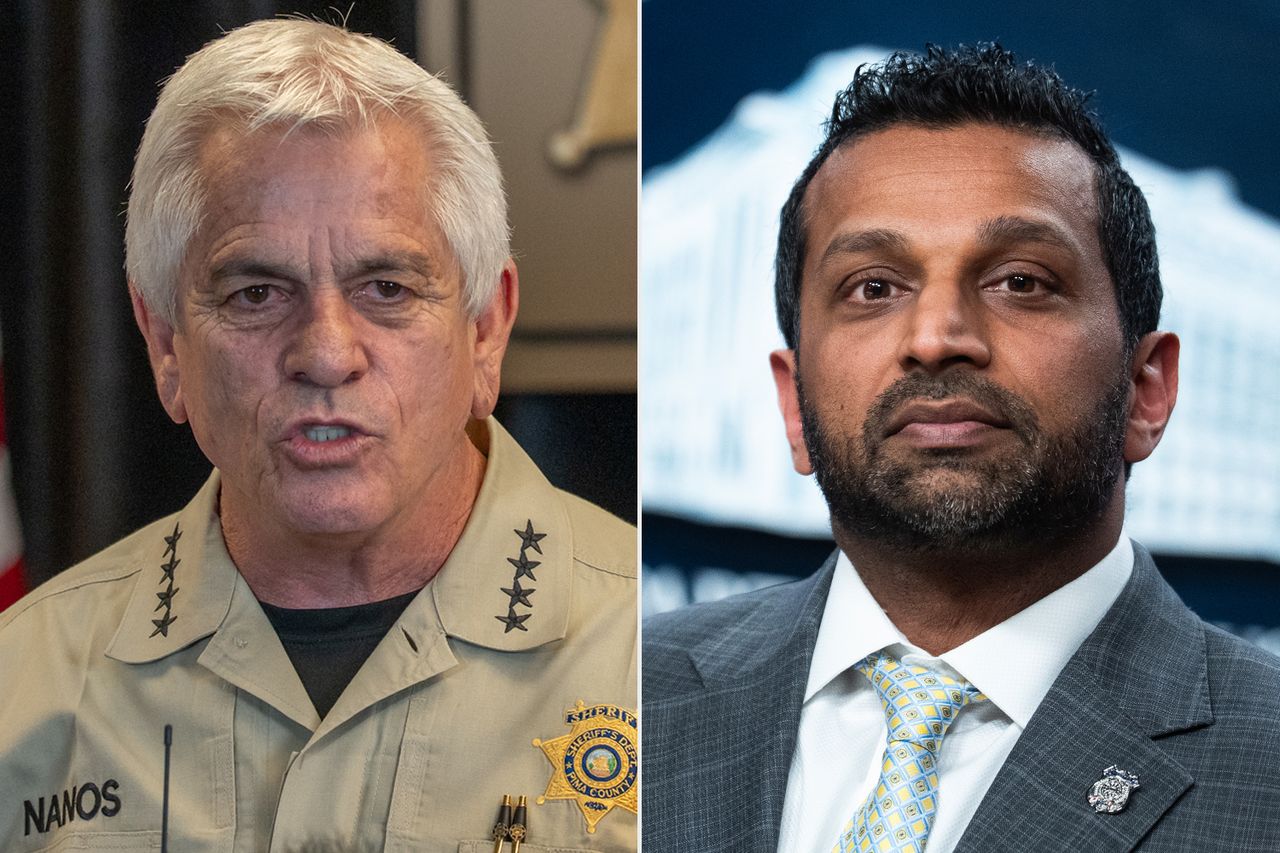
Credit: Jan Sonnenmair/Getty; Tom Williams/CQ-Roll Call, Inc via Getty
Nanos, who has bristled at past reports of tension between his agency and federal law enforcement, denied the claim. He says coordination between his officers and the FBI began soon after learning of Nancy's disappearance.
“Director Patel has his rights to his opinions,” he says, adding that he believed some remarks were “factually inaccurate.”
“The FBI was with us day one,” Nanos adds. “We’ve always had a working relationship.”
He also disputed claims that investigators mishandled the scene or delayed search efforts in the critical early hours after Guthrie vanished.
“The plane was started immediately,” Nanos says, referring to aerial search operations. “They found blood. Search and rescue looked at the scene and realized it seemed suspicious. They did exactly what they were supposed to do.”
For Nanos, much of the public criticism overlooks the realities of how complex criminal investigations unfold, especially when detectives are intentionally withholding information to protect the integrity of the case.
“The sheriff doesn’t do the investigation, his team does,” he says. “There are several people dedicated to this team and they are the talent. Criticizing those who are actually out there touching it, smelling it, handling it, doing the work — that’s just absolutely shameful. Those young men and women are working hard every day.”

Credit: Nathan Congleton/NBCU Photo Bank/NBCUniversal via Getty
In a March interview that aired on the Today show, co-host Savannah Guthrie was asked directly how her family felt about the way the search had been conducted.
“Well, it’s still going,” she said. “And people have worked tirelessly — tirelessly — and we see that. But we need answers. We cannot be at peace without knowing.”
As the family continues to wait for those answers, Nanos says he understands the frustration surrounding the case. While he is no longer directly communicating with the Guthrie family and says those conversations are being handled by the FBI, he maintains that investigators remain focused on solving it.

Credit: Nancy Guthrie/Facebook
"The public is frustrated. Even the Guthrie family," he says. "Every passing second must feel like 100 days because they don't know. What matters is moving forward carefully so we don't make mistakes or falsely accuse somebody or make a bad arrest."
Back in February, the FBI said it received more than 13,000 tips from the public related to the disappearance. And while months have passed without an arrest, Nanos says the flow of tips has not stopped.
“We still get calls, we still get tips,” Nanos says. “Even if the tip is from last night, 102 days later, because it might be somebody calling saying, ‘Somebody in this neighborhood doesn’t look right.’ We tell our folks here in Pima County: if you see something suspicious to you, call us.”
Anyone with information about Nancy Guthrie's disappearance is asked to contact 1-800-CALL-FBI (1-800-225-5324) or the Pima County Sheriff's Department at 520-351-4900.
Read the full article here