

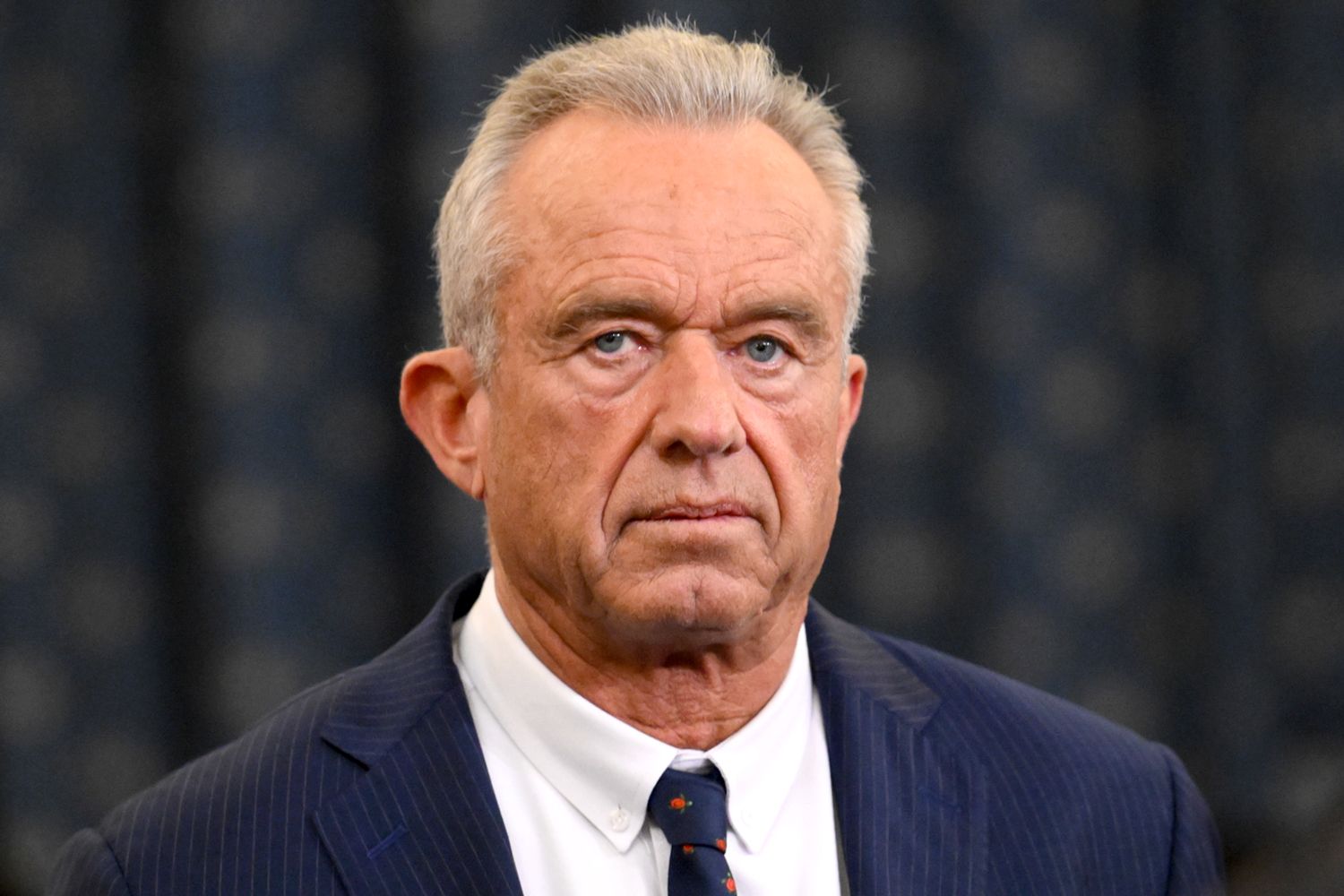
Robert F. Kennedy Jr. announced initiatives to reduce the use of the most widely prescribed class of psychiatric medications
Credit: Pete Kiehart/Bloomberg via Getty
NEED TO KNOW
- Robert F. Kennedy Jr. is advocating for reduced reliance on antidepressants like SSRIs for treating depression and anxiety
- Experts warn that limiting access to these medications could harm patients who benefit from them
- Kennedy encourages non-drug treatments like therapy, exercise, and nutrition to improve mental health outcomes and patient autonomy
Robert F. Kennedy Jr. is fighting against the use of antidepressants, pushing to wean off Americans who rely on them.
The Health and Human Services secretary, 72, recently announced several initiatives that aim to reduce the prescription of SSRIs. SSRIs — short for selective serotonin reuptake inhibitors — work by increasing the amount of serotonin in your brain. According to the Cleveland Clinic, they're the most commonly prescribed antidepressant, with more than 1 in 10 people taking them for conditions like depression and anxiety.
"Psychiatric medications have a role in care, but we will no longer treat them as the default," Kennedy said on May 4 at a Mental Health and Overmedicalization Summit. “We will treat them as one option, to be used when appropriate, with full transparency and with a clear path off when they are no longer needed.”
"Let me be clear,” he added. “If you are taking psychiatric medication, we are not telling you to stop."
Despite the assurance, Kennedy's initiative focuses on studying and supporting the “deprescribing” of the most widely prescribed class of psychiatric medications. This includes treatments for depression and anxiety like Zoloft, Lexapro and Prozac.
“HHS is working to prevent the unnecessary initiation of psychiatric medications and support the tapering and discontinuation for patients not experiencing clinical benefit,” the department said in a release.

Credit: Getty
Sign up for From the Editor, our free weekly newsletter from PEOPLE's Editor-in-Chief, Charlotte Triggs.
Kennedy published a “Dear Colleague” letter encouraging providers to rely on nonpharmacological treatments like social connection, psychotherapy, physical activity, diet and nutrition, among other interventions.
“Our goal is straightforward: to reduce unnecessary dependence on medication, to improve patient outcomes and to return control to the patients,” he said.
About one in six U.S. adults reported taking SSRIs in 2025, according to a study in the medical journal BMJ Mental Health. Many experts have since expressed their opposition to Kennedy's push against them.
"There are a lot of prescriptions because there are a lot of folks with illnesses that can respond to these medications," Dr. J. John Mann, from the New York State Psychiatric Institute, told Reuters. "Restricting use of these medications is not justifiable medically."
Credit: Taylor Hill/WireImage
Never miss a story — sign up for PEOPLE's free daily newsletter to stay up-to-date on the best of what PEOPLE has to offer, from celebrity news to compelling human interest stories.
"Although these medications carry real risks and should be prescribed thoughtfully, abrupt policy efforts that stigmatize or limit access could produce serious public-health consequences for patients who rely on them," added Dr. Mark Olfson from Columbia University Medical Center in New York.
In a statement, the American Foundation for Suicide Prevention (AFSP) also stressed the importance of SSRIs in helping people with major depression and suicidality.
"A robust body of scientific evidence demonstrates that antidepressants are effective in treating acute depressive episodes, preventing future episodes, and reducing suicidal thoughts and behaviors," the statement by AFSP says. "While all medications carry potential risks, decades of research — spanning clinical trials, population-level studies, and health system data — show that the judicious use of antidepressants reduces suicide risk overall."
Dr. Theresa Miskimen Rivera, president of the American Psychiatric Association, told NPR that blaming the country's mental health crisis on overprescription of psychiatric medications is “really an oversimplification” that “ignores the larger reality.” However, she agreed with any plans that will better train healthcare providers to safely prescribe medications.
Read the full article here