

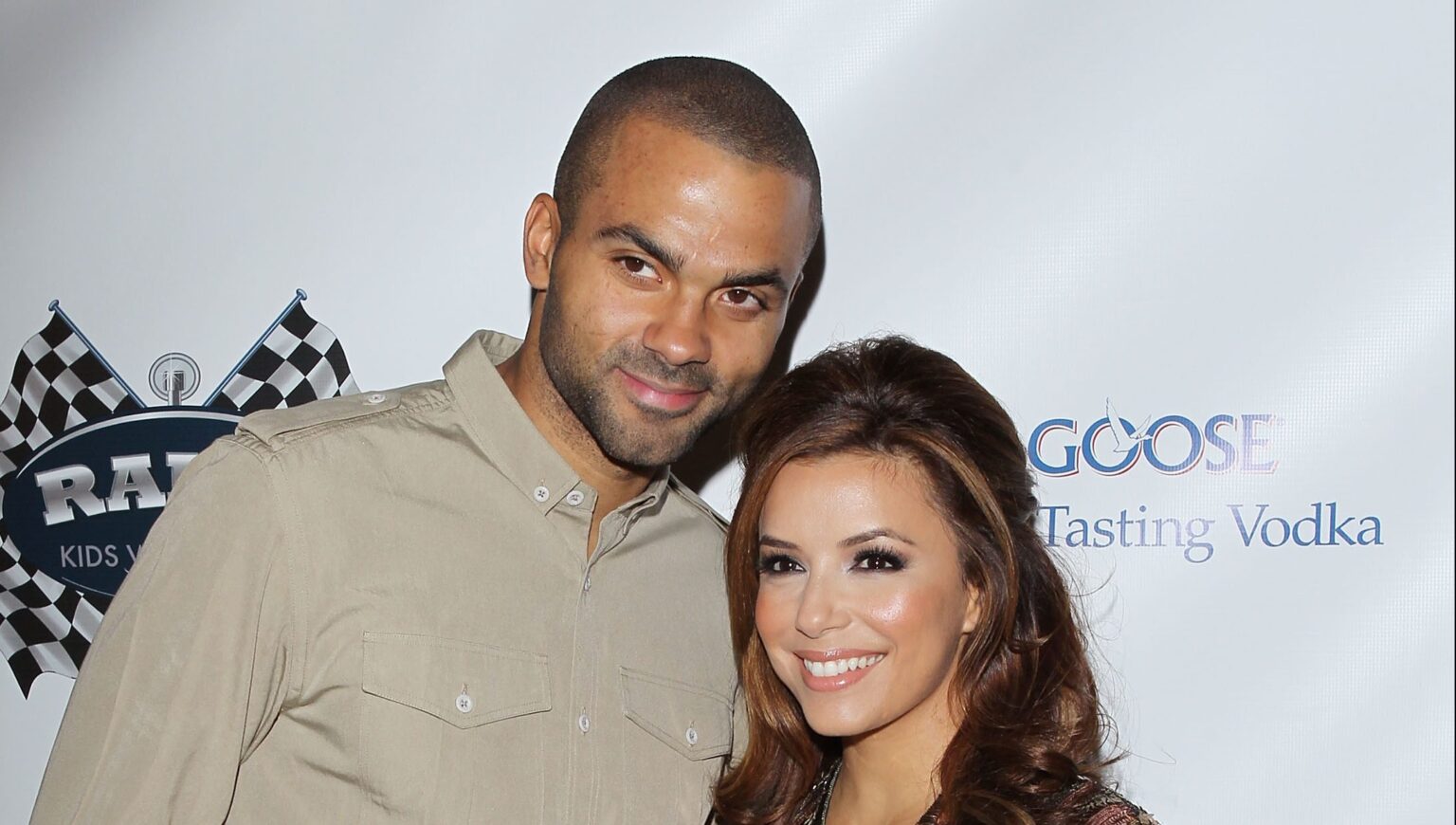
Eva Longoria just posed with Tony Parker. Smiling. Easy. Fifteen years after she filed for divorce, citing his alleged affair with a teammate’s wife.
The internet did what the internet does. “Grown-up behavior.” “Iconic exes.” “Why can’t my divorced parents do this?”
And sure, the picture is lovely. But I want to slow it down. Because what you’re looking at, two people standing next to each other without the air crackling with betrayal, is not nothing. That smile took years. Probably tears you’ll never see. Conversations neither of them will ever post.
So before we crown them the patron saints of post-divorce grace, let’s talk about what it actually takes to get from “you cheated on me on a national stage” to “sure, let’s take the photo.”
The thing an affair actually breaks
In my office, I talk about affairs the way I’d talk about a shattered window. The glass is on the floor, and everyone wants to know who threw the rock. But the real damage is that the room is no longer safe. The wind comes in. The temperature drops.
In attachment terms, an affair introduces a third party into the primary bond. Your nervous system, when you’re partnered, rests on two beliefs. I am your priority. I am enough for you. An affair tells the betrayed partner’s body the opposite. You are not my priority. You are not enough.
That’s why the betrayed partner can’t just “get over it.” They’ve lost their reality. They look back at the last vacation, the last anniversary, the last “I love you” whispered in the dark, and they wonder what was real. It’s a kind of psychological vertigo.
And here’s the part the gossip headlines never catch. An affair is almost never one betrayal. It’s six or seven betrayals stuffed inside one umbrella word. You weren’t there for me. You didn’t think about my feelings. You lied to my face. You let me feel stupid in front of our friends. You gaslit me when I asked. Then, also, you slept with someone else. Each one of those needs its own conversation. Its own grief. If you want to understand how these layers stack, this is the science behind emotional affair versus physical betrayal, and why both detonate the same nervous system.
Why couples get stuck for years (and sometimes never get out)
Here’s what I see all the time. A couple comes in two, three, five years after the affair. They stayed together. They “did the work.” They’re fine. And then every few weeks, blowout.
She gets triggered. He’s late. He angles his phone away at dinner. Suddenly, she’s back in 2009, asking the questions, checking the receipts. And he, the one who strayed, rolls his eyes. Sighs. Slumps in his chair. “Oh my god, are we doing this again? I’ve apologized a thousand times.”
That eye roll is the moment most couples die. Years after the fact.
He thinks she’ll never let it go. She thinks he never really got it. Both of them are exhausted. Both of them are right, in a way, and that’s what makes it brutal. If you want to know where you sit in your own version of this pattern, you can find out your relationship pattern in a few minutes.
The reason couples like Eva and Tony can stand next to each other smiling, while other couples are still screaming in the kitchen at 11pm, isn’t about who’s “more mature.” It’s about whether somebody, at some point, stopped trying to skip the hard part.
The compassion nobody offers the cheater
I’m going to say something unpopular. We have to find room for empathy for the partner who cheated. Yes, even them.
When I slow down that eye-roll moment in session, I don’t see a jerk. I see a man who is terrified. When she brings up the affair, his nervous system doesn’t hear “I am hurting and I need you.” It hears “You are bad. You will always be bad. You will never be free of this.” The eye roll isn’t arrogance. It’s despair. The collapse of someone who feels they’re serving a life sentence.
And when I look at the betrayed partner, I don’t see a woman trying to punish him. I see a woman whose body just spiked with danger. She’s not nagging. She’s checking. Are you still here? Do you still get it? Is it safe?
Both of these people make sense. Both of them are drowning. He’s drowning in what I call the cocktail of shame, the bone-deep belief that he is a monster. She’s drowning in vertigo, still trying to figure out what was real.
This is why “communicate better” is such a useless piece of advice. You can read every book on the science behind red flags in a relationship and still get ambushed by your own nervous system at a Starbucks because that’s where he had coffee with her.
What I’d actually say to them
If Eva and Tony had walked into my office in 2010, here’s what I would have said to him, and what I say to every betrayer who sits across from me.
You don’t have to get good again. Stop trying to.
The betrayer almost always rushes. When is it over? When am I forgiven? When do you trust me again? And I have to tell them, gently, that the rushing is the problem. Your partner’s organism is millions of years old. It can tell the difference between strategy and truth. Between “I want this to end” and “I hurt you in a way I would completely understand if you never forgave me.”
The sentence that changes things isn’t “I’m sorry, can we move on.” It’s “I expect that for the rest of your life, you’re going to see something, a song, a city, a name, and you’re going to get hit by it. And I will always be there to hold the hand of the part of you I hurt.”
That’s the missing experience. Not a strategy. A posture.
And to the betrayed partner, I say: your bringing it up isn’t weakness. It’s your body checking the locks. You’re allowed to check the locks.
What the photo really shows
So when you see Eva and Tony smiling 15 years on, don’t read it as “they got over it.” Read it as: at some point, somebody stopped rushing. Somebody let the other person feel it for as long as they needed. Somebody held the hand of the part they hurt.
That’s what the photo shows. Not closure. Not maturity. Just two people who finally let the truth in the room, and discovered it didn’t kill them.
That’s the thing about real repair. It doesn’t look like fireworks. It looks like a quiet smile, 15 years late.
________________________________________________________________________________________________
Figs, the founder of Empathi and his wife, Teale, are couples therapists in San Francisco, relationship experts to the Stars and Silicon Valley, founders of Empathi, and built Figlet, our AI relationship coach, an AI relationship coach trained on their clinical work.
Read the full article here