

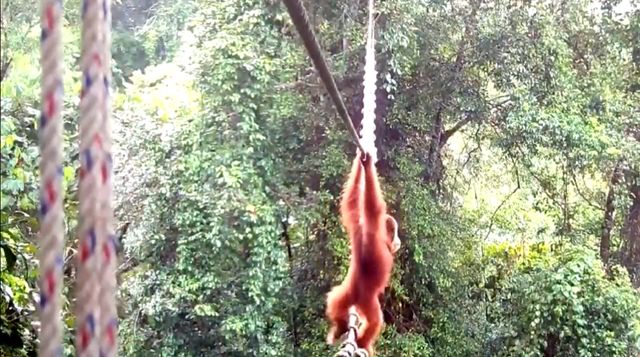
"These bridges allow orangutans to move, to mix, to maintain healthy populations," said conservationist Erwin Alamsyah Siregar
NEED TO KNOW
- A Sumatran orangutan was filmed using a human-made canopy bridge to cross a public road in Indonesia for the first time
- These crossings help the critically endangered species combat forest fragmentation, allowing the orangutans to “move, to mix, to maintain healthy populations,” despite roads crossing their habitats
- “We are very grateful that the canopy here provides benefits for orangutan conservation efforts,” said Erwin Alamsyah Siregar
Sumatran orangutans are taking a step away from extinction.
On Monday, April 27, conservationists shared footage showing a Sumatran orangutan using a human-made canopy bridge to cross a public road in Indonesia for the first time, marking a vital accomplishment for the critically endangered species.
"This was the moment we had been waiting for," Erwin Alamsyah Siregar, executive director of Indonesian conservation group Tangguh Hutan Khatulistiwa, or TaHuKah, told The Associated Press. "We are very grateful that the canopy here provides benefits for orangutan conservation efforts."
In a video shared by the Sumatran Orangutan Society and TaHuKah, the young male orangutan uses its arms to grip a rope bridge and cross above a busy road. Halfway through the animal's journey, it pauses to take in the view before continuing to swing across the canopy.
Credit: SUMATRAN ORANGUTAN SOCIETY/TAHUKAH
According to the U.S. Department of Agriculture, human development has contributed to forest fragmentation, defined as a loss of forest and the division of the remaining forest into smaller blocks. Roads built throughout Indonesia have fragmented forests, separating groups of orangutans and leaving the animals unable to reach one another without risking a road crossing. Canopy bridges keep Sumatran orangutans connected safely.
"Development was necessary for people," Siregar explained to the AP. "But without intervention, it would have left orangutans trapped on either side."
Never miss a story — sign up for PEOPLE's free daily newsletter to stay up-to-date on the best of what PEOPLE has to offer, from celebrity news to compelling human interest stories.
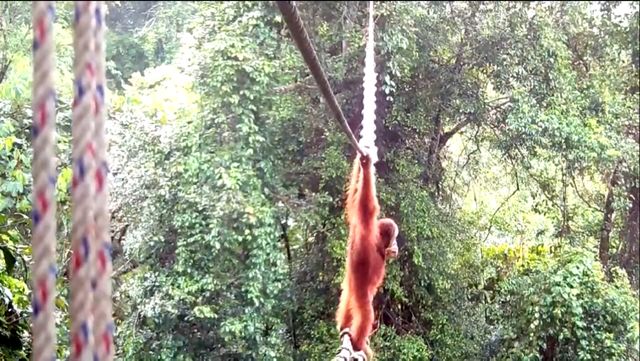
Credit: SUMATRAN ORANGUTAN SOCIETY/TAHUKAH
The canopy bridge in the video crosses a road that connects two remote villages to schools, healthcare and government services, and cuts directly through a prime orangutan habitat. Before the canopy bridge's installation, an estimated 350 apes were split between two forest areas, the Siranggas Wildlife Reserve and the Sikulaping Protection Forest.
"These bridges allow orangutans to move, to mix, to maintain healthy populations," Siregar said. "It reduces the risk of extinction."
Although five canopy bridges were carefully positioned and installed in the area two years ago, they were only used by smaller monkeys and squirrels — until now.
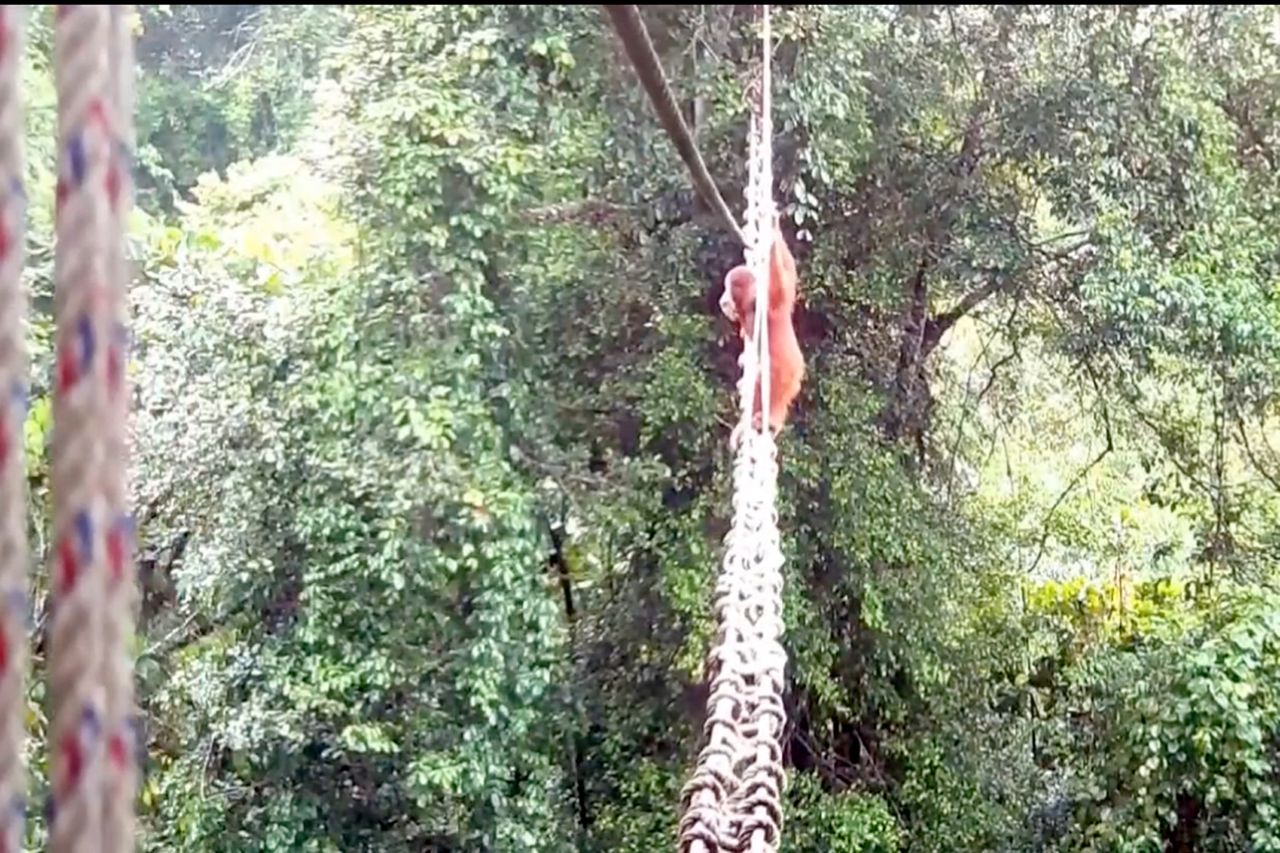
Credit: SUMATRAN ORANGUTAN SOCIETY/TAHUKAH
"They observe," Siregar explained of the Sumatran orangutans, which number fewer than 13,000 in the wild. "They don't rush. They watch, they try, they retreat."
The first video evidence of a Sumatran orangutan using one of the bridges is seen as a conservation win and a hopeful signal that more primates will use the bridges to stay connected.
Read the full article here