

NEED TO KNOW
- A passenger plane took off from an Australian airport on July 24, 2025 before autopilot reportedly steered the aircraft toward mountainous terrain after the flight crew became distracted with other duties
- The Alliance Airlines Embraer ERJ 190 had been traveling from Cairns, Queensland to Brisbane at the time of the incident, the Australian Transport Safety Bureau confirmed in a recently-released report
- The report revealed that the aircraft’s landing gear was retracted late, but safely, despite exceeding the recommended retraction speed limit
A passenger plane departed from an Australian airport before autopilot reportedly steered the aircraft toward mountainous terrain after the flight crew became distracted with other duties.
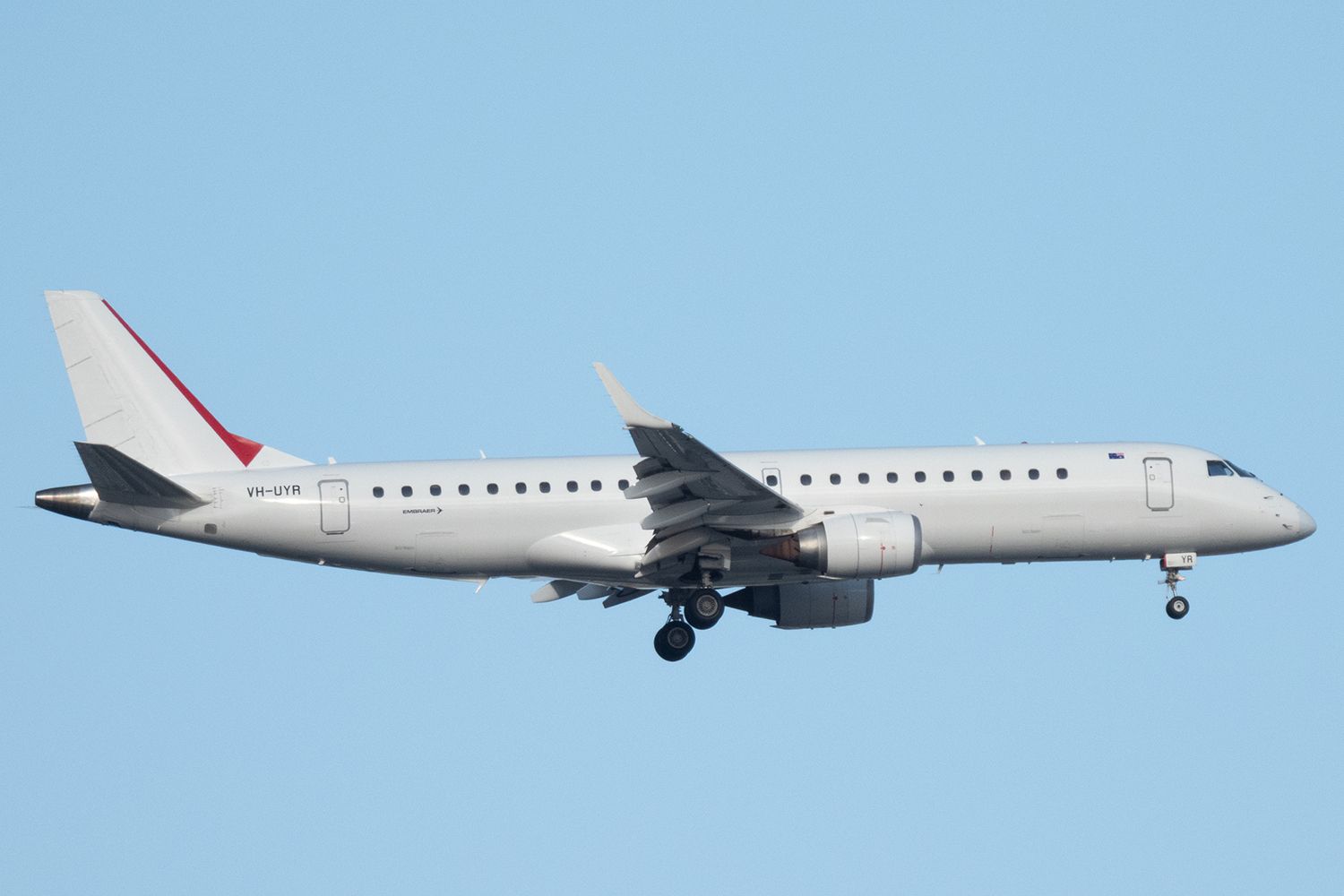
On Friday, April 24, the Australian Transport Safety Bureau (ATSB) revealed in a report that “the crew of an Alliance Airlines Embraer ERJ 190, registered VH‑A2T, [had] departed Cairns, Queensland, for a passenger transport flight to Brisbane,” at 6:51 p.m. local time on July 24, 2025.
Ninety passengers and four crew members had been on board at the time of the incident, per the Sydney Morning Herald. The outlet noted that cockpit distractions had resulted in the autopilot steering the aircraft toward mountainous terrain.
Alamy
The ATSB report stated, “As the aircraft became airborne in darkness, the captain, acting as pilot monitoring, announced ‘pitch rate’ to alert the first officer, who was pilot flying, that the aircraft’s rotation had slowed. Both crewmembers then focused on the aircraft flight path, and the retraction of the landing gear was inadvertently omitted.”
The captain, who had not been driving the plane, called “pitch rate” to make the pilot aware of a slower-than-usual nose-up movement, according to the Sydney Morning Herald.
The crew had taken off “from runway 15 with a clearance to follow the AKROM 1 standard instrument departure (SID),” the ATSB said.
The report read, “As the aircraft continued climbing and turning left to follow the SID, the flight crew received 2 radio altimeter annunciations and observed the flight director unexpectedly command a right turn,” adding, “After completing the left turn to follow the SID, the first officer engaged the autopilot, and the aircraft started a right turn toward terrain. The captain identified the turn and instructed the first officer to turn left back to the required track.”
The ATSB said that “the aircraft then continued along the SID” before “the captain [recognized] that the landing gear was still extended and quickly retracted it. The landing gear completed retracting when the aircraft had reached a speed of 252 kt [knots, around 290 mph], 17 kt above the maximum landing gear retraction speed.”
The country’s national transport safety investigator noted, “The flight continued and the aircraft landed at Brisbane without further incident at [8:44 p.m.]. Following the flight, the aircraft was inspected and found to be undamaged.”
An ATSB release stated the flight crew had become “distracted in the take-off sequence.”
“Both crew members then became focused on the aircraft’s flight path,” ATSB Director of Transport Safety, Stuart Macleod, said in a statement.
“This likely meant the captain did not have time to verify the aircraft’s positive rate of climb before a terrain avoidance turn was needed as part of the standard instrument departure being followed,” he added.
Due to the captain not announcing “positive rate,” the first officer didn’t request the retraction of the landing gear, the findings detailed, per the release.
Never miss a story — sign up forPEOPLE’s free daily newsletter to stay up-to-date on the best of what PEOPLE has to offer, from juicy celebrity news to compelling human interest stories.
“However, the announcement of the acoustically and semantically similar ‘pitch rate,’ at about the same time as the omitted ‘positive rate,’ potentially caused interference in the flight crew’s working memory, and possibly gave them a false sense that the landing gear had been retracted,” Macleod said.
According to the report, abnormal radio altimeter alerts and unexpected flight director indications increased the flight crew’s workload, continuing to distract them during the aircraft’s initial climb.
Getty
“These distractions increased the flight crew’s workload and delayed their [recognizing] the landing gear was still extended,” Macleod said.
However, the captain was able to identify the landing gear after the workload became lighter. The landing gear completed its retraction as the plane traveled at an approximate speed of 290 mph.
Macleod said that while it was above the 270 mph retraction speed limit, the aircraft had not exceeded the around 305 mph maximum airspeed with the landing gear still down, per the release.
The flight continued its journey without further incident, per the report.
“This incident highlights the impact a combination of omitted actions and distractions can have on aircraft operations, during what is often a high workload period,” Macleod said. “Such situations can create challenges in responding to the unexpected with potential for a reduction in safety when pilots act rapidly and reflexively.”
The report confirmed that Alliance Airlines had since made some changes following the incident.
The ATSB said, “Alliance Airlines accelerated its program to upgrade E190 aircraft from load 25 avionics [aviation electronics] to load 27 and at the time of the release of this report, all E190s in the Alliance Airlines fleet have been upgraded. This should prevent recurrence of the unexpected flight management system indications presented to the crew during this incident.”
“In addition, the load 27 avionics upgrade incorporated electronic checklists that require associated actions to be undertaken before the electronic checklist is completed,” the report added.
Read the full article here