

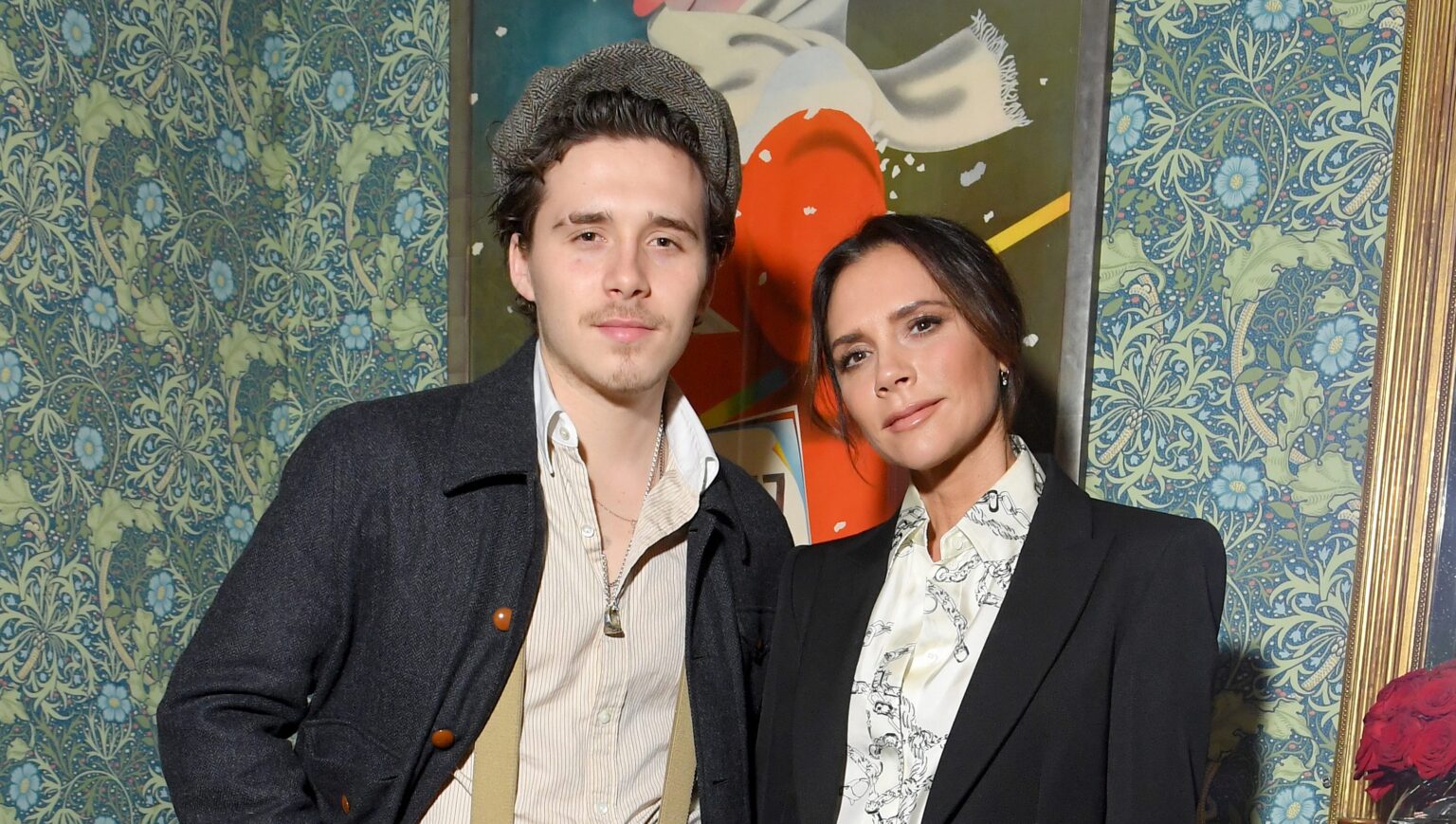
Victoria Beckham finally said it out loud. On Tuesday, in her first TV interview since Brooklyn’s scathing public statement, she called the past year “challenging” and vowed she will “always protect” her kids.
The internet immediately picked sides. Camp Victoria says Brooklyn is the ungrateful son who let his new wife rewrite his family. Camp Brooklyn says Victoria is the controlling mother who can’t let her boy grow up. Camp Nicola has its own subreddit.
Everyone is hunting for the villain. There isn’t one.
I’m a couples therapist. I work with families that look very glossy from the outside and very chaotic from the inside. What I see in the Beckham story is not a tabloid drama. It’s one of the most common, most painful patterns I sit with every Tuesday. And almost nobody is naming it correctly.
The Bull, And What’s Hiding Underneath It
When Victoria says she will “always protect” her kids, watch that word. Protect. That’s not a media line. That’s a part of her doing a job.
In my world, we call that part The Bull. The Bull is relentless. It pursues, it defends, it controls the narrative, it picks up the phone, it gives the interview. The Bull is the part of a parent that absolutely will not let go because letting go feels like death.
Underneath The Bull is something much smaller and much more tender. A mother who is terrified of losing her boy. A woman who is asking, in the only two questions our nervous systems ever really ask anyone we love, Are you there for me? Am I still enough for you?
When a child grows up, falls in love, and forms a new primary bond with a partner, the original family system gets thrown into chaos. This is biology, not bad behavior. We are hardwired from the cradle to the grave to need our attachment figures, and a threat to those bonds registers like a survival threat.
So mom pursues. Dad protects. The adult son, doing the very thing he is biologically supposed to do (build his own life with his wife) starts to feel like a constant disappointment to the people who raised him. He can’t get it right. So he pulls away.
She reaches harder. He withdraws further. She gives an interview. He releases a statement. And around it goes.
That isn’t a feud. That’s an attachment panic loop in designer clothes.
Why “Just Talk It Out” Doesn’t Work Here
Here’s the part the gossip take always misses.
When families like this come into my office, they want to litigate. The wedding. The guest list. The dress. Who posted what on Instagram. Who said what to which reporter. They believe, sincerely, that if they can just get the facts straight, the pain will resolve.
I call it the who-did-what-when bucket. The events are not the issue. The way people feel about each other underneath the events is the issue. It’s much easier to argue about a seating chart than to say, “I am terrified you don’t love me anymore.”
Here is the clinical detail I want you to sit with, because it’s the thing I see in the room that the public never sees. The adult child who has pulled away, the one everyone assumes is “fine” because he posted a smiling photo, is usually drowning in a two-ingredient cocktail of shame. One hundred percent shame. I am bad. I am a disappointment. I keep failing the people who love me.
When a human nervous system is full of that much shame, the limbic system takes over. The limbic brain is basically a naked mole rat. It can’t really see or hear. It just senses threat, and it bolts.
So when mom reaches out, full of love and pain and protector energy, the son does not receive it as love. He receives it as evidence that he is failing again. And he goes silent. Or he releases a statement.
If you’ve ever been the one reaching, or the one going silent, this is the moment to find out your relationship pattern before you blame yourself for either side of it.
There Are No Bad Guys. Ever.
The internet wants narcissists and golden children and toxic mothers. Cosmo agrees with you. Your group chat agrees with you. The whole feed agrees with you.
Eating that content is like eating M&Ms for dinner. Delicious. Briefly. Then you feel like garbage and nothing is healed.
Everyone walks into therapy as the world-renowned expert in what is wrong with their family member. If I held a global conference on what is wrong with your son, or your mother, I would book you as the keynote. We are obsessed with the story of other. The story of other never leads to growth.
So here is the angle nobody on the timeline will give you. Victoria’s fierce protection and Brooklyn’s fierce distance are not opposites. They are the same coin. Both are panicked nervous systems trying to survive the unbearable feeling that they might be losing each other.
If they were sitting on my couch, I would not let them explain their side. The more one explains, the more the other retreats. I would slow them down to the feeling underneath the content. I would ask Victoria, before she protects, what is she scared of? I would ask Brooklyn, before he withdraws, what does he believe about himself in his mother’s eyes?
This is the heart of what we do in the science behind san francisco marriage counseling with families exactly like this one. It’s also why patterns of half-contact, vague public messages, and intermittent reach-outs sting so badly between estranged family members, in the same way the science behind breadcrumbing explains why a single ambiguous message from someone you love can wreck your whole week.
The Line I Want You To Screenshot
Disconnection is a feature, not a bug. It is not proof a family is broken. It is proof that two people mean so much to each other their nervous systems can’t handle the thought of losing the bond. Victoria and Brooklyn aren’t fighting because they don’t love each other. They’re fighting because they do, and nobody taught them what to do with that much love when it starts to feel unsafe.
Poor little devils. Both of them.
______________________________________________________________________________________
Empathi founder Figs O’Sullivan is a couples therapist and relationship expert to the Stars and Silicon Valley, founder of Empathi, and built the Figlet platform, an AI relationship coach trained on his clinical work.
Read the full article here