

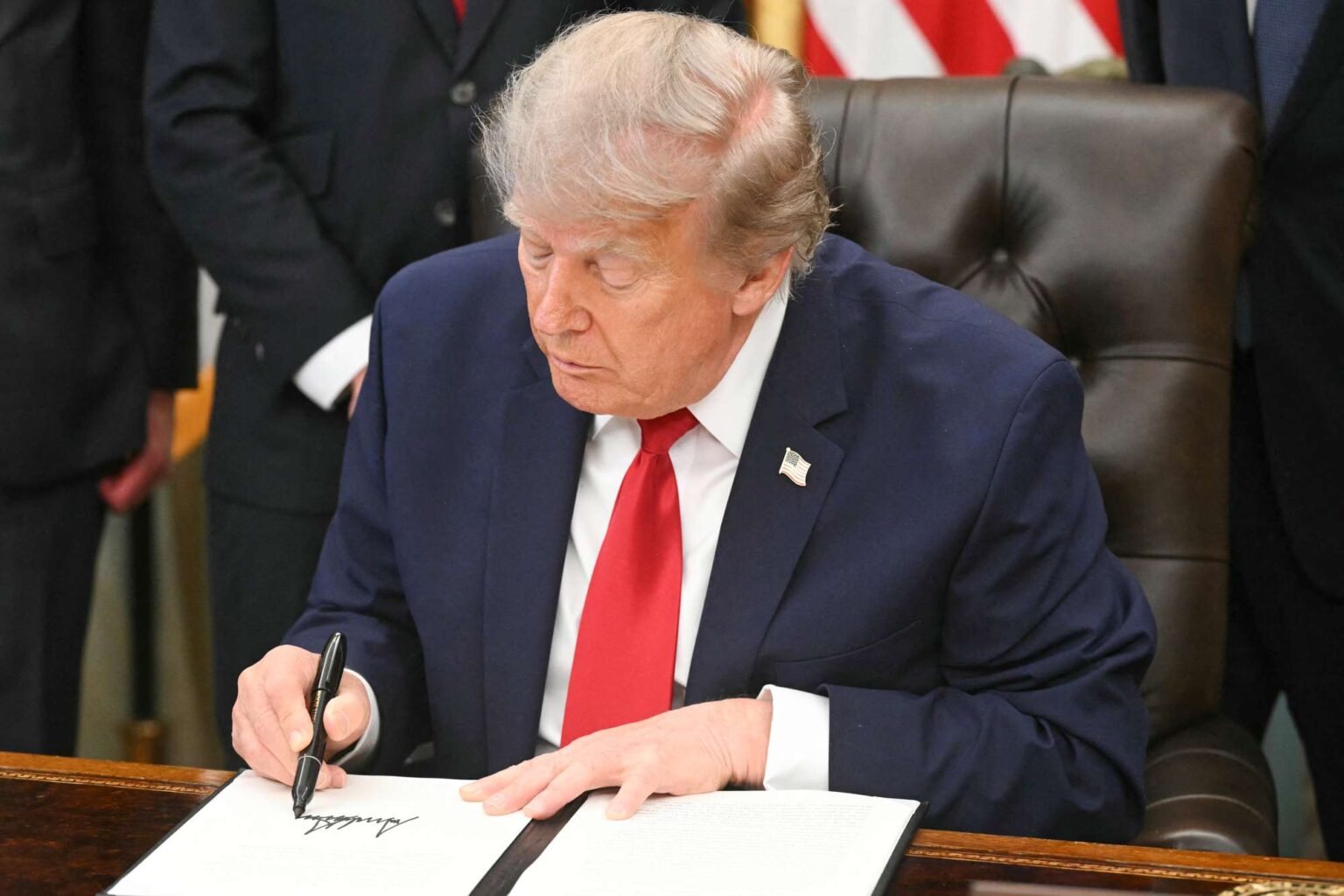
“We had a bad decision, very unfair decision,” Trump, 80, told reporters about the Supreme Court’s June 30 ruling that preserved birthright citizenship
Credit: SAUL LOEB/AFP via Getty
NEED TO KNOW
- President Trump signed two executive orders aiming to narrow birthright citizenship by creating exceptions to the 14th Amendment
- The orders target children of “alien enemies” and those born through “birth tourism” with fraudulent visas
- “We had a bad decision, very unfair decision,” Trump, 80, told reporters about the Supreme Court’s June 30 ruling that preserved birthright citizenship
After the Supreme Court rejected his first attempt to limit birthright citizenship, President Donald Trump is trying again — this time with a pair of executive orders that take a different legal approach.
The orders, signed Thursday, Aug. 6, seek to narrow who qualifies for automatic U.S. citizenship at birth by carving out new exceptions to the 14th Amendment, according to The Washington Post. One order declares that children born to “alien enemies,” or members of foreign terrorist organizations, would not be eligible for citizenship. The other excludes children born to people who are deemed to have fraudulently obtained tourist visas for the purpose of giving birth in the United States.
The move comes weeks after the Supreme Court reaffirmed that the 14th Amendment guarantees citizenship to nearly everyone born on U.S. soil, including children of undocumented immigrants, striking down Trump’s earlier executive order issued on the first day of his second term.
The new directives represent the administration’s latest effort to fulfill a long-standing campaign pledge by testing the constitutional boundaries of birthright citizenship through complex legal arguments.
Speaking from the Oval Office on Thursday, Trump blasted the Supreme Court’s ruling and said his administration was pursuing a new strategy after what he described as an unfair outcome.
“We had a bad decision, very unfair decision,” Trump, 80, told reporters about the June 30 ruling. “Our country suffers because of it, and we’re ending it a different way.”
The Supreme Court dealt a significant blow to Trump’s earlier effort to restrict birthright citizenship when five justices concluded that the Constitution guarantees birthright citizenship, signaling that any broad change to the policy would likely require a constitutional amendment rather than executive action, according to The New York Times.
A sixth justice, Trump appointee Brett Kavanaugh, said he would have invalidated Trump’s previous order on statutory grounds instead of constitutional ones, according to the outlet.
Although Trump vowed shortly after the ruling to ask the court to reconsider its decision, he never followed through. The deadline to seek a rehearing passed last week without the administration filing a request.
Never miss a story — sign up for PEOPLE’s free daily newsletter to stay up-to-date on the best of what PEOPLE has to offer, from celebrity news to compelling human interest stories.
Read the full article here