

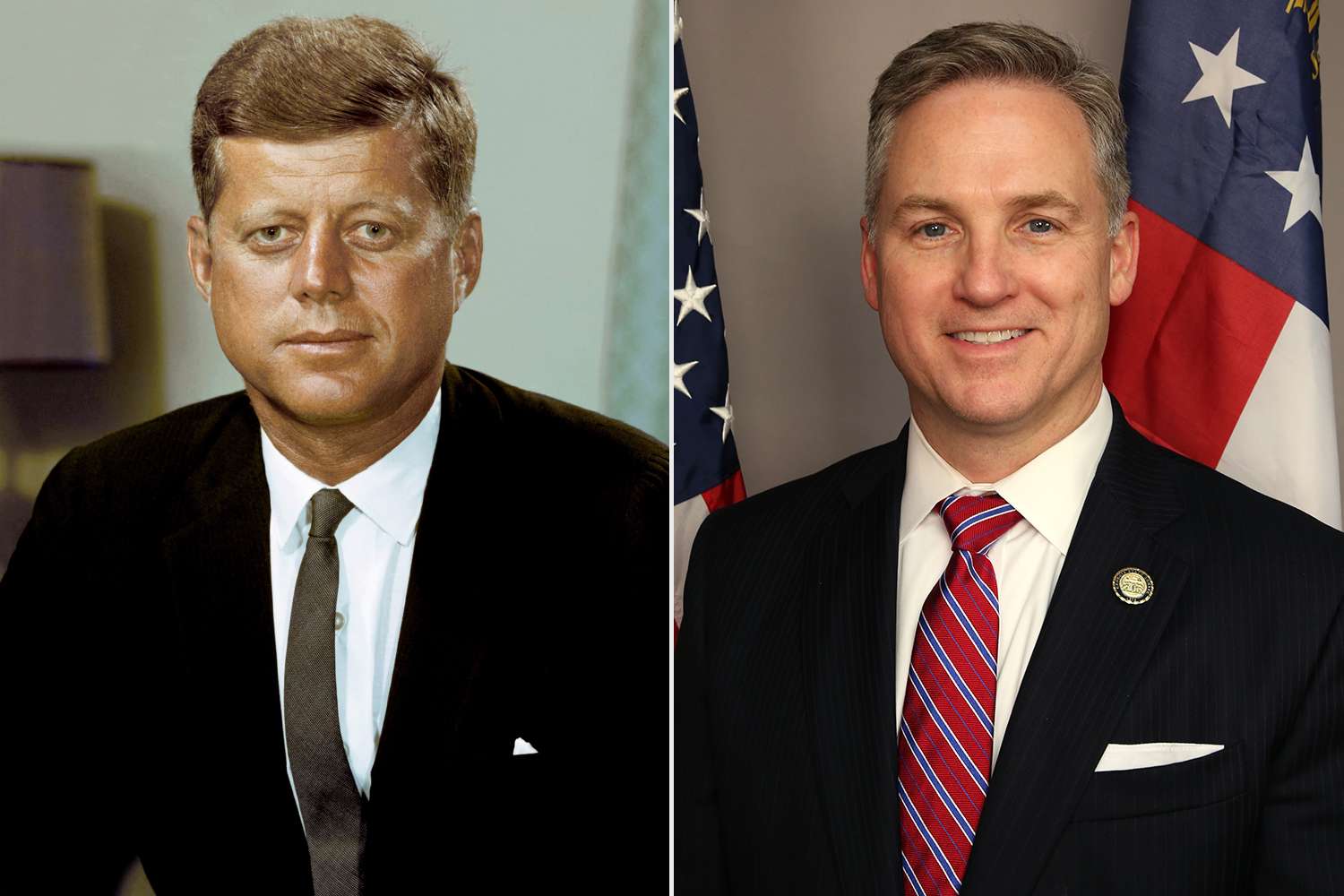
John Fitzgerald Kennedy and John Flanders Kennedy might appear the same on a ballot, but there's little else connecting the American politicians
Credit: TPLP/Getty; Georgia General Assembly
NEED TO KNOW
- Eight decades after future President John Fitzgerald Kennedy’s first congressional race — and 63 years after his assassination — Georgia voters are once again finding a John F. Kennedy on their ballots
- Unlike the original JFK and much of his family, the new JFK is a Republican
- Former Georgia state senator John Flanders Kennedy notched a narrow first-place finish in the state’s GOP primary for lieutenant governor on Tuesday, May 19, and will now head to a run-off election in an attempt to formally earn his party’s nomination
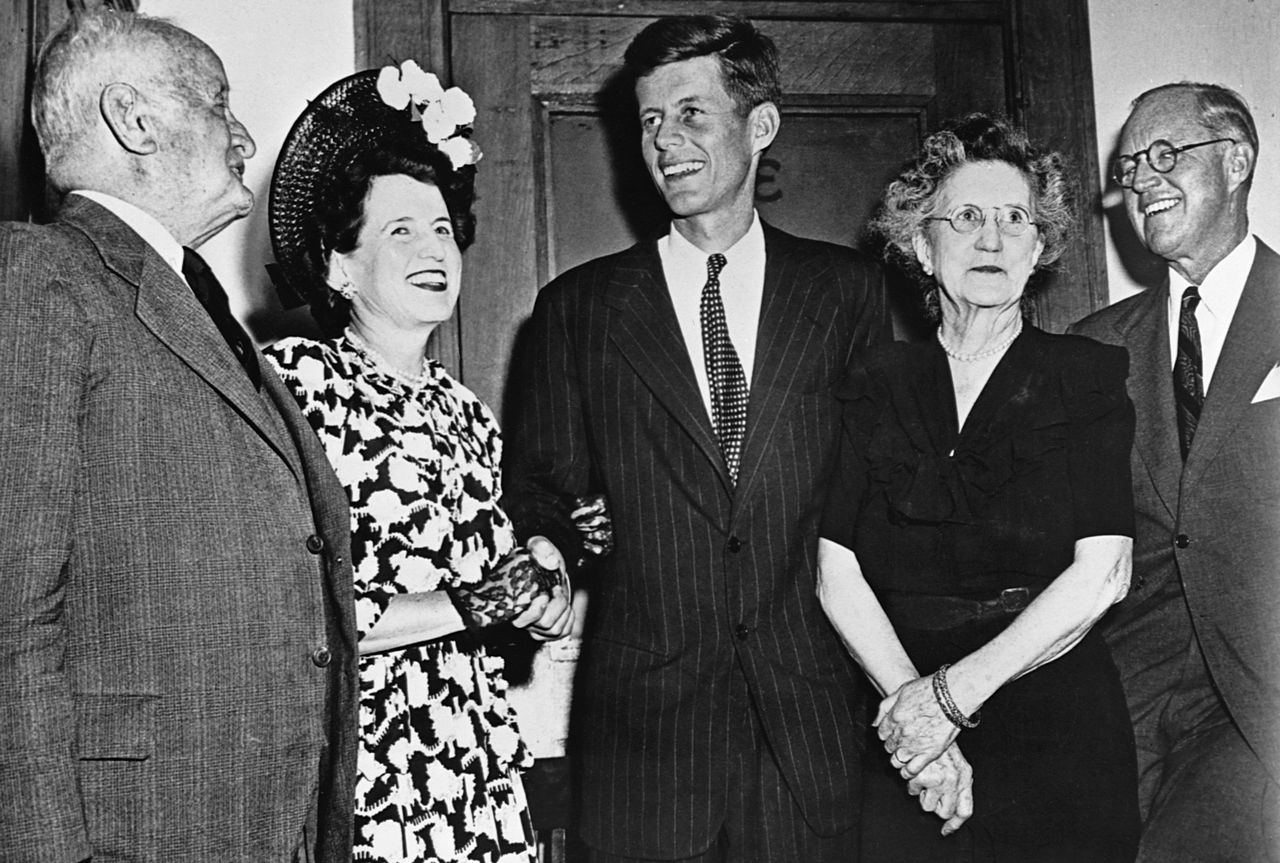
In 1946, the future President John Fitzgerald Kennedy was the 29-year-old war hero son of the wealthy former U.S. ambassador to the U.K., pursuing election to Congress in a Boston district once represented by his maternal grandfather.
"Mr. Kennedy, who will be 29 next month, declared that 'the temper of the times imposes an obligation upon every thinking citizen to work diligently in peace, as we served tirelessly in war,'" The New York Times reported on page 15 of its April 23, 1946, edition, noting that the young Kennedy was "unmarried" and lived with his grandfather, former Boston Mayor John F. Fitzgerald.
After 14 years in the House and then the Senate, JFK would successfully win the White House with 303 Electoral College votes across 22 states, including Georgia.
Now, eight decades after that first congressional race and 63 years after his assassination, Georgia voters will have the opportunity to vote for a John F. Kennedy once again. Unlike the original JFK and much of his family, though, this one is a Republican.
Former Georgia state senator John Flanders Kennedy notched a first-place finish in the state’s GOP primary for lieutenant governor on Tuesday, May 19, advancing to a June runoff against second-place candidate Greg Dolezal, a fellow state senator. The state’s current lieutenant governor, Burt Jones, is running for governor with the backing of President Donald Trump.
Georgia’s Kennedy was born in 1965 — two years after President JFK was assassinated in Dallas. His background is slightly different than the scion of a Boston political dynasty that continues to produce Cabinet secretaries (Robert F. Kennedy Jr.), congressional candidates (Jack Schlossberg), and U.S. ambassadors (Caroline Kennedy, Joseph Kennedy III) to this day.
Credit: Corbis via Getty
“As a lifelong Georgian from Adrian, Georgia, I was raised on small-town values,” the Georgia politician says on “JFKforGeorgia.com,” his campaign website. “My dad was the local doctor, providing care to those who needed it most.”
“We used to watch the Andy Griffith show to see how city folk live," Kennedy told NPR in 2014, when he first ran for office.
Instead of graduating from Harvard Law School, as President Kennedy did, Georgia’s JFK attended Mercer University in Macon, Ga., for his undergraduate and law degrees.
"I've been the brunt of a lot of jokes for the last 48 years. Anyone that knows me knows that I'm conservative, and I've been conservative all my life,” he said in 2014, “and actually was a Republican in high school in the '80s when not many people in south Georgia or central Georgia were Republicans, and certainly not many people where I grew up were Republicans.”
On Tuesday night, Kennedy expressed gratitude for his first-place finish in the seven-way primary and pledged to “not let up” until he defeated Dolezal in the June 16 runoff.
“Tonight, hardworking Georgians put this campaign in first place, and I am grateful for every single vote. But the job is not finished,” he wrote on X. “As your next Lieutenant Governor, I will fight to responsibly cut income taxes, eliminate property taxes, and support our men and women in law enforcement.”
Tonight, hardworking Georgians put this campaign in first place, and I am grateful for every single vote. But the job is not finished.
A runoff is ahead, and we will not let up. We will not allow ourselves to be outworked in this race and will continue earning the trust of… pic.twitter.com/3zdpnRbveh
— John F. Kennedy (@johnfkennedyga) May 20, 2026
Never miss a story — sign up for PEOPLE's free daily newsletter to stay up-to-date on the best of what PEOPLE has to offer, from celebrity news to compelling human interest stories.
Dolezal has campaigned on his lawsuits against Georgia Secretary of State Brad Raffensperger — a Republican who was boxed out of the gubernatorial runoff after Trump attacked him for refusing to go along with the president’s plot to overturn the 2020 election in Georgia — and investigation into Fulton County District Attorney Fani Willis, who criminally charged the president in connection with the alleged scheme. The Georgia case was dismissed in November 2025.
Trump has denied all criminal wrongdoing and continues to falsely insist he won the state and the presidential election as a whole in 2020.
A campaign ad Dolezal ran earlier this year depicted Muslims attacking white Georgia residents, describing them as “invaders who would rather pillage our generosity than assimilate” and calling on Georgia voters to “keep Georgia sharia free.”
“I, quite frankly, think it’s kind of bizarre,” Kennedy said of the ad at the time, according to The Georgia Recorder. “At this stage of the campaign, some candidates will do outlandish things to get attention, and this is probably in that vein. That’s not my style. That’s not what I’m a part of.”
Former state Sen. Nabilah Parkes, one of only a handful of Muslim lawmakers in Georgia, told The 19th that the bigoted ad inspired her to pursue the Democratic nomination for lieutenant governor.
She resigned her seat shortly after to focus on the race and garnered roughly 40% of the vote on Tuesday, setting up a runoff with state Sen. Josh McLaurin.
Credit: Corbis via Getty
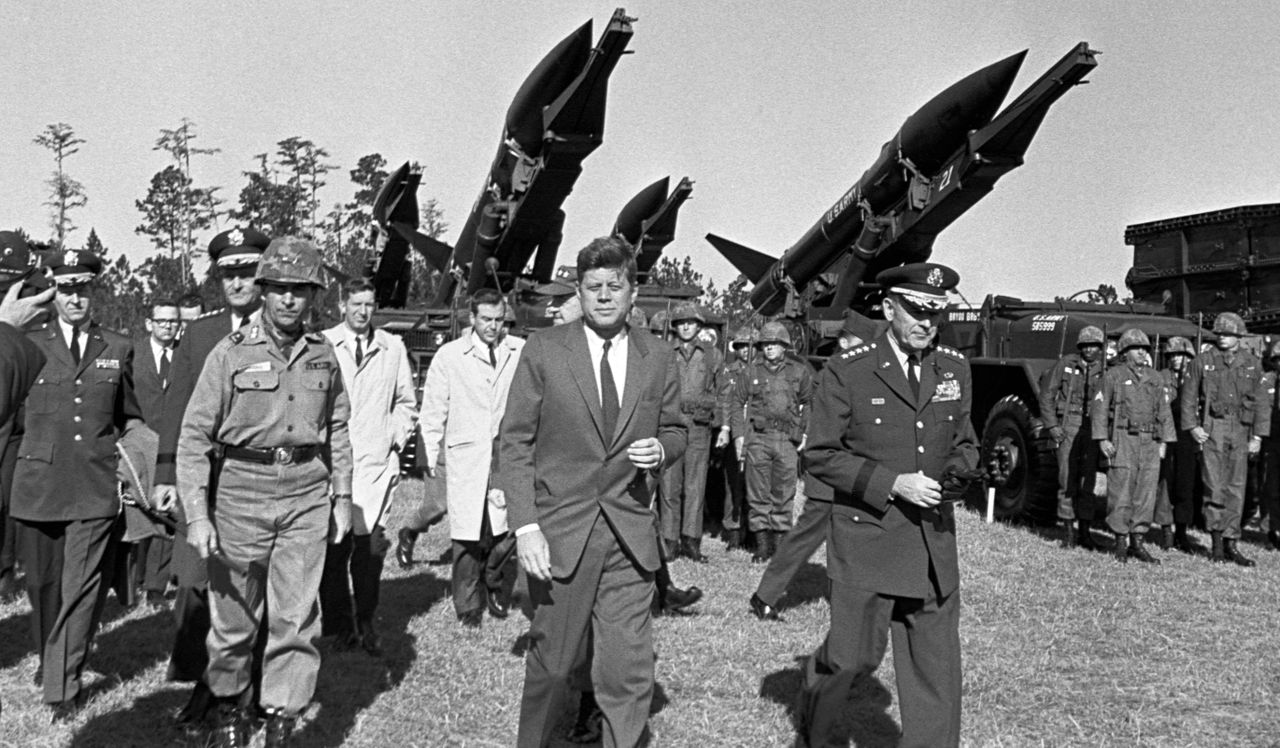
In 1960, as the future president John Fitzgerald Kennedy pursued the Democratic nomination, a different kind of religious bigotry factored into the race in the South, including Georgia.
Amid segregation in the Jim Crow South, some Southern Democrats feared the Boston liberal gaining the party’s nomination and preferred his eventual vice president, Texas Sen. Lyndon Baines Johnson.
Credit: Bettmann/Getty
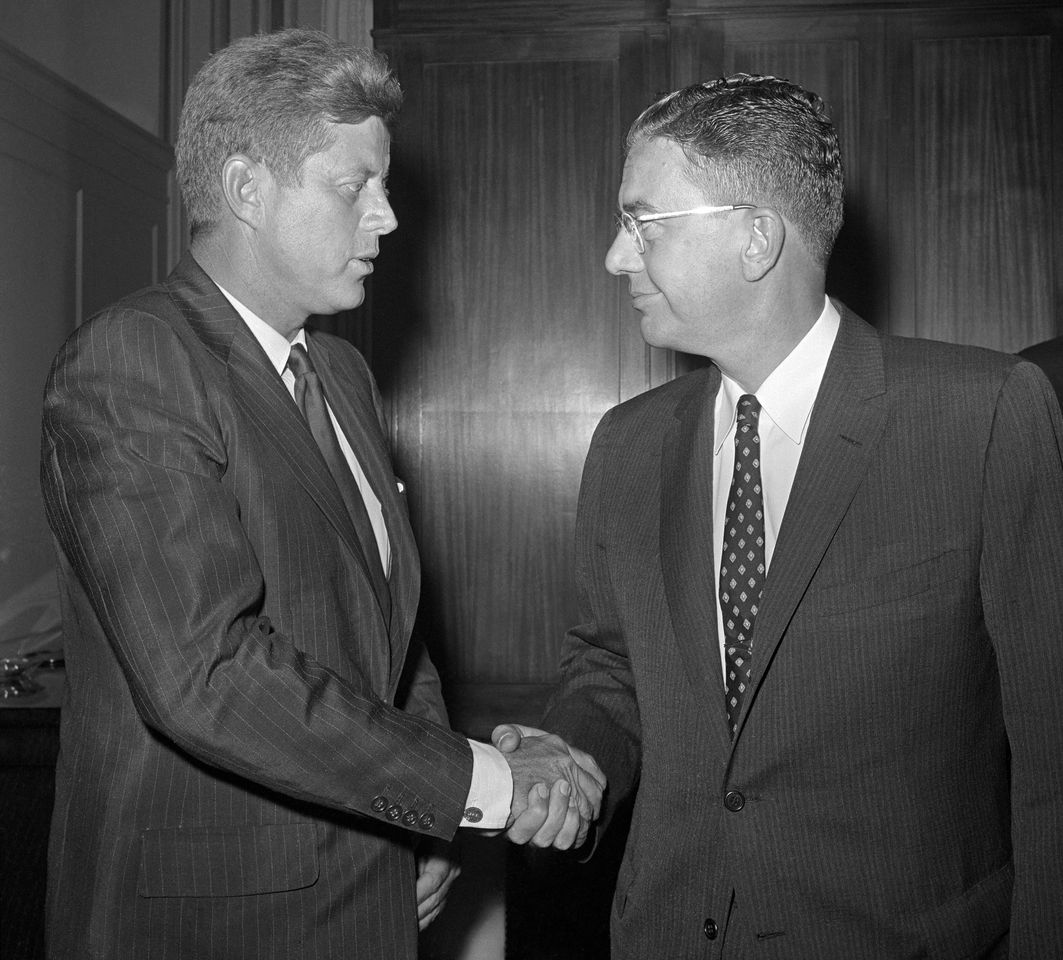
Worried that Johnson might not declare for president, some influential Democrats pitched segregationist Georgia Sen. Herman Talmadge as an alternative in the spring of 1960.
“It was noted in some circles that [Talmadge] movement might serve as a[n] umbrella for political leaders who wanted to support Mr. Kennedy eventually,” New York Times reporter Claude Sitton wrote on May 13, 1960, “yet escape criticism from those who object to him because he is a Roman Catholic.”
Read the full article here