

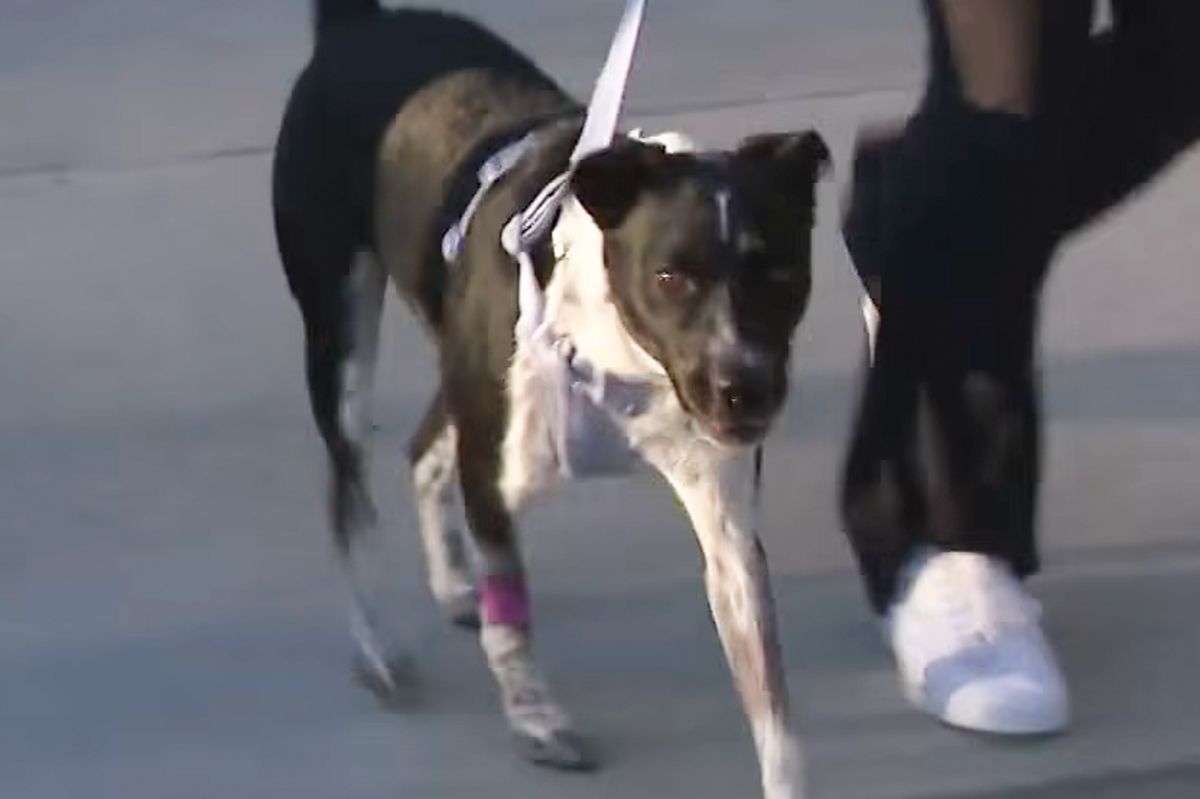
“Within 15 minutes she was throwing up, having diarrhea, acting lethargic, excessive drooling, and her gums were white,” the dog's owner wrote of the incident
Credit: KTLA 5/Youtube
NEED TO KNOW
- A Los Angeles dog owner says her pet became critically ill after a walk through Valley Village Park
- Jenifer Dorhoutmees shared on Instagram that her dog tested positive for methamphetamine and required urgent care to stabilize her condition
- The owner hopes the incident raises awareness about potential dangers during routine dog walks
A Los Angeles dog owner is speaking out after her pet was hospitalized following a walk at a North Hollywood park, saying the experience turned life-threatening in a matter of minutes.
Jenifer Dorhoutmees shared on Instagram that her dog, Uni, whom she's had since she was 5 weeks old, became seriously ill on Wednesday, April 22, after the pair extended their usual walk and passed through Valley Village Park.
“Not to be dramatic but yes it is that serious,” Dorhoutmees wrote, recalling how quickly the situation escalated. “Within 15 minutes she was throwing up, having diarrhea, acting lethargic, excessive drooling, and her gums were white.”
Dorhoutmees said she rushed Uni to urgent veterinary care, where the dog was treated as a critical case. After testing, she said, veterinarians told her Uni had tested positive for methamphetamine.
“When we first arrived it took them 45 minutes to an hour to get her temperature to drop [from 106],” she wrote. “They said, had we not gotten there in time she could have suffered brain damage, organ failure, and potentially loss of life.”
Uni was later transferred to a 24-hour animal hospital, where she was monitored and placed on IV fluids. Dorhoutmees said the dog experienced additional complications, including low blood pressure, elevated liver enzymes and issues with blood clotting.
“With the help of the hospital she was finally considered stable this morning,” she added. “But for now she is home and it is safe to say we can finally breathe.”
The ordeal, Dorhoutmees said, was especially alarming given how quickly it unfolded.
“One minute we are at the end of our walk playing fetch,” she wrote. “And then next thing I know she's basically unable to walk.”
As a dog groomer, she noted that dogs experience the world through scent, which can put them at risk in unpredictable environments. “The joke is always ‘she's just reading the drama that unfolded here through scents,'” she wrote. “When dogs sniff it's their equivalent of scrolling the feed.”
Never miss a story — sign up for PEOPLE's free daily newsletter to stay up-to-date on the best of what PEOPLE has to offer, from celebrity news to compelling human interest stories.
Veterinary experts say cases like Uni's highlight a growing concern for pet owners in urban areas.
Dr. Laurie McCauley of Optimum Pet Vitality tells PEOPLE that increased drug use in cities can pose unexpected dangers to animals.
“Living in an urban environment where drug usage has become more prevalent has created an added danger to our pets,” McCauley says. “Dogs don't need to inject methamphetamine to have serious and potentially fatal reactions, they can innocently consume it on a walk if the drug is tucked away waiting for its intended user to return.”
According to McCauley, ingestion of methamphetamine can quickly become life-threatening for dogs.
“When a dog ingests meth, it can become hyperactive and hyper-focused. A high enough dose can cause seizures and death,” she explains, noting that fever is also common.
For pet owners who suspect exposure, McCauley recommended acting quickly. “If you are worried that your dog has ingested methamphetamine, collect urine if possible and test it with an instant drug test,” she says, noting that approximately 10 to 20 mL is needed for accuracy.
She also encourages pet owners to keep their dogs on "a short leash" in areas where harmful substances might be found to reduce risk. “Retractable leashes should not be used, they allow dogs to sniff under bushes or benches where small packages could be hidden," she adds.
McCauley notes that keeping dogs moving can also help. “Run or jog with your dog. If they are moving fast, they are getting the exercise they need and will not have time to sniff and pick up potentially harmful substances or even rotten food,” she shares.
In her post, Dorhoutmees said Uni will need follow-up testing in the coming days, including checks on her blood pressure and liver function. For now, she hopes the experience encourages others to stay alert during routine walks.
“There isn't much we can do, there's no way of knowing if there is drugs on the floor,” Dorhoutmees wrote. “But we can pick better routes to walk on and signs to look for.”
Read the full article here