

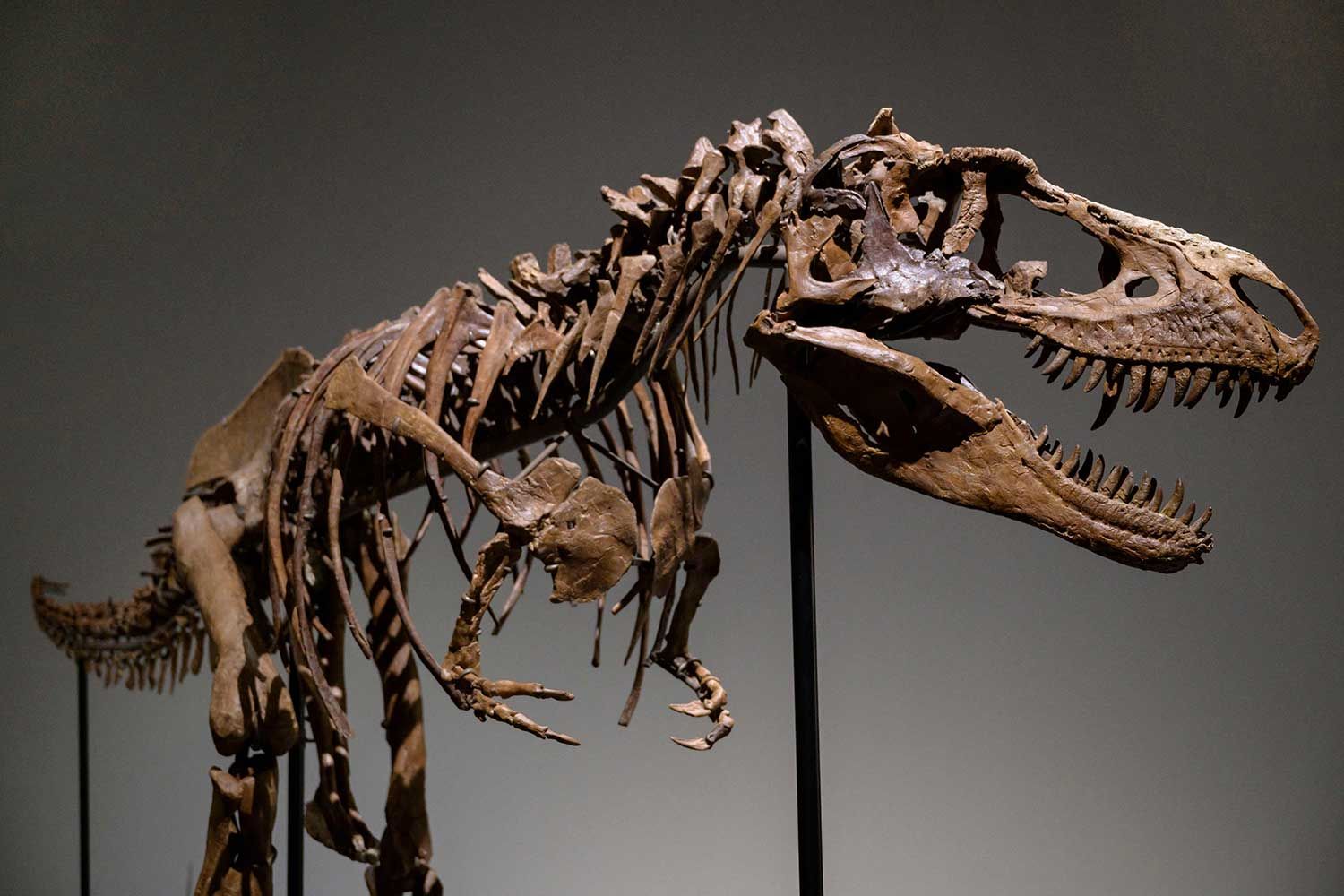
The fossilized skull belonged to a juvenile Gorgosaurus, a close relative of T. rex that lived about 76 million years ago
Credit: ANGELA WEISS/AFP via Getty
NEED TO KNOW
-
A fossil found during a hike in Canada has been identified as a juvenile Gorgosaurus, a close relative of Tyrannosaurus rex that lived about 76 million years ago
-
Researchers determined the dinosaur’s identity from a detailed cast of its skull impression, providing the first confirmed evidence that Gorgosaurus lived in northeastern British Columbia
-
The study suggests that the species roamed a much larger area than previously believed
A fossil discovered during a hike through a campground in Canada has been identified as the remains of a young Gorgosaurus, a close relative of Tyrannosaurus rex that roamed western North America roughly 76 million years ago.
Researchers from the University of Alberta determined the dinosaur’s species after studying a detailed cast made from the impression of part of its skull.
Their findings, published in June in the journal Palaeogeography, Palaeoclimatology, Palaeoecology, offer new insight into where the ancient predator lived and how it may have hunted as it matured.
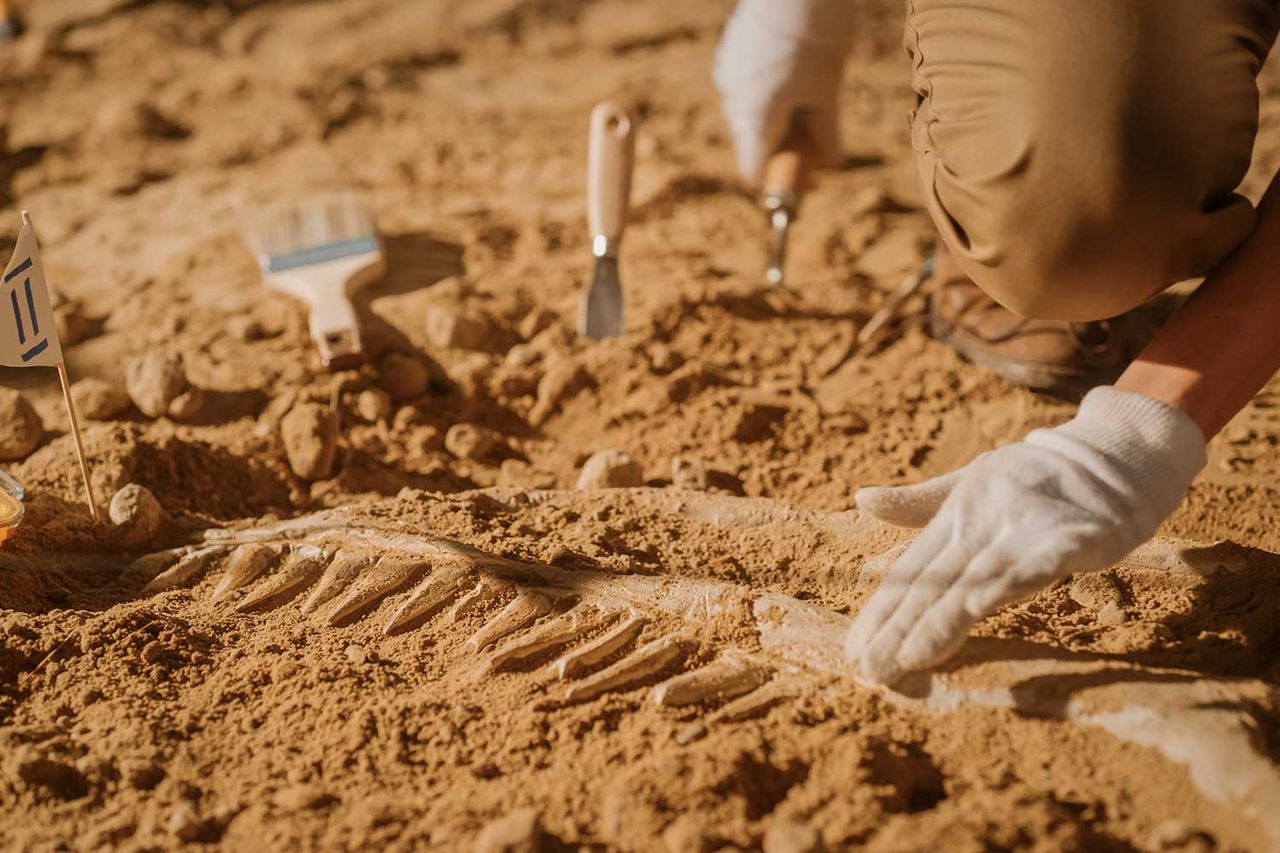
The fossil’s story began in 2017, when British Columbia resident Rick Lambert spotted an unusual-looking rock while hiking near Tumbler Ridge, close to the Alberta border.
Lambert, who grew up searching for fossils in England, told the Canadian Broadcasting Corporation (CBC) that a squirrel happened to draw his attention toward the rock near a riverbank.
Although most of the original bone had eroded, the impression remained detailed enough for researchers to create a high-quality cast for study.
“We were able to identify [Gorgosaurus] based on a unique set of characteristics on this impression,” lead author Colton Coppock told the CBC.
According to the recently published study, the preserved portion of the skull belonged to a juvenile Gorgosaurus, which roamed the earth about 10 million years before T. rex.
Credit: Getty
The fossil also marks the first confirmed evidence that Gorgosaurus inhabited what is now northeastern British Columbia, expanding scientists’ understanding of the dinosaur’s ancient range.
“It’s probably like T. rex’s great-uncle,” Coppock told the outlet.
While the two predators shared features like short arms and long tails, Coppock said Gorgosaurus was more lightly built, with longer legs that may have made it the faster hunter.
“They’re kind of the more lightly built tyrannosaurs with longer limbs. Think of like a faster T. rex,” he explained.
The fossil also provided clues about how young Gorgosaurus may have fed. The juvenile’s front teeth differed from those of adults, leading researchers to suggest the dinosaurs changed their feeding behavior as they matured.
Credit: Getty
“Since these animals don’t have large, really muscular jaws early on in life, we think they were using these incisiform teeth to precisely cut up flesh, rather than just going in with brute force and taking huge chunks out with their blade-like teeth [like the adults],” Coppock said.
Never miss a story — sign up for PEOPLE’s free daily newsletter to stay up-to-date on the best of what PEOPLE has to offer, from celebrity news to compelling human interest stories.
Researchers also concluded that Gorgosaurus likely occupied a much broader territory than previously documented. Based on fossil evidence, the species ranged from northeastern British Columbia into northern Montana, covering an area of roughly 198,000 square kilometers (about 76,000 square miles), according to the study.
For Coppock, the discovery suggests that there is still much to learn from British Columbia’s fossil record. “B.C. is kind of like the new frontier in terms of dinosaur research,” he told the CBC.
Read the full article here