

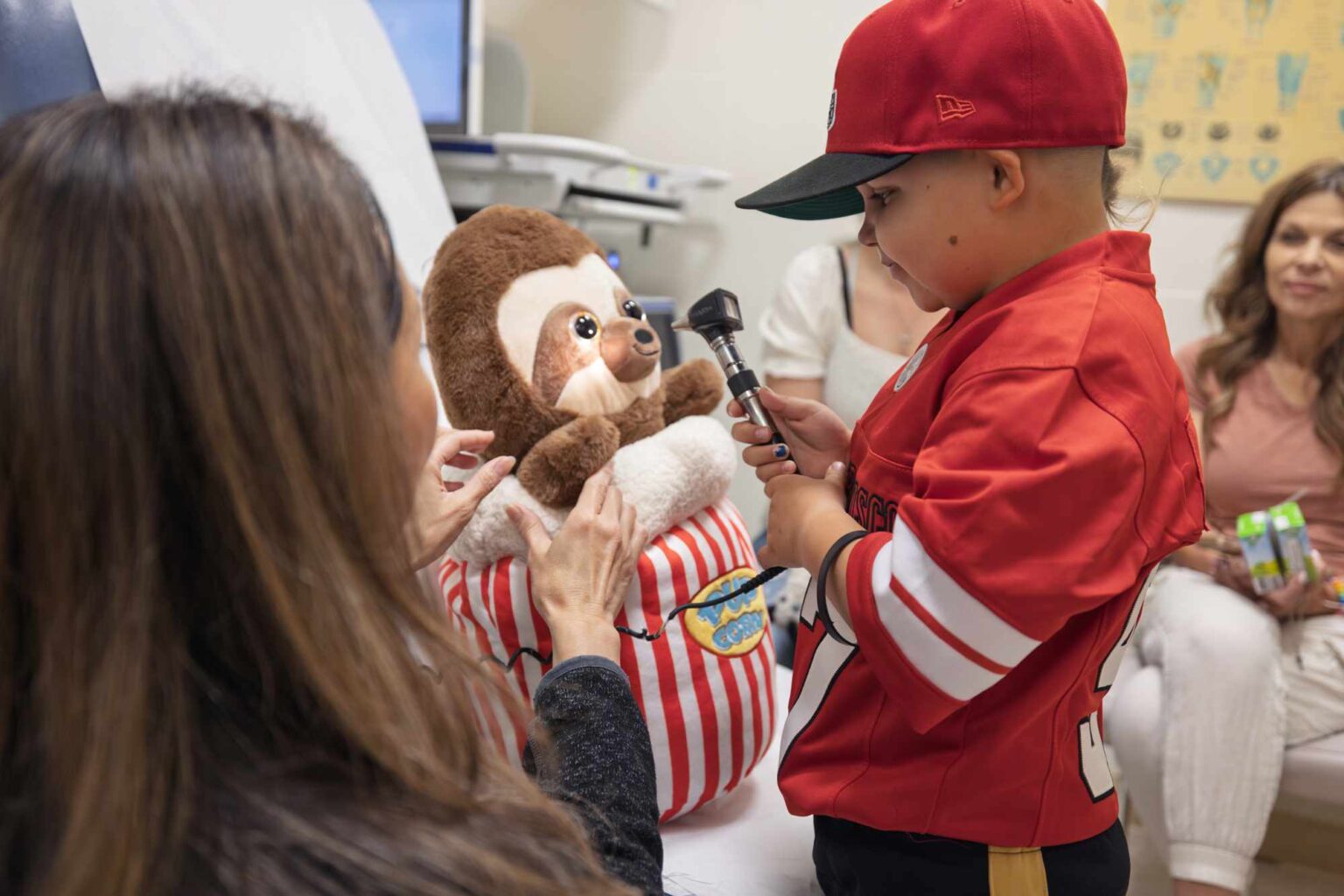
Stephen De La Torre's brain tumor was the size of a battery and close to his brain stem, so doctors found a way to shrink the cancer — and avoid exposing healthy tissues to radiation
Credit: Kurt Hickman/Stanford Medicine
NEED TO KNOW
- Stephen De La Torre was diagnosed with a rare brain tumor that caused severe symptoms like headaches and vision problems
- He became the first patient to receive proton therapy at Stanford’s new compact proton therapy suite
- The targeted radiation treatment minimizes damage to healthy brain tissue and reduces long-term side effects for children
A seven-year-old boy with a rare brain tumor was the first patient to be treated with therapy that delivers targeted radiation to his cancer — sparing healthy, developing brain tissue from being exposed to radiation.
Stephen De La Torre was struggling with headaches, vision problems, nausea and lethargy — and was finally diagnosed with a rare type of brain tumor: a papillary tumor of the pineal region. It was approximately the size of an AA battery and blocking cerebrospinal fluid from draining, which caused swelling and his symptoms.
Credit: Kurt Hickman/Stanford Medicine
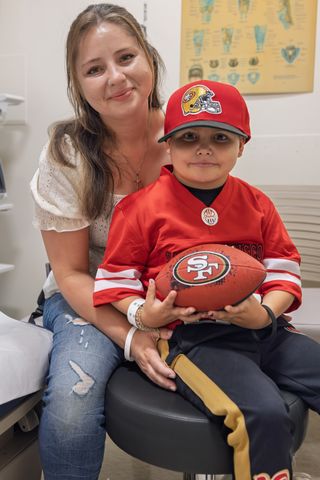
“Our surgeons told us that his tumor was located really close to the brain stem, so they removed what they could safely,” Stephen's mom, Tricia De La Torre, told Stanford University. “He needed radiation to eliminate the rest.”
Stephen underwent surgery on March 9 at Lucile Packard Children's Hospital Stanford to remove what doctors could before he began undergoing radiation five days a week.
Credit: Kurt Hickman/Stanford Medicine
Doctors realized that Stephen was an excellent candidate for proton radiation therapy; it is a more targeted type of radiation and would limit the amount of radiation to healthy tissue, like his brain stem. “The key is being able to eliminate cancer without causing unacceptable collateral damage,” said Dr. Bill Loo, professor of radiation oncology, in a release from the medical center. “With protons, we can deposit the dose of radiation in a more controlled way.”
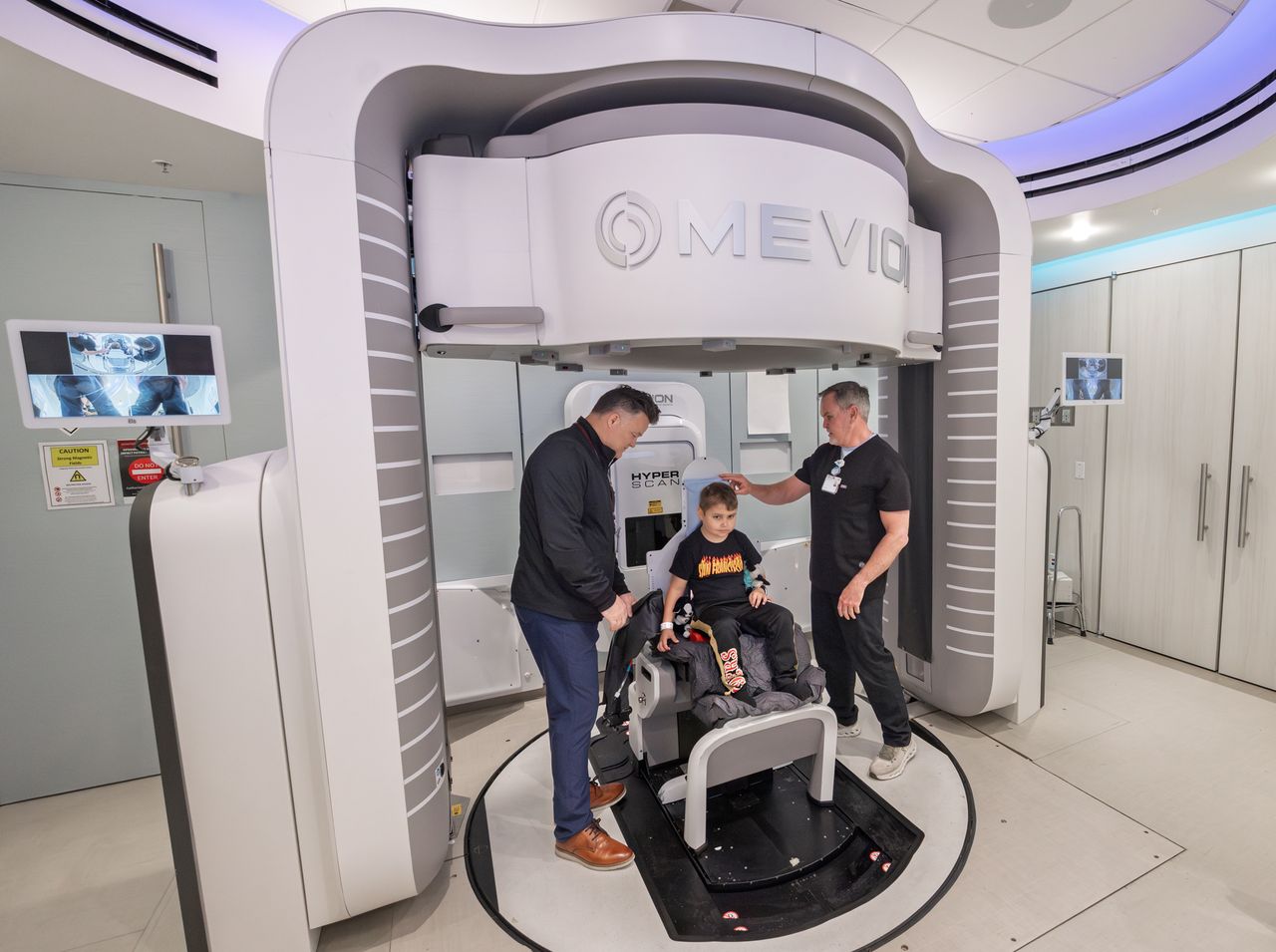
The problem? Proton therapy machines are massive, requiring a football field-sized space for the equipment. And the nearest facility was more than 500 miles away.
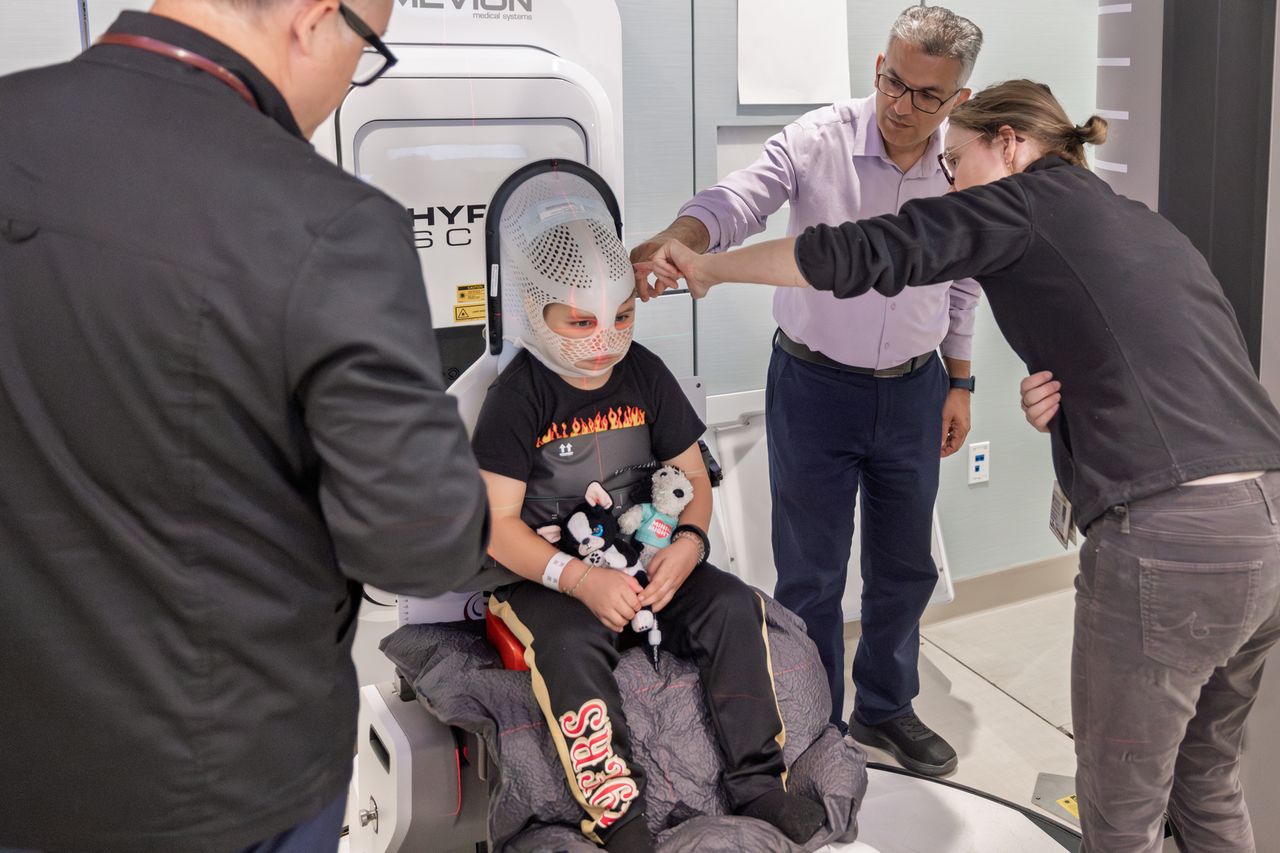
But Stanford was in the final stages of building a compact proton therapy suite — the first of its kind, and the world's smallest. On June 4, Stephen became the first patient to undergo proton therapy at the Sridhar B. Seshadri Proton Therapy Suite.
“Being able to send radiation to just the right spot, and avoid healthy tissues nearby, is extremely beneficial,” said Dr. Susan Hiniker, Stephen's pediatric radiation oncologist at Stanford Medicine Children's Health, explaining that especially for children, "it lowers their risk of long-term treatment side effects."
And in Stephen's case, "the tumor is so close to his brain stem,” his mom said, "it would be good for the surrounding tissue not to get that extra radiation."
Credit: Kurt Hickman/Stanford Medicine
Never miss a story — sign up for PEOPLE's free daily newsletter to stay up-to-date on the best of what PEOPLE has to offer, from celebrity news to compelling human interest stories.
As for Stephen, he's relishing his role, his mom says: “He's really excited about it. He's been telling everybody, ‘I'm the first patient!' "
Stephen's set to undergo a few more treatments. Then doctors are confident he will go home, ready to resume dirt biking, sports, and rooting for the San Francisco 49ers — cancer-free.
“He's just told us he's going to be OK,” De La Torre said. “His strength and his optimism are the most amazing things about him.”
Read the full article here