
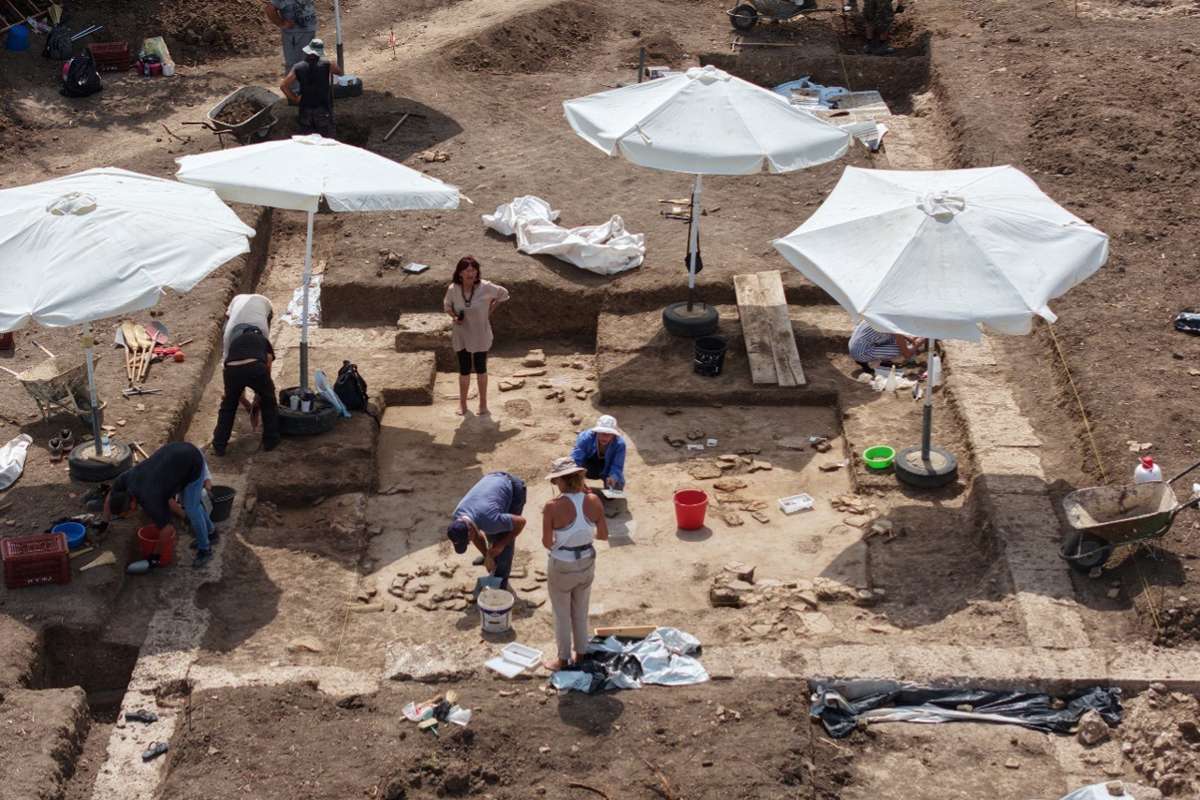
The gymnasium dates back to ancient Mieza, a town in the kingdom of Macedonia
Credit: Hellenic Ministry of Culture
NEED TO KNOW
- Greek officials said intricate mosaics link the newly excavated Mieza complex to Alexander the Great’s education under Aristotle
- The teaching complex was commissioned by Philip II for his son, according to ancient accounts
- Earlier excavations uncovered a wrestling ring, stadium and covered 200-meter running track at the site, and discoveries include styluses and coins
Archaeologists have unearthed new details of an ancient gymnasium in Mieza, a town in what was once the ancient Greek kingdom of Macedonia, where Aristotle is believed to have taught a teenage Alexander the Great.
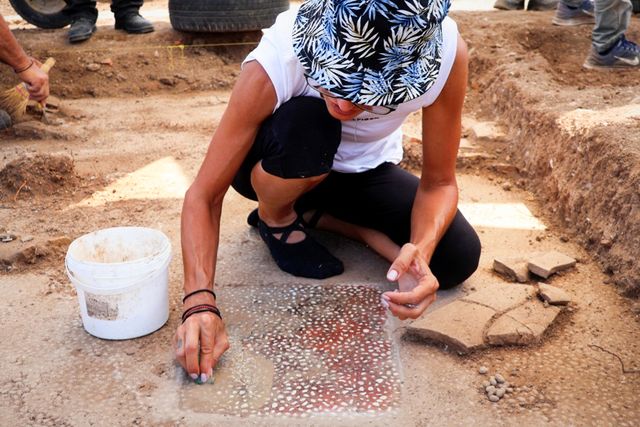
Greek officials announced the discovery of intricate mosaics indicating the structure to have been associated with Aristotle, Alexander the Great, and Alexander’s father, Philip II. Both father and son served as kings of Macedonia, with Alexander for his historic empire stretching from Greece to India.
The research project started in 2024, beginning with an excavation led by honorary curator of antiquities Dr. Angeliki Kottaridis and the Programmatic Agreement between the Ministry of Culture and the Municipality of Naoussa.
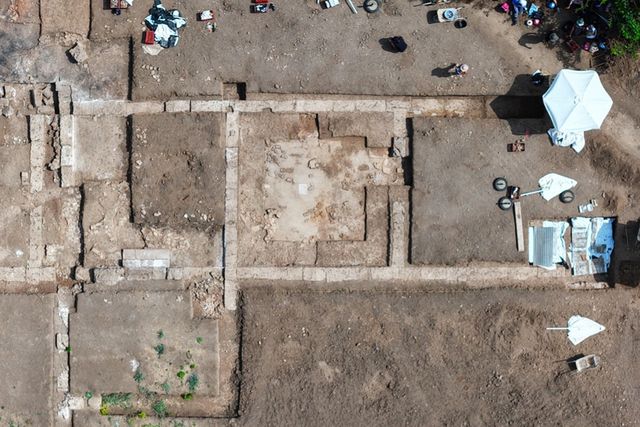
“A particularly important find is the large tripartite complex, covering an area of over 160 square kilometers [about 61 square miles] in the ‘Didaskaleio,’ with a central vestibule and two andronas – banquet halls,” the press release, translated from Greek to English, reads. “Mosaic floors have been preserved in both, while the raised pedestals for the couches confirm their use as banquet halls.”
The banquet halls each had 10 couches, which would have been intended to accommodate about 20 people, per the release. Other new discoveries include four styluses, ceramics, and coins that all could have been utilized in the school. Photos show the elaborate stone structures, with one image etched onto a wall appearing to depict a dog and other animals.
The exact details of the mosaics and their meanings have yet to be shared.
Credit: Hellenic Ministry of Culture
This is not the first time an excavation has been performed at the site—previous research found a wrestling ring, a stadium, arcades, and a xystus, or a covered, 200-meter-long running track protected from the elements, Smithsonian Magazine reported. The existence of the space has been known since the first century C.E., when Plutarch wrote in his biography The Life of Alexander that Philip II had the space built for his son.
Credit: Hellenic Ministry of Culture
Never miss a story — sign up for PEOPLE’s free daily newsletter to stay up-to-date on the best of what PEOPLE has to offer, from celebrity news to compelling human interest stories.
The latest research offers further insight into what the famous ancient Greek ruler’s day-to-day life and education were like. The newly excavated area is known in Greek as a “Didaskaleion,” or a “house of teaching.”
PEOPLE has reached out to the research team behind the excavation project.
Read the full article here