

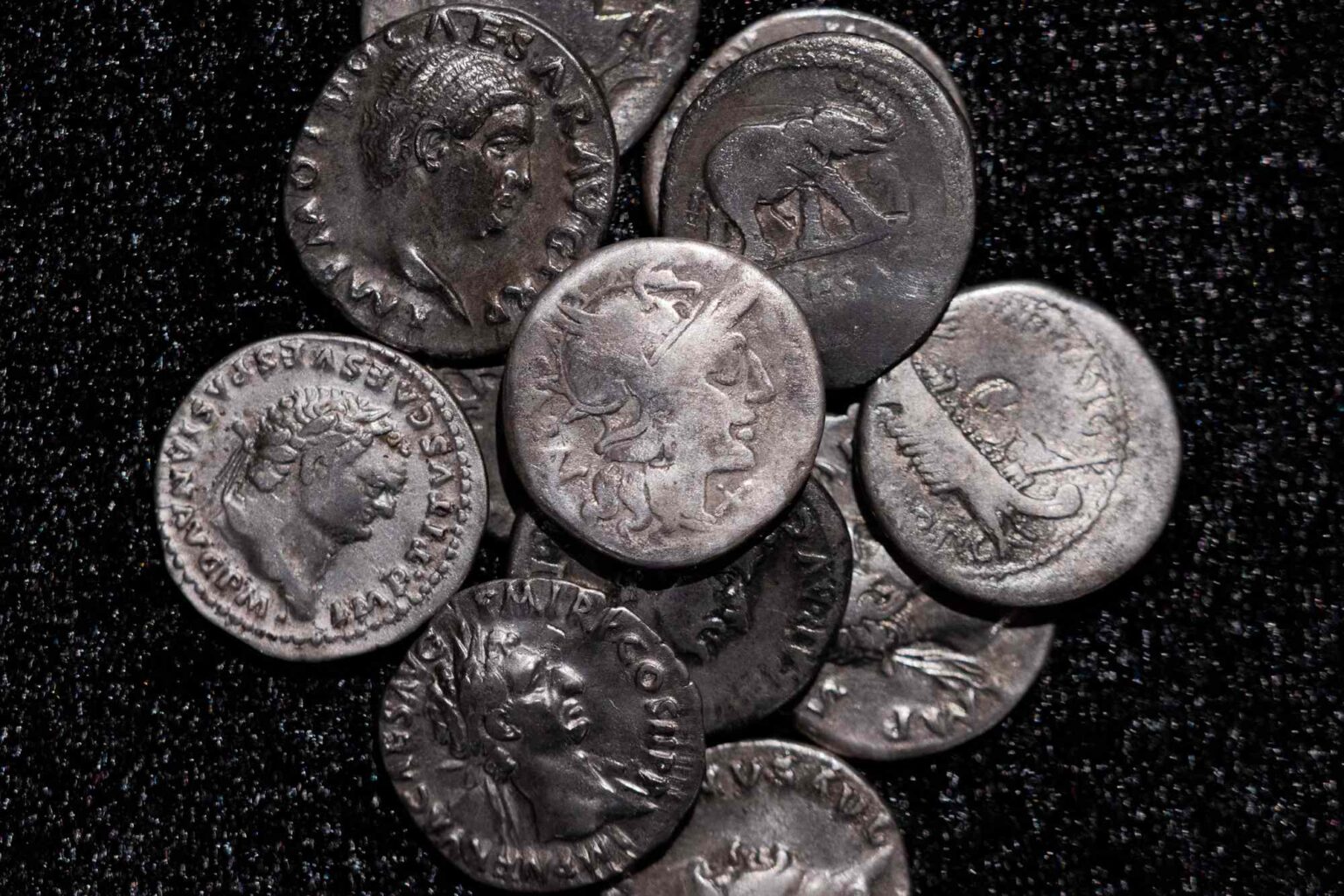
Oliver Reidl made the discovery in Western Germany
Credit: Rolf Vennenbernd/picture-alliance/dpa/AP
NEED TO KNOW
- An amateur archaeologist named Oliver Reidl discovered 934 Roman silver coins in Western Germany using a metal detector
- The coins, dating to Emperor Hadrian’s rule, may have been hidden for safekeeping in the second century A.D., researchers with LVR-LandesMuseum in Bonn, Germany
- Experts estimate the coins represent six years of savings for a Roman soldier at the time
An amateur archaeologist was walking through a field in Western Germany with a metal detector when he made a shocking discovery—a treasure trove of the largest quantity of ancient silver Roman coins found in German history.
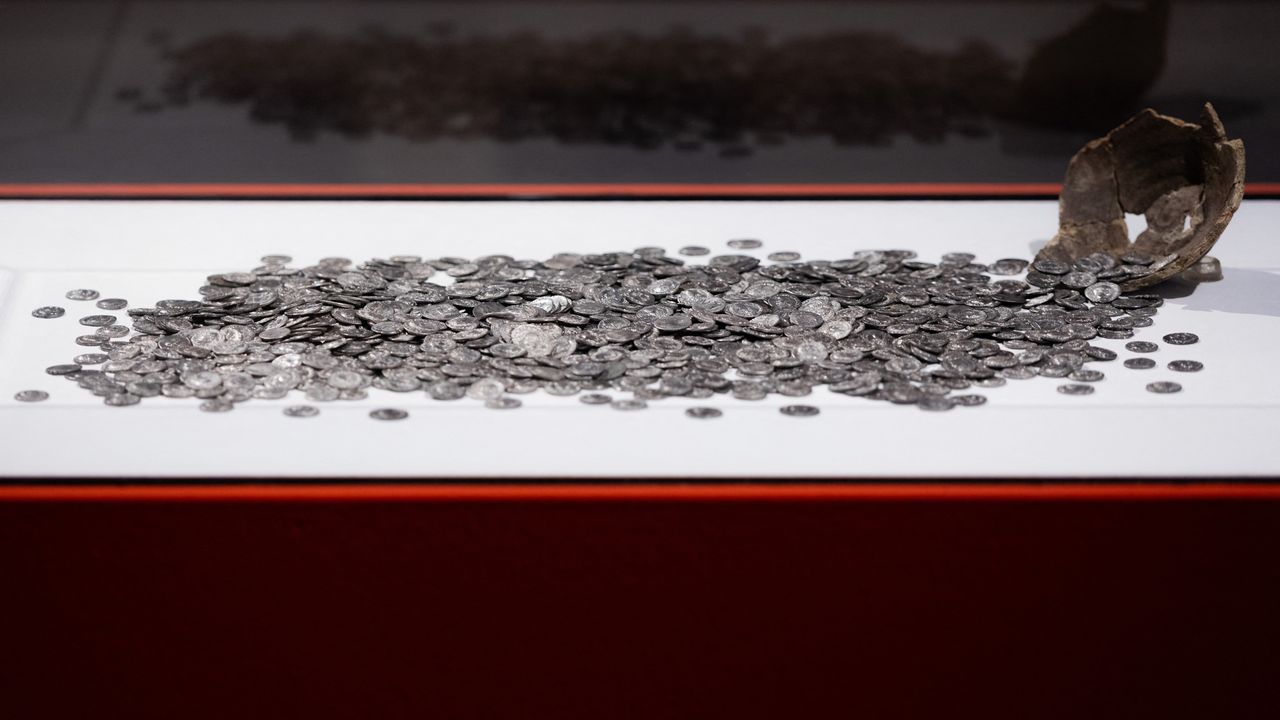
Oliver Reidl noticed his metal detector beeping uncontrollably and knew he had to call in the experts to begin a dig, the Associated Press reported. When a team of archaeologists arrived, they found what would later be identified as 934 Roman silver denarii dating back to the rule of Roman Emperor Hadrian. The area in which the coins were found was under Roman rule from 39 BC to AD 459.
Credit: Rolf Vennenbernd/picture-alliance/dpa/AP
“It was clear to me that there was something bigger buried here,” Reidl told the outlet of making the initial discovery in Wesseling, Germany, a year ago.
The round silver coins bearing the emperor’s profile were put on display at LVR-LandesMuseum in Bonn, Germany, on Tuesday, Sept. 22, German outlet DW and AP reported.
A spokesperson for the LVR Office for the Preservation of Archaeological Monuments in the Rhineland told AP that the department currently believes the coins were intentionally hidden during the second century A.D., nearly 2,000 years ago.
“Of course, we can only speculate about the motives, but it’s very likely that someone wanted to keep this money safe,” Erich Classen, state archaeologist and director of the office, told the outlet. “After all, banks didn’t exist back then.”
The pile of coins weighed roughly 6.8 pounds, AP reported.
While the reason the coins were stored remains a mystery, museum officials told AP that historical records point to a Roman soldier stashing his savings.
Never miss a story — sign up for PEOPLE’s free daily newsletter to stay up-to-date on the best of what PEOPLE has to offer, from celebrity news to compelling human interest stories.
“At that time, an ordinary soldier in the legion earned 300 denarii a year. However, about half of that was withheld for food and equipment,” Rahel Otte, a research associate at the archaeological office, told the outlet. She estimates that the amount of coins discovered equates to six years’ worth of savings.
PEOPLE has reached out to LVR-LandesMuseum.
Read the full article here