
NEED TO KNOW
- On Feb. 3, 1959, the face of modern music changed forever in one tragic moment with the simultaneous deaths of Buddy Holly, Ritchie Valens and The Big Bopper
- Later referred to as The Day the Music Died by Don McLean in his hit song “American Pie,” the 3 artists and pilot Roger Peterson crash-landed near Clear Lake, Iowa, while flying between locations on their Winter Dance Party tour
- As a whole, the death of Holly, Valens and The Big Bopper sent ripples through American pop culture at the time, and influenced the likes of Don McLean to create the timeless folk-rock track “American Pie”
On Feb. 3, 1959, the face of modern music changed forever in one tragic moment with the simultaneous deaths of Buddy Holly, Ritchie Valens and The Big Bopper.
Later referred to as The Day the Music Died by Don McLean in his hit song “American Pie,” the 3 artists and pilot Roger Peterson crash-landed near Clear Lake, Iowa, while flying between locations on their Winter Dance Party tour.
Due to a combination of the stark loss of the three artists at the height of their careers and the subsequent ubiquitous nature of McLean’s “American Pie,” the incident has been steeped in mysticism for nearly 70 years. But what exactly went on that day, and why is the incident — and its participants — so significant to the scope of American pop culture?
Michael Ochs Archives/Getty
Why are Buddy Holly, Ritchie Valens and The Big Bopper so significant?
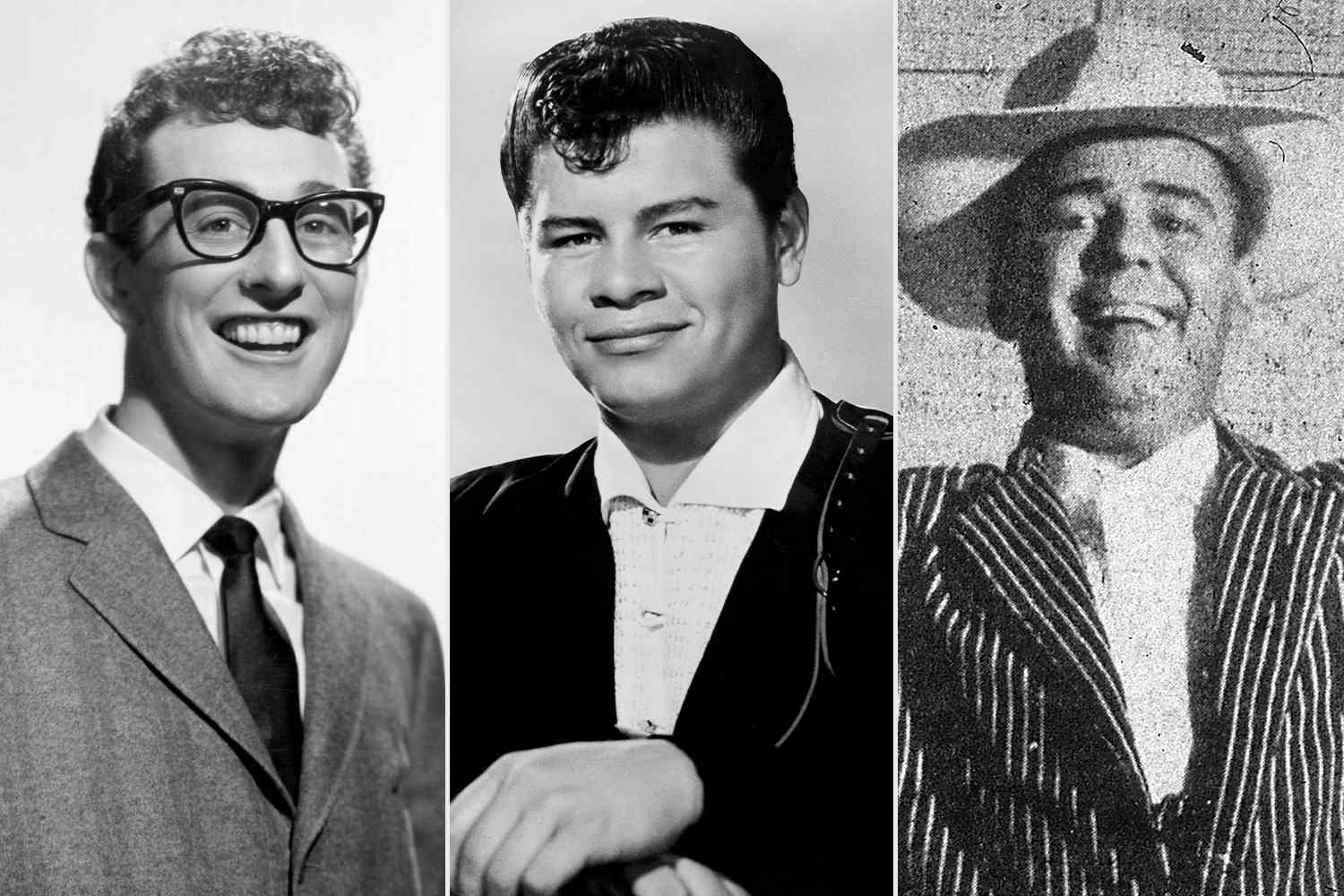
Holly, Valens and J.P. “The Big Bopper” Richardson each laid the framework for their respective lanes of music at a key time of cultural formulation in America.
For Holly, his pioneering work came by way of efforts to effectively modernize the genre of rock & roll, directly cited by the likes of The Beatles, Bob Dylan, The Rolling Stones and countless others as a core creative influence. During his time as a working musician, he was responsible for starting and supporting the careers of Waylon Jennings, The Crickets, Norman Petty, Sonny Curtis and Lou Giordano. Holly set the tone for what modern rock music would be, and also created a standard for singers penning their own lyrical content, which was a more atypical practice during his era.
Valens, though only 17 years old at the time of his death and having only been in the spotlight for less than a year, was a revolutionary barrier-breaker who effectively fused Mexican folk melodies, Afro-Cuban rhythms and American rock into a first-of-its-kind success story. Widely known for his hit track “La Bamba,” Valens broke down barriers by bringing Mexican folk ideologies to mainstream U.S. radio. “I mean the world, the universe knows ‘La Bamba,’ ” Connie Valens, Ritchie’s sister, told PEOPLE in 2025. “No matter where you go, people know ‘La Bamba,’ children sing ‘La Bamba.’ ”
The Big Bopper, in his own right, set the tone for what was possible with the concept of rock novelty and music that was largely driven by personality. Known for the hit track “Chantilly Lace,” The Big Bopper brought a playful edge to the world of rock music that threw mystery to the wayside in favor of making Richardson himself the central figure of his creative world. Loud, funny and talkative, The Big Bopper merged radio and rock stardom and became a larger-than-life entity with a true theatrical presence.
Never miss a story — sign up for PEOPLE’s free daily newsletter to stay up-to-date on the best of what PEOPLE has to offer, from celebrity news to compelling human interest stories.
Hulton Archive/Getty
How did Buddy Holly, Ritchie Valens and The Big Bopper die? A late night flight through winter weather is to blame
Fast-forward to February 1959, and Holly, Valens and The Big Bopper were in the throngs of the “Winter Dance Party” tour across the Midwest alongside Holly’s bandmates, Jennings, Tommy Allsup, and Carl Bunch, as well as supporting act Dion and the Belmonts. The collective of musicians was facing mounting frustrations with cases of the flu, coupled with the lengthy distances needing to be traversed in their tour bus, taking a toll on the group. As a result, Holly decided to charter a plane in Clear Lake, Iowa, to take a small group of his cohorts to their next gig, which was in Moorhead, Minn.
As the most widely-accepted recollection of events goes, The Big Bopper, who was dealing with a case of the flu, swapped places with Jennings so that the former could take the shorter trip on the plane. In a similar turn of fate, Allsup ultimately lost his chance to fly to Valens in a game of coin toss. The trio and Peterson subsequently boarded a 1947 Beechcraft Model 35 Bonanza airplane and headed off into poor winter weather conditions late at night. As a result of those combined factors, Peterson lost control of the aircraft and crashed in a cornfield in Cerro Gordo County, Iowa, killing everyone aboard.
The PEOPLE Puzzler crossword is here! How quickly can you solve it? Play now!
Michael Ochs Archives/Getty
According to Buddy Holly, A Biography by Ellis Amburn, it was a ham radio operator who overheard local authorities’ discussion of the crash site that shared the news with a local station, leading the story to be quickly picked up by tv, radio and news publications worldwide. The same biography, as well as The Buddy Holly Story by John Goldrosen, cites that Giordano, who was in New York at the time of the incident, called Holly’s wife, Maria Elena Holly, to break the news to her.
“He asked me if I had seen the television or listened to the radio yet,” the late “That’ll Be the Day” singer’s wife recalled, per Goldrosen’s book, “And when I told him I hadn’t, he said, ‘Don’t turn them on-I’m on my way over.’ But I turned on the radio. And my aunt came in just as I heard the news…”
Shortly after, she suffered a miscarriage of her and Holly’s child, with the cause being attributed to psychological trauma, per Time. The tragic moment set the precedent that extends to this day of next of kin being notified of an individual’s death before the news is broadcast elsewhere.
Michael Ochs Archives/Getty
After the tragic plane crash, The Day the Music Died became a cultural totem, and captivated new generations thanks to Don McLean
The after effects of the death of Holly, Valens and The Big Bopper cannot be understated. The shocking and immediate loss of three significant tastemakers of the era left a profound impact on music as a whole at the time. Jennings, stepping out from the shadow as Holly’s bassist, pivoted to country music and emerged as one of the most successful solo acts in the genre of all time, establishing a definitive legacy that carries into the modern day. Other Holly proteges, like Giordano, did not enjoy the same success after the death of the singer virtually eliminated the ecosystem that made his career possible overnight.
However, each of the deceased artist’s works remained lauded. In Holly’s case specifically, he remained cited as a key influence to many of the iconic “British invasion” bands like The Beatles and The Rolling Stones that emerged within just a few years of the crash’s occurrence.
Similarly, the moment that the three artists died profoundly impacted a 14-year-old paper boy in New York. McLean, who remembers the emotional impact the artists’ deaths had on his young mind, put pen to paper in 1971 to create his career-defining, timeless folk-rock hit “American Pie,” effectively immortalizing the tragic crash in song.
Through striking lyrics like “But February made me shiver / With every paper I’d deliver / Bad news on the doorstep / I couldn’t take one more step / I can’t remember if I cried / When I read about his widowed bride / But something touched me deep inside / The day the music died,” McLean painted a visceral image of the emotional toll the loss of the 3 icons took on him and the nation as a whole.
“I wanted a rock and roll song, and I wanted a great crazy chorus, and I wanted to tell this story of the turmoil in America and moving forward,” McLean remembered of writing “American Pie” in a 2025 conversation with PEOPLE. “It also had mystical and moral. We must remember morality, the morality of our country and the things that have happened. This was all in the song, and I was so excited about it. I wrote the bulk of the song in about two hours, but I thought about it for several months, and it took me 10 years to get to the point where that first little bit came out.”
As a whole, the death of Holly, Valens and The Big Bopper sent ripples through American pop culture at the time, striking a chord with listeners who deeply resonated with each artists’ groundbreaking recorded works. Though if the continued reverence for their music and retelling of their story goes to show anything, it’s that the memory of The Day the Music Died still echoes in the minds of many, and will continue to do so for years to come.
Read the full article here