

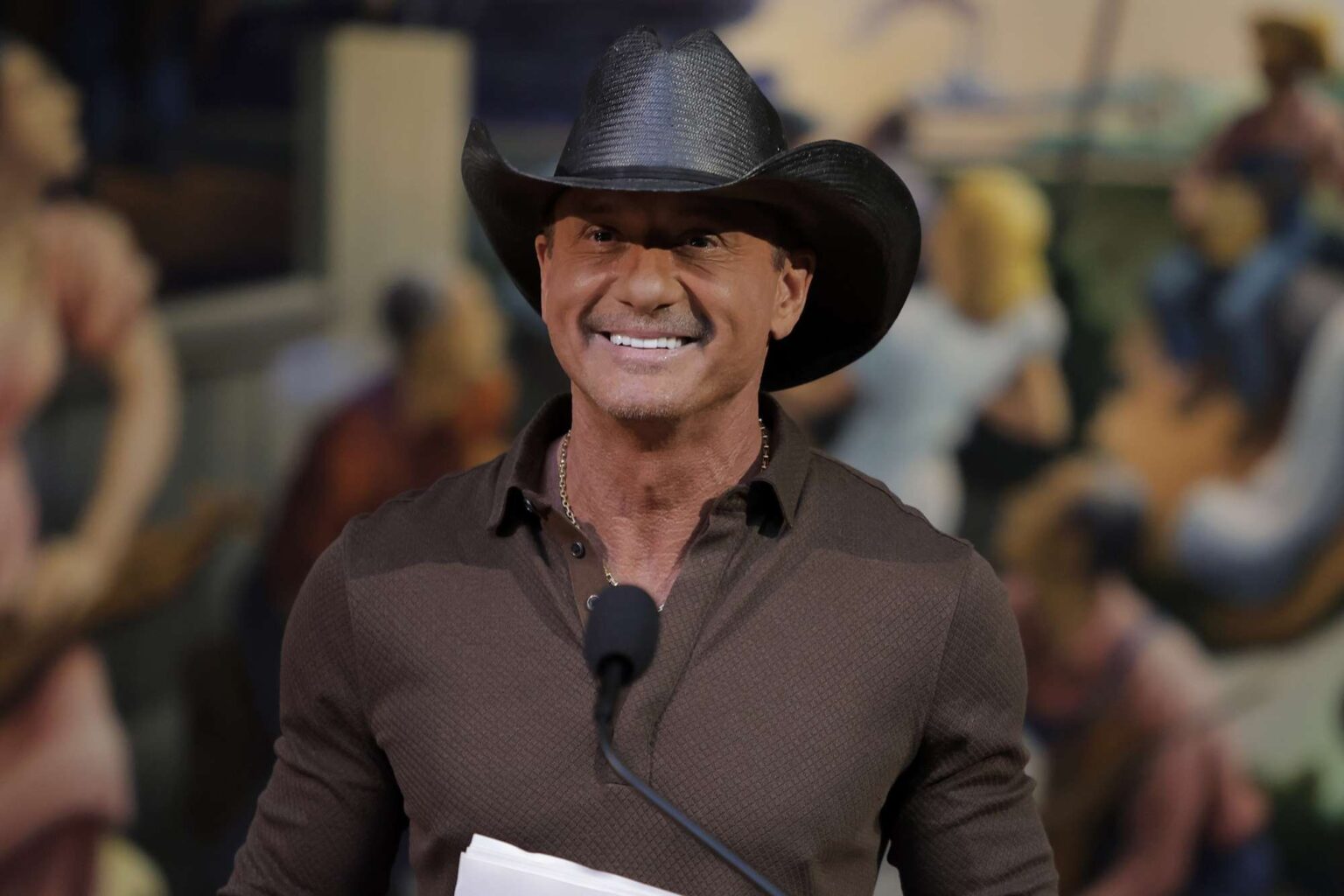
The country superstar joins songwriter Paul Overstreet and bluegrass legends the Stanley Brothers in the 2026 class
Credit: Tibrina Hobson/Getty
NEED TO KNOW
- Tim McGraw will be one of the newest members of the Country Music Hall of Fame
- “I don’t know if I ever thought it would happen in my lifetime,” the 58-year-old country superstar admits to PEOPLE
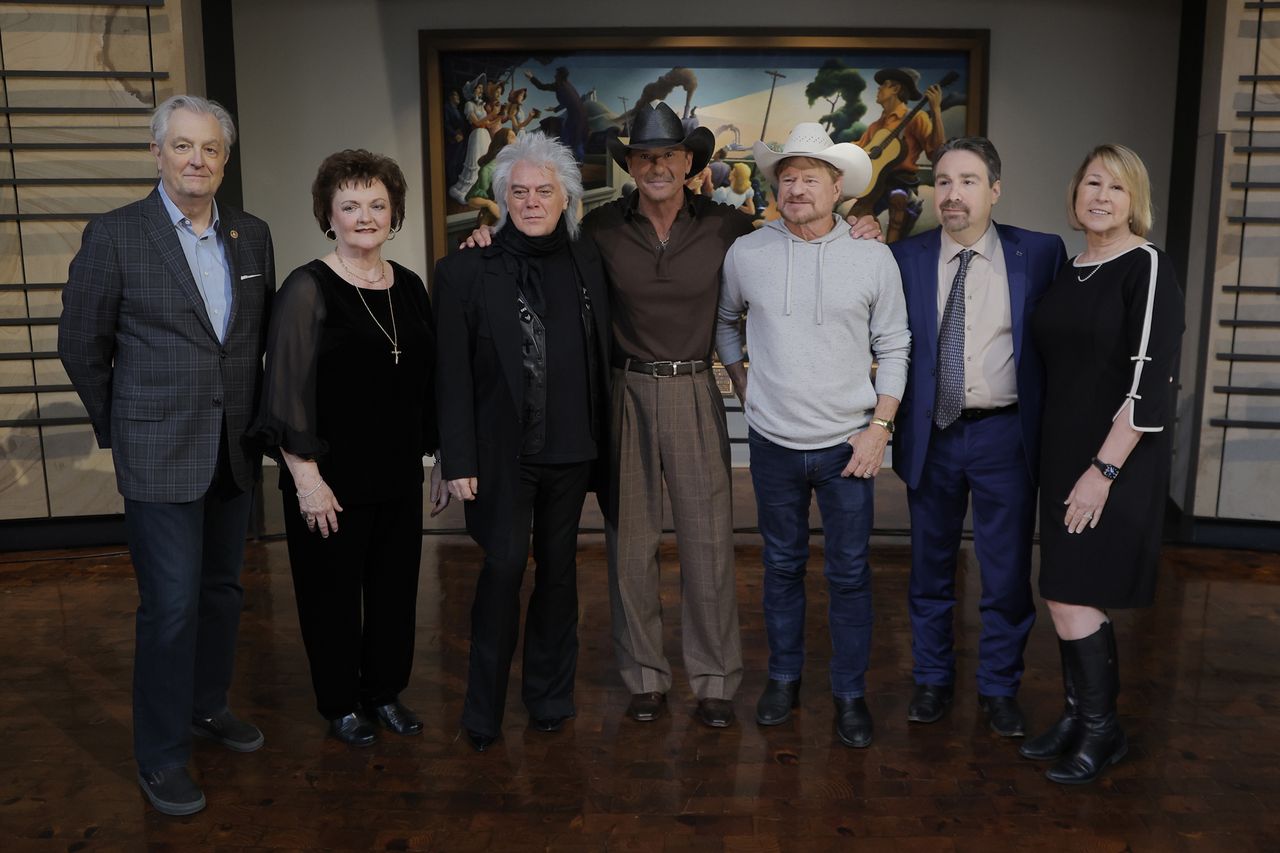
- Songwriter Paul Overstreet and legendary bluegrass duo the Stanley Brothers will also be inducted
Tim McGraw says he has allowed himself to imagine the day he would enter the Country Music Hall of Fame, but there was always a catch.
"I don’t know if I ever thought it would happen in my lifetime," the 58-year-old country superstar admits to PEOPLE.
But McGraw was alive, kicking — and soaking in every second of it — when his name was announced on Friday, along with hit-making songwriter Paul Overstreet and the legendary bluegrass duo, the Stanley Brothers, as the newest members of the Hall of Fame. Their induction this fall will bring membership to 161 in the hallowed hall, which is located in Nashville.
As delighted as McGraw was to receive country’s highest honor, he also was quick to say there’s still something else that would top it. “When I’m sitting out here,” he said, motioning to the center of the Hall of Fame Rotunda that had been filled with chairs for the announcement, “and Faith is at the podium. I can’t wait. That’ll be a bigger moment than this.”
Faith Hill, of course, is his wife, who can boast her own superstar solo career along with being one-half of the country powerhouse couple that everyone knows by their first names only. On Friday, she was sitting on the front row in the rotunda, soaking in the joy of her husband’s moment, and she received his lengthy, tight embrace the moment he had finished speaking. (The couple’s three adult daughters, Gracie, Maggie and Audrey, could not attend because of work commitments, but McGraw said they didn’t forget their dad’s big day: “I got tons of calls this morning and tons of love.”)
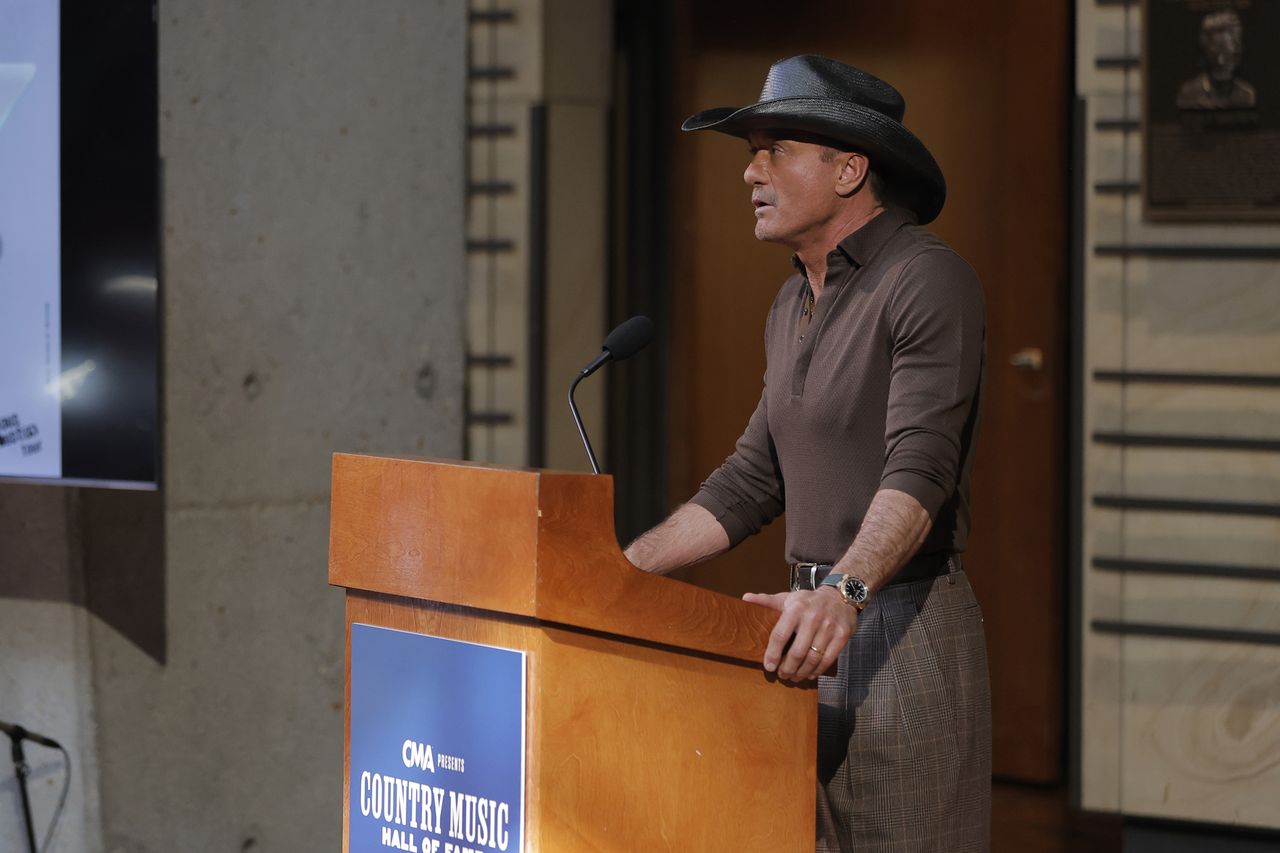
During his remarks, McGraw had to fight back tears and sometimes choked on his words, especially as he thanked Hill.
“I wouldn't be standing here today if it weren’t for great women in my life,” he told the crowd of about a hundred who’d gathered for the invitation-only event, “from my grandmother to my mom, my sisters, my daughters, and most of all, to my wife. Thank you, baby. I would not be standing here today if it wasn't for you, nor would I want to be."
Credit: Tibrina Hobson/Getty
Later, McGraw described how Hill has contributed to his success, starting with her role in his sobriety; he’s been open about her intervention in what he called “the hell-bent road I was headed down.” But he also noted that, over their almost 30-year marriage, each has made the other better: “We sort of pushed each other and elevated each other’s careers.”
McGraw is well acquainted with the heights: 49 No. 1 country singles (including such classics as “Live Like You Were Dying,” “Humble and Kind” and “I Like It, I Love It”), 106 million records sold worldwide, 13 studio albums to top the Billboard chart. His tours with Hill are among the highest grossing in country music history. Among the honors he’s received are 11 CMA Awards and three Grammys, and he’s also branched out to a memorable acting career.
He learned he was going into the Hall of Fame, he said, during what he thought was a business call with his management, which he took while walking on a New York City street.
“I’m listening with earpods, and they said, ‘Hey, Tim, somebody else is on the line,’” McGraw recalls.
Suddenly, he said, he found himself talking to Country Music Association CEO Sarah Trahern, though at first he couldn’t figure out why.
“She said something about the Hall of Fame, and I totally missed what she was saying,” he recalled. “It didn’t register at all, so I stopped walking and I said, ‘Hold on. Somebody’s gonna have to explain this to me because I don’t understand what you’re saying.' And she says, ‘Tim, we’re calling to tell you that you are going to be inducted into the Country Music Hall of Fame.’”
Hearing that, he said, “I just lost it right on the street in New York. I’m sure people were running in all directions from me when that happened. I was just sobbing on the street.”
A little over a month since that call, he said he’s still having a hard time absorbing the news. He was overwhelmed again on Friday when he walked into the rotunda for the announcement.
“I just had to stop in front of Merle Haggard’s plaque because he’s been my number one all time forever," McGraw said. "And to stand there just for a brief second, I gave myself a moment to think that I’m gonna be hanging forever in the same room with Merle Haggard.”
Credit: Tibrina Hobson/Getty
Entering the Hall of Fame is a capstone for any artist, but for McGraw, it’s hardly an ending.
“I always feel like I can get better, and I feel like I’ve got a lot of runway left in my career, in my life,” he said, “and so what this does for me is it makes me want to live up to it. It’s new juice, I guess. I’ve gotta prove I belong here now!”
No need, Tim — but his calendar is full of opportunities for him to keep his glow on, with a summer tour, new music to record and “some acting stuff” all in the works.
"It’s gonna be a busy couple of years,” McGraw said.
Paul Overstreet earned his spot in the Hall of Fame with country classics written over three decades, beginning with his first chart-topper, The Forester Sisters’ “I Fell in Love Again Last Night,” in 1985. The many other hits he’s co-written include The Judds’ “Love Can Build a Bridge,” Kenny Chesney's “She Thinks My Tractor’s Sexy,” Randy Travis' “Diggin’ Up Bones” and Blake Shelton's “Some Beach.”
Perhaps his most fruitful collaboration has been with Don Schlitz, who was inducted into the Hall of Fame in 2017; together they wrote Travis signature songs “Forever and Ever, Amen,” “On the Other Hand” and “Deeper Than the Holler,” as well as “When You Say Nothing at All,” which Keith Whitley took to No. 1 in 1988 and Alison Krauss placed in the top 5 in 1995. Overstreet also has enjoyed a successful career as a recording artist with such hits as “I Won’t Take Less Than Your Love,” recorded with Tanya Tucker and Paul Davis; “Daddy’s Come Around” and “Seein’ My Father in Me.”
Credit: Tibrina Hobson/Getty
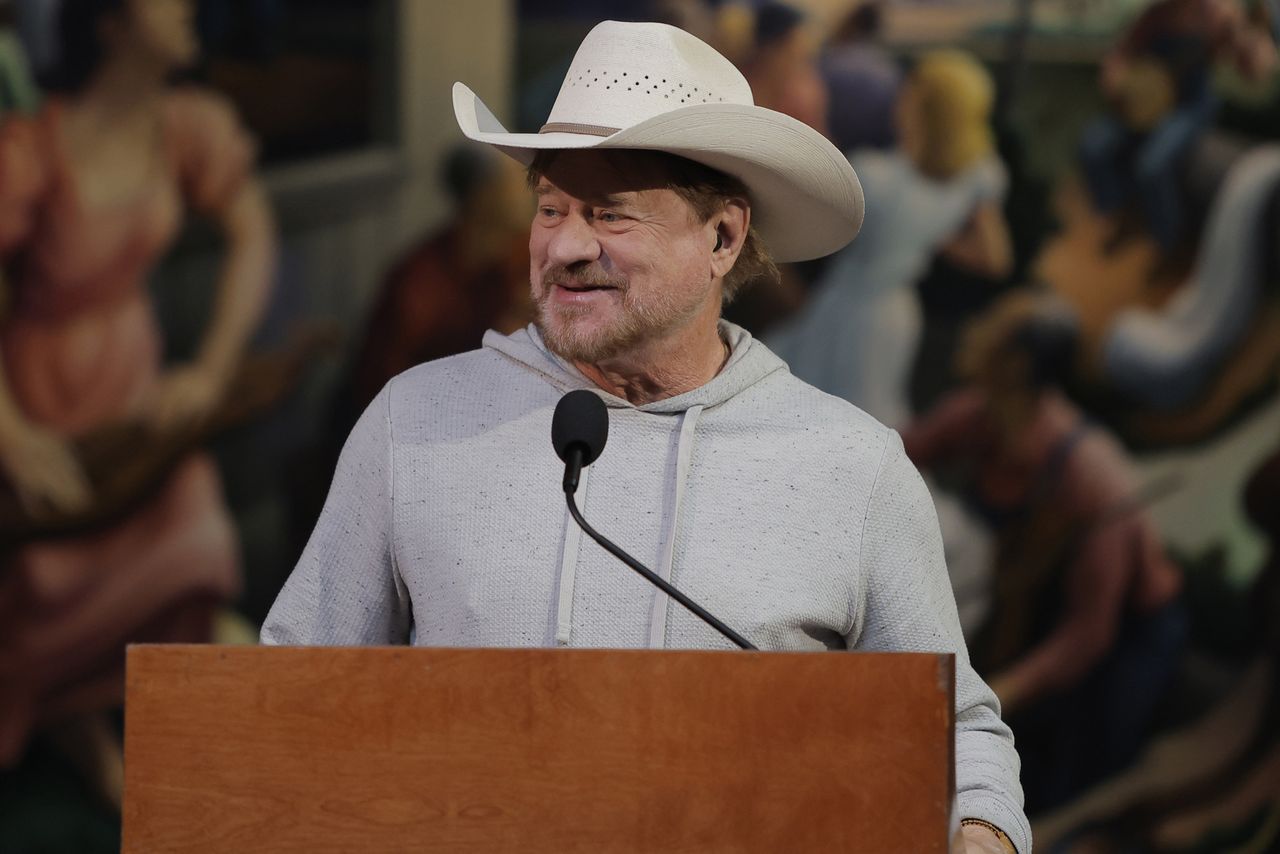
Despite his many appearances on the charts as a singer and songwriter, Overstreet, 71, told PEOPLE that he has measured his career not by numbers but by how his music has affected his listeners.
He quickly points to two of his favorites: “When I play ‘Seein’ My Father in Me,’ people will tell me later, ‘Boy, that tore me up,’ or some lady will say, ‘Man, you tore my husband up.’” He’s also found “When You Say Nothing at All” is a song that can magically silence a chatty room into submission. “There’s a spirit,” he said, “in that combination of the music and the words.”
The Stanley Brothers are among the most influential bluegrass acts, making a name for themselves with their celestial vocals and breakneck picking (Ralph on banjo and Carter on guitar) and their band, the Clinch Mountain Boys. Their 1959 duo, “I Am a Man of Constant Sorrow,” contributed to the 1960s folk revival and found new audiences decades later when it was featured in the Coen brothers’ film classic O Brother, Where Art Thou?
Carter Stanley died, at age 41, in 1966 of liver failure, and Ralph, two years younger, continued with the Clinch Mountain Boys. Over the years, he mentored new generations of bluegrass musicians, including Keith Whitley and Ricky Skaggs. His haunting a cappella performance of “O Death,” for O Brother, Where Art Thou?, earned him a Grammy for best male country vocal performance at age 75. He died of skin cancer in 2016 at age 89.
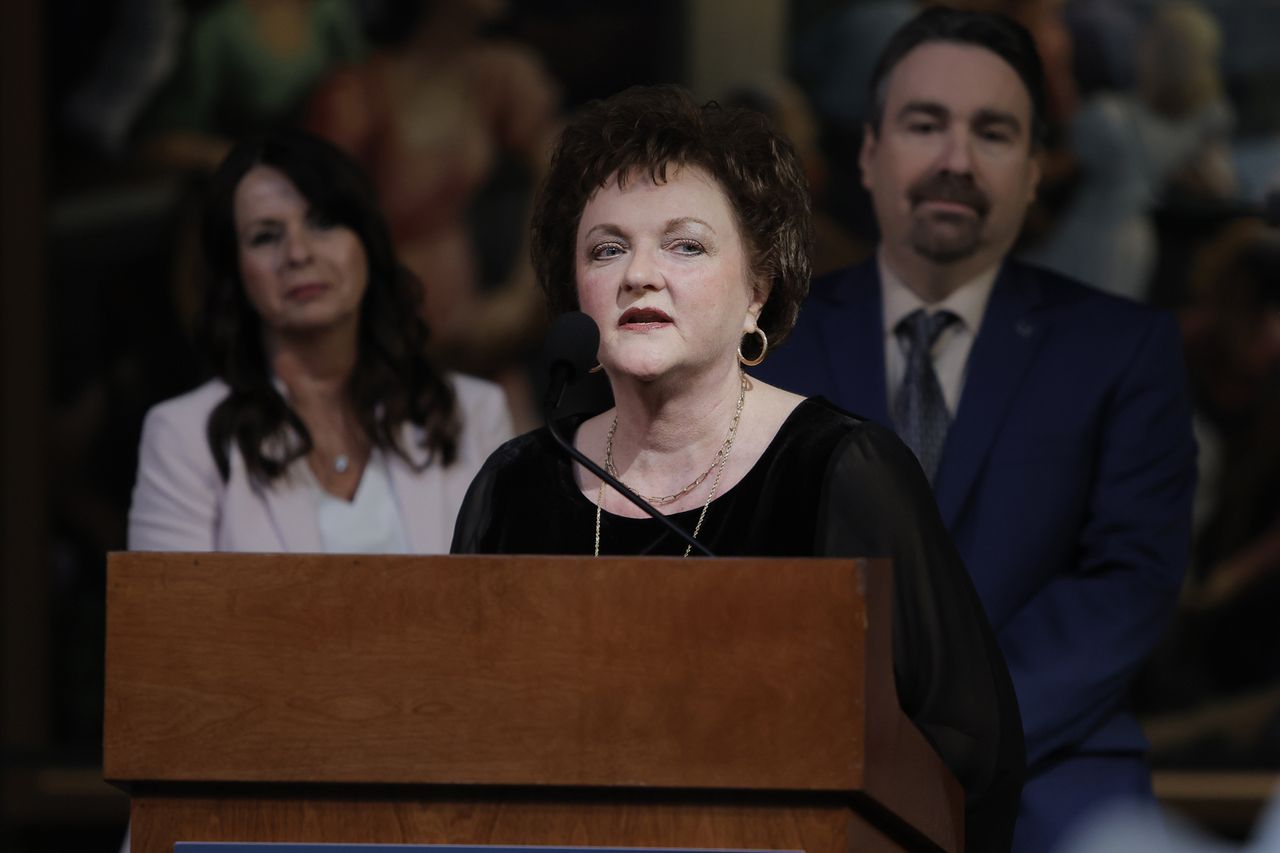
Three of the brothers’ children accepted the Hall of Fame honor on behalf of their fathers on Friday: Ralph’s son Ralph Stanley II, who now leads the Clinch Mountain Boys, and daughter Lisa Stanley Marshall; and Carter’s daughter, Jeanie Stanley.
Credit: Tibrina Hobson/Getty
In their remarks, they expressed just as much relief as excitement that this moment had finally arrived.
“It’s been a long time coming,” said Jeanie Stanley, who has had her own career as a bluegrass musician.
Her uncle, she said, talked openly about his desire to be in the Hall of Fame: “He told me that he wanted brother Carter and him to be inducted together, side by side, just like when they started out. He said, ‘That’s the one thing I don’t have that I want.’ You don’t know what I would give if he had lived to see this, both of ’em … The cotton gets no higher."
Read the full article here