


The actress writes about her scary health crisis from 20 years ago in her new memoir 'It's Never Too Late'
CBS via Getty; Chad Buchanan/Getty
NEED TO KNOW
- Marla Gibbs played Florence Johnston on The Jeffersons and Mary Jenkins on 227 in the ’70s and ’80s
- The actress suffered a brain aneurysm and stroke in 2006
- Her new memoir It’s Never Too Late hits bookshelves on Feb. 24
For longtime fans of Marla Gibbs, the star might seem as indomitable as they come. Over more than five decades in the spotlight, she has mastered the art of portraying seemingly indestructible women.
Take Florence, the housekeeper she played on The Jeffersons for all of the sitcom's 11 seasons (1975–85). Florence once got a scary, barking doberman to heel by simply saying, "Don't be no fool." And headstrong housewife Mary Jenkins on the 1985–90 sitcom 227 didn't take guff from anyone, especially her maneating neighbor Sandra, played to Emmy-winning perfection by Jackée Harry.
Elizabeth Sisson/NBC
But in Gibbs' new memoir It's Never Too Late (HarperCollins), featuring a foreword written by her 227 daughter Regina King, the 94-year-old actress reveals previously unseen sides of herself. She grew up in a dysfunctional household where she was raised, in part, by an emotionally abusive grandmother, was married for 18 years to a man who was both emotionally and physically abusive, and she didn't achieve widespread success as an actress until she was in her 40s.
"My work," she writes in It's Never Too Late, has been about making people happy, acting out stories in theaters and on soundstages."
In 2023, the mom of three — her eldest child and only daughter, Angela, 71, is also a successful actress — told PEOPLE about her driving force. "God is really the source. What people don’t realize is the challenges you go through are there to get you to your path. All the trauma I experienced, my marriage ending, that was all pushing me forward. Finally, when I made it out [to Los Angeles to pursue acting], I realized God had everything laid out for me, just waiting for me."
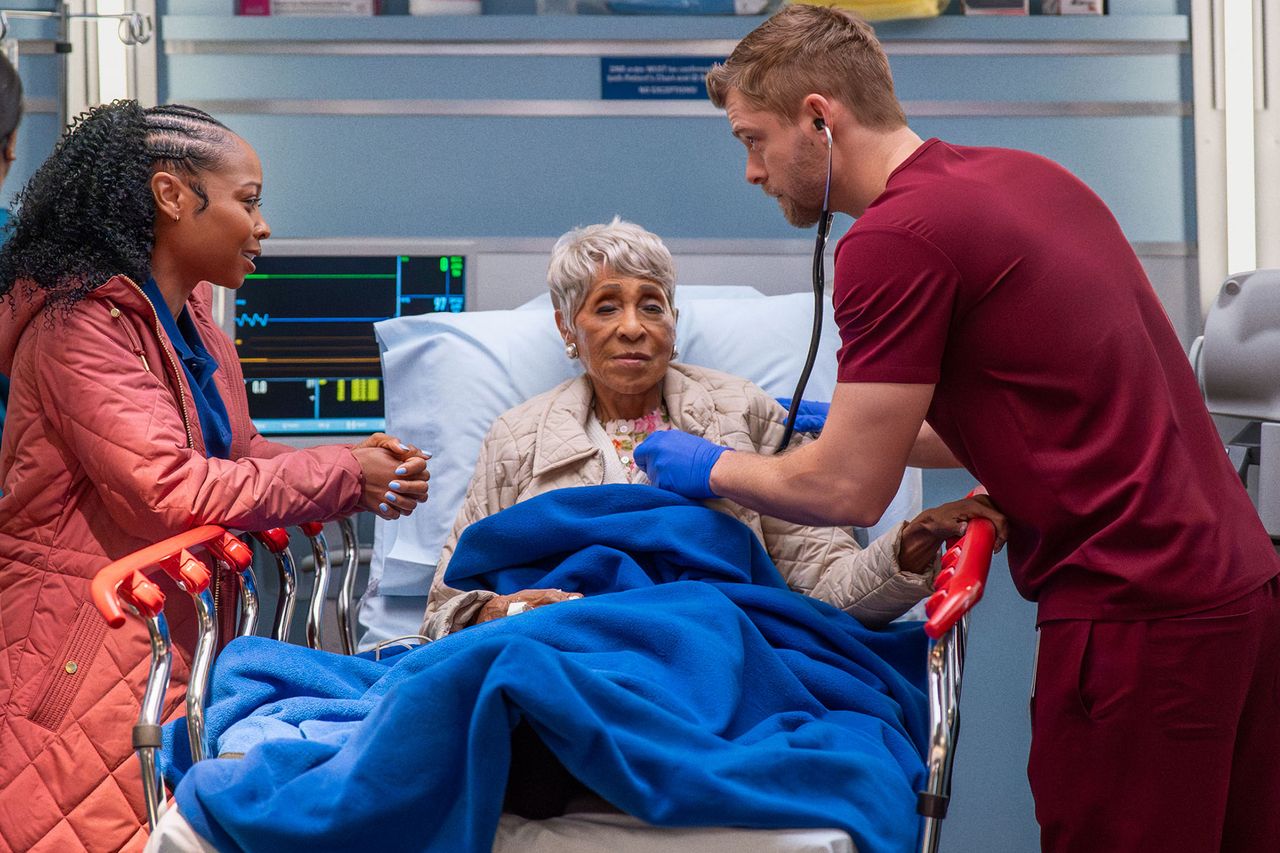
What was perhaps the greatest challenge of her life arrived in 2006 when she suffered a brain aneurysm followed by a stroke that nearly killed her. In an exclusive excerpt from her memoir, Gibbs, whose most recent TV roles have included guest spots on Grey's Anatomy, Will Trent and Chicago Med, reflects on her long journey to healing.

ABC/Liliane Lathan
Most people do not survive brain aneurysms, so I knew God still had plans for me. The more my strength and memory came back, the more trouble I got into. As I said before, I’m Gemini and my mind is always curious and always working … not always for the better.
For instance, I did not want to use the diapers while in rehab. I wanted to go to the bathroom on my own. The bathroom was right next to my bed so I could not understand why I needed help to get there. Every time they would leave the room, I would sneak out of the bed and end up on the floor.
My family finally had to ask them to tie me to the bed. I watched carefully as the nurses tied me up, so I could untie myself as soon as they left. And you guessed it … I'd be on the floor again. I said to myself, “Marla we gotta stop ending up down here, we’re not getting anywhere.” There was just something inside me that kept saying, “It ain't over.” But when I got home and looked at the old woman staring back at me in the mirror I said, “Maybe it is over.” Maybe my days as an actress are gone.

Mark Von Holden/Variety via Getty
Recovery was hard and it took every ounce of physical, mental and spiritual strength I could muster. I started questioning why it happened, especially when I still had so many plans for my life. I was getting ready to tour with my new jazz CD, but as they say, man makes plans and God laughs. This wasn’t funny though. I sank into a deep depression. I felt like maybe it was time for me to go. I didn’t want to get up. I didn’t want to do anything.
My family had a caretaker come and help. She would fix breakfast and help them clean, but it was just a difficult time. It’s humbling when you can’t do anything for yourself. My mind told me I could walk, but I couldn’t without help.

Amistad
I went to outpatient rehab for occupational, physical and speech therapy. As I progressed, they had me do a light jog across the room. My friend, Chrystal Carmichael from Detroit, came to help. The first day she got here, we went walking, and then I wanted to show her I could jog, and I fell and hit my head.
It was embarrassing but mostly it was disheartening. I complained to the rehab center, and the nurse said, “We didn’t tell you to jog at home!” I finally accepted where I was at in my recovery. I had always been an independent woman who juggled multiple projects. Now, I was totally dependent and could do nothing. Acceptance of where I was in my recovery was essential to me healing, and I think acceptance is key to healing in life.
Adapted from IT'S NEVER TOO LATE by Marla Gibbs, published by by Armistad, an imprint of Harper Collins. Copyright © 2026 by Marla Gibbs. All rights reserved.
It's Never Too Late publishes Feb. 24 by HarperCollins and will be available wherever books are sold.
We independently evaluate all recommended products and services. If you click on links we provide, we may receive compensation.
Read the full article here