

In his most raw interview ever, Spencer opens up to PEOPLE, sharing intimate memories and shocking insights into the life and death of his iconic sister
NEED TO KNOW
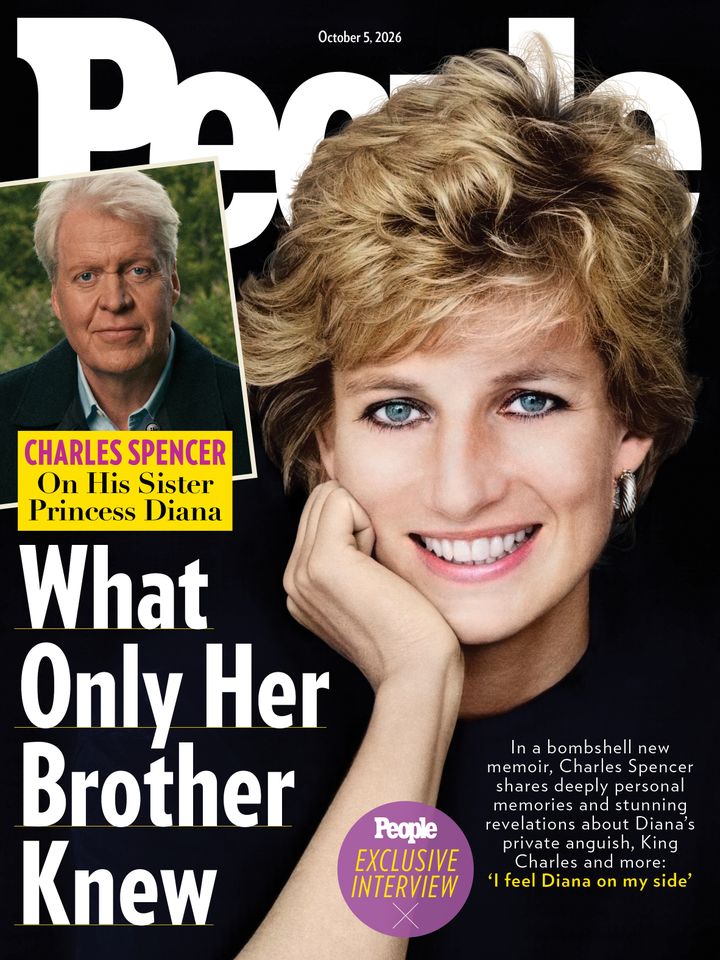
- Charles Spencer reflects on the extraordinary life and tragic death of his sister, Princess Diana — whom he affectionately called “Duch” — in an exclusive interview with PEOPLE
- His memoir, Swan Song: Diana, My Sister, explores her profound struggles, their bond and his tensions with former brother-in-law King Charles
- “People had no idea how much they were taking from her,” Spencer tells PEOPLE of his sister’s intensely scrutinized public persona
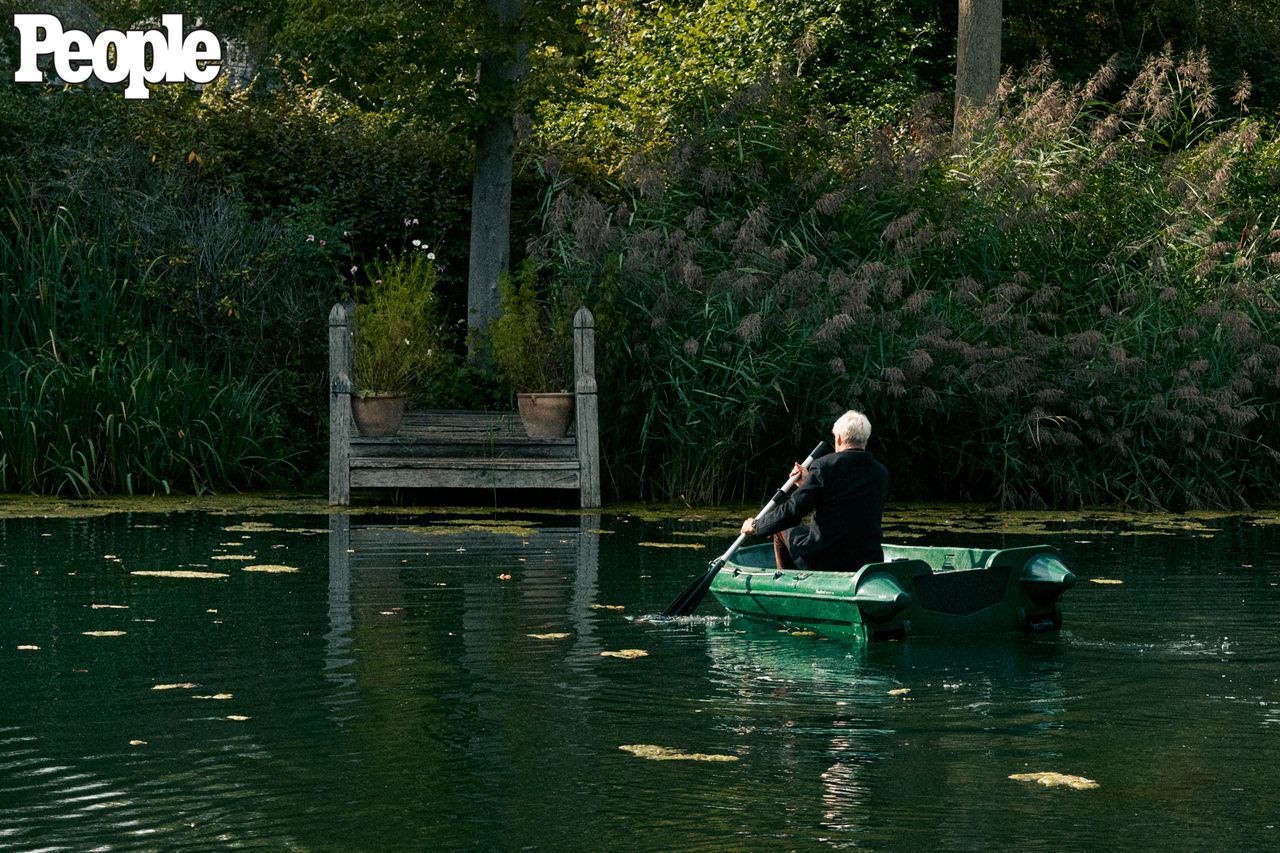
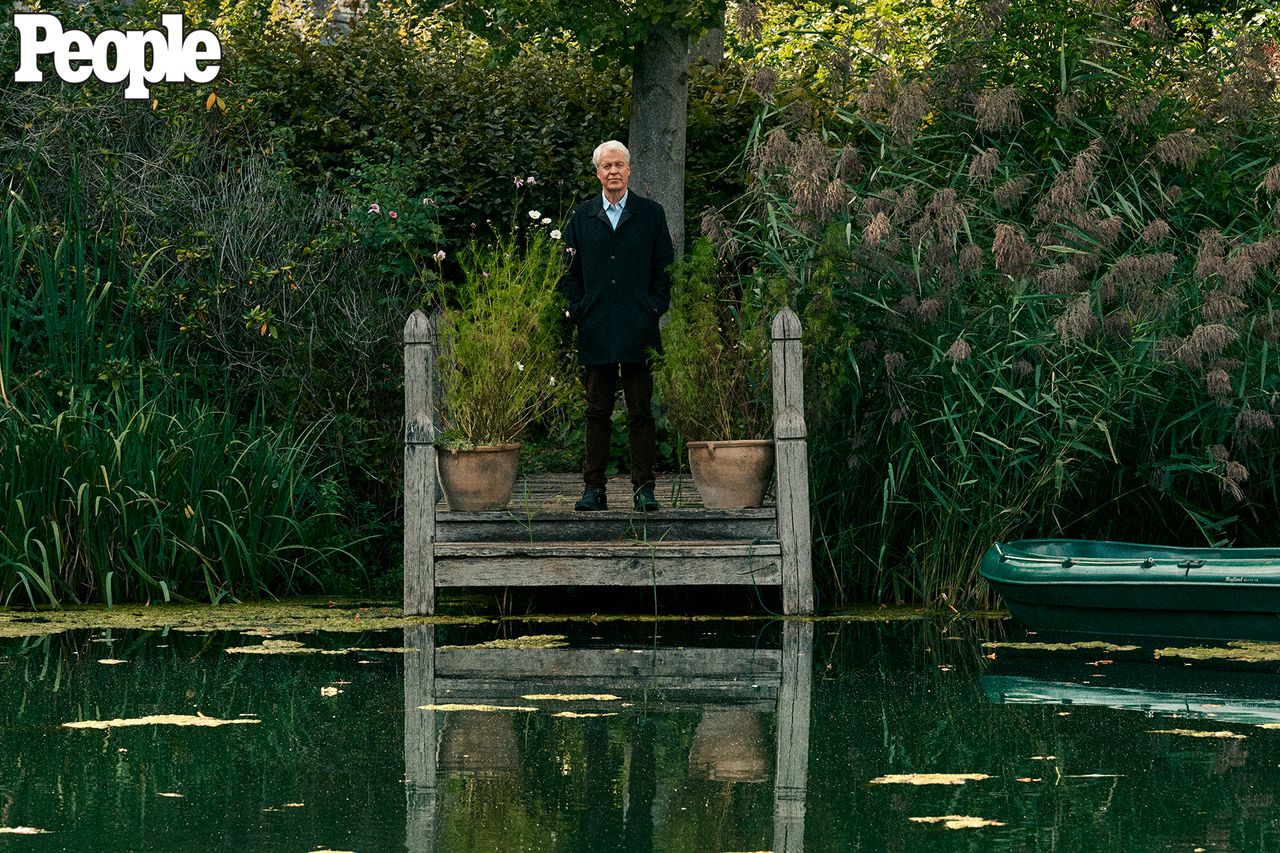
It’s a crisp fall day in Northamptonshire, England, the kind that tastes like sparkling cider and puts an extra spring in the step of even the local hares. As pheasants dart around the 13,000-acre Althorp estate, Charles Spencer carefully climbs into a small rowboat on the edge of Althorp’s historic Round Oval lake and paddles to the center island. There his sister Princess Diana—the most famous woman of the modern world—lies in a lead-lined casket buried deep within the verdant soil, permanently at rest beneath a canopy of towering trees.
“When I’m on the island, I feel sadness, of course, but also calm,” Spencer, 62, tells PEOPLE in this week’s exclusive cover story. “Diana’s graveside is a very calm and beautiful place. It’s a place for me to reflect on loss, naturally—but I love the natural beauty all around. She’s home.”
For a woman who seemed to belong to everyone—more than 2 billion people watched her funeral at Westminster Abbey on Sept. 6, 1997—the solitude of Diana’s final resting place is in stark contrast to the relentless pandemonium of her life. Just 19 when her engagement to then-Prince Charles, 32, catapulted her from gentlehearted kindergarten aide to glamorous superstar, she found little peace in the tumultuous 16 years that followed. When she died in a Paris car crash at age 36, she left a “shattered world of grief,” says Spencer, who quickly assumed the role of family spokesman. In his damning eulogy, he excoriated the royal family before the global court of opinion, pledging that Diana’s “blood family” would protect her sons, Prince William, then 15, and Prince Harry, 12.
Credit: Matt Holyoak
The Charles Spencer of that day—the one who needed to “punch the air” from his diaphragm to deliver his final choked words from Westminster Abbey’s pulpit—is in many ways the same man today. His blockbuster new memoir, Swan Song: Diana, My Sister (out Sept. 22), finds his unflinching eye—the same cornflower blue as Diana’s—once again trained on the royal family, in particular the now-King Charles, 77. Drawing upon his meticulous diaries through the years, Spencer depicts a petulant Charles whose “giddy” reaction to Diana’s death was one of “a lottery winner.” In response to the memoir, Buckingham Palace issued a rare statement of rebuttal, saying, “While we do not comment on books as a matter of principle, His Majesty is mindful that the pain of fraternal grief can cloud reason, affect judgment and color memory in ways others do not recognize, even many years after such a loss.”
Credit: Matt Holyoak
But if Spencer the score-settler remains unsoftened by age—something he attributes, in part, to the justice sensitivity often associated with ADHD, a diagnosis he received late in life—in other ways, he is unrecognizable from the livid young man of Diana’s funeral. Still a lanky figure at 6’3”—Diana, he notes wryly, persisted in calling him her “little brother”—he is more contemplative than in previous years. A father of seven and grandfather of one who is now married to his fourth wife, Norwegian academic Cat, 44, the author and historian is reflecting on his own mortality. “Without wanting to sound melodramatic, both of my parents died in their 60s, and I think we measure our lives against those markers,” he says.
Credit: Matt Holyoak
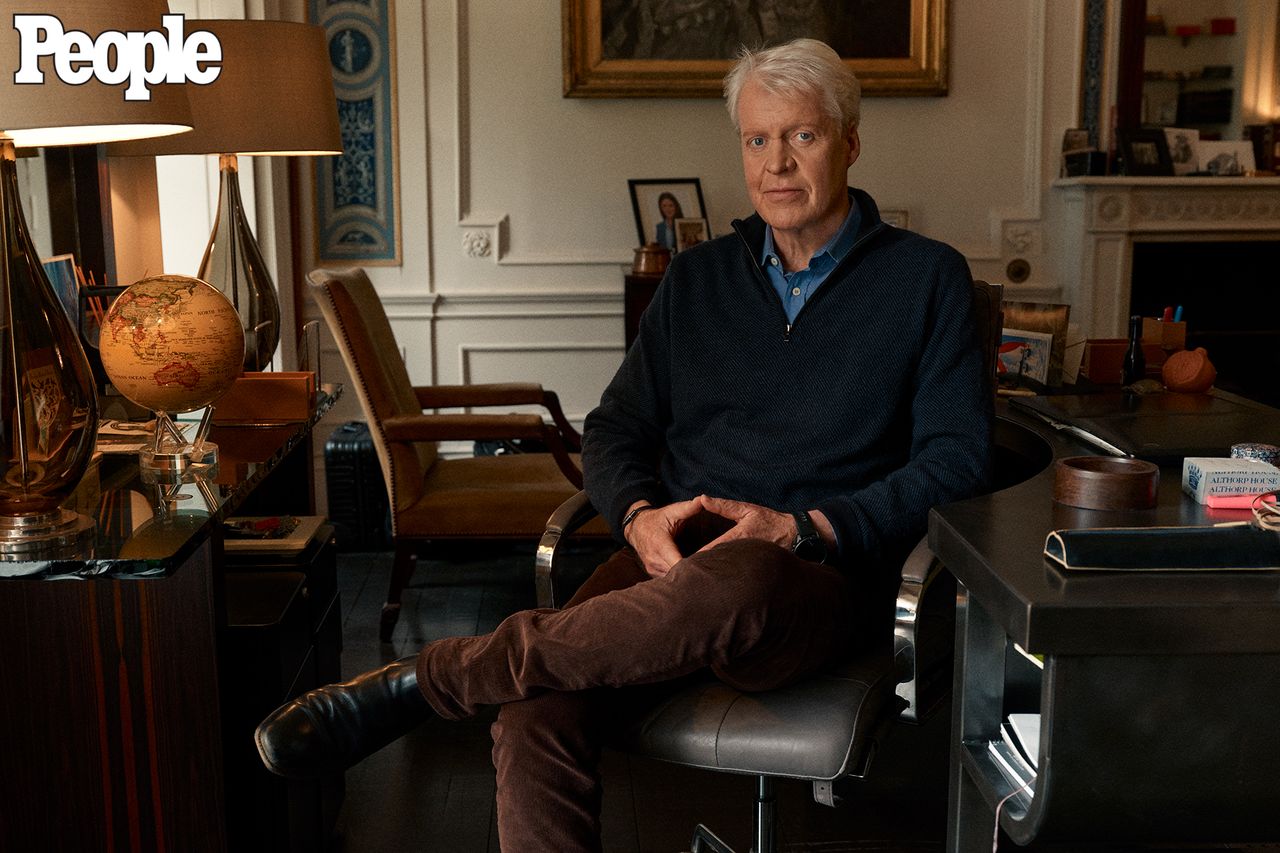
During an expansive interview in an Althorp sitting room, under the impassive gaze of his ancestors’ portraits, Spencer speaks with PEOPLE about the sister he called “Duch.” (She, in turn, called him “Carlos.”) “This book, in my view, is something she would like,” he says of Diana. “She always loved it when I paid compliments, and this is 350 pages of compliments.” What’s more, he adds, “I think this does give me the opportunity to lay certain myths to rest.”
One of the “myths” your seek to dispel in the book is that Diana had an unhappy childhood.
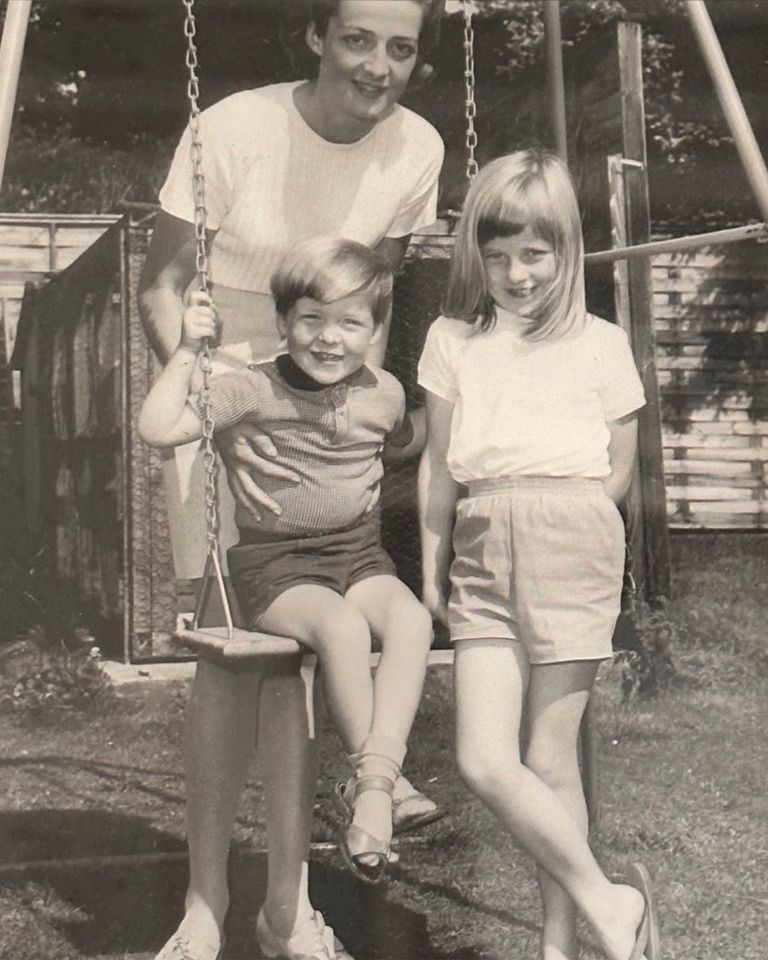
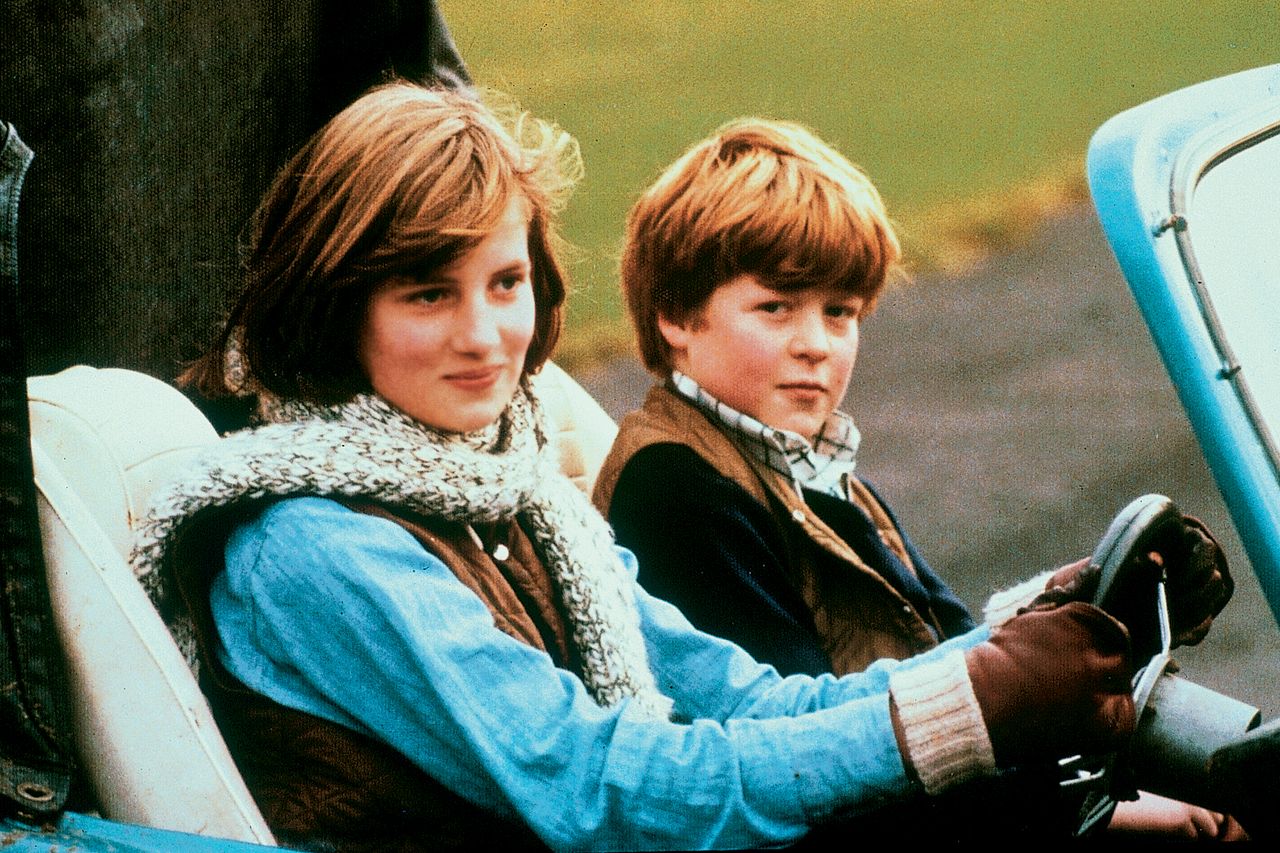
The childhood I remember us sharing was a really happy one. Of course, there was the blight of my mother [Frances] leaving home, but my father [John] was a really caring father and made the house really joyful.
Credit: The Spencer Family
I checked it with people who remembered it. We had a really lovely nanny called Sally and . . . she remembered Diana as this very happy little girl. So maybe there was stuff going on inside that was more personal than she was processing, but at the time I think we seemed very happy.
You write that your father [who died at age 68 in 1992] was likely depressed after your mother left.
He tried to shield that as much as possible from us. I could walk past his study, see him slumped in his chair looking out the window and realize he wasn’t happy. But when he was around us, he was really a very, very warm and loving father. His face lit up. So yeah, I think he came from a family background and an age group, which certainly in England, people wouldn’t have gone for [therapy]. He would have thought that he was admitting to some form of insanity.
Credit: The Spencer Family
Your family was intertwined with the royals even before Diana met Charles. You write that your father once had feelings for Queen Elizabeth, prior to her marriage to Prince Philip.
My father would never talk about it, but. . . back in his youth, he was a really good-looking young army officer and working close to the royal family, and some connection was felt on both sides, I believe. And then my father was told by Lord Mountbatten, who was Prince Philip’s uncle, “ What on earth do you think you’re doing? You’re not suitable.” And was told to disappear. It broke his heart at the time as a young man in his 20s.
Your parents, John and Frances, both struggled after the death of their third child, John, in 1960, who was born with 12 fingers and toes and died the same day. That tragedy echoed through the generations.
Would a son as the third child have meant that maybe Diana wouldn’t have been born? It was an extraordinary moment in the family, this longed-for little boy, because it mattered so much back then to have a son to take over the family name. The devastation of John’s death resonated and probably ruptured [my parents’] marriage deep down.
Credit: Matt Holyoak
Grief is, of course, a strong theme in the book. But you also write about the apparent absence of it, particularly when you spoke with then-Prince Charles immediately after the news of Diana’s death.
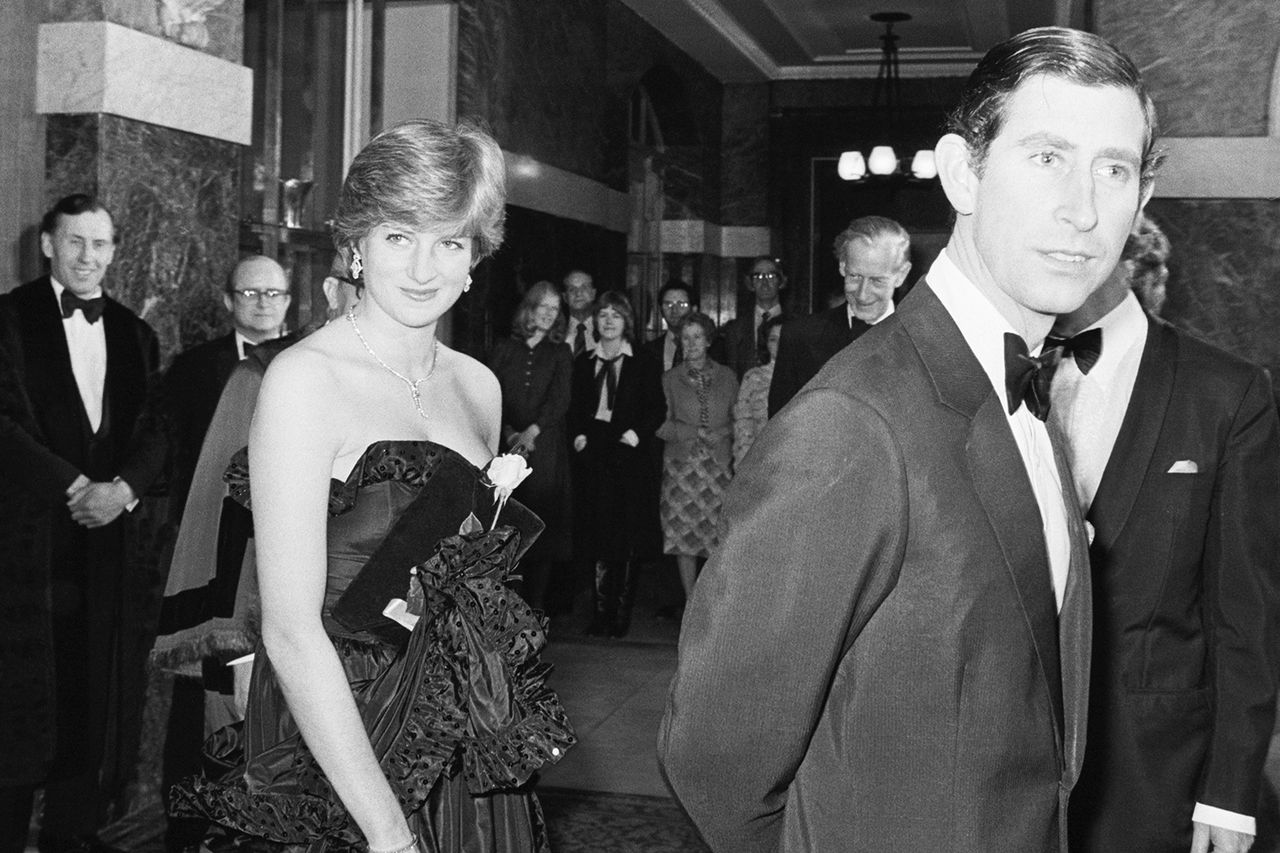
I’d known Diana had died for a few hours, and I was sort of rushing around the house. I had four young children. It was just me and them under the roof and I was trying to work out everything, really, what to do, how to get back to England, et cetera, because I was living in South Africa. And then he called, and yeah, I’m sorry to say, he just sounded really giddy. And I know it’s unfortunate, but that’s how it struck me, and it seemed to me so incredibly bizarre at the time. And I can only speculate why. Maybe he felt that now he could eventually marry the woman who he was in love with [Camilla Parker Bowles, whom he later wed in 2005], but that’s me speculating. I’ve heard, I don’t watch The Crown, but I’ve heard that in The Crown, for instance, [Charles] is sort of knocked sideways by the news of Diana’s death, and that’s just not true.
Credit: Getty
Part of my duty, I am a historian, is to lay down facts, and that’s what I’m doing. There’s no viciousness. I’m not resentful or bitter or any of those things. It’s just a straightforward fact that that was the case, and I think that’s important for people to know. And it was devastating at the time, actually, but there was so much going on that day that I just thought, “This is really weird,” and that’s how I still look back on it.
Did you have any fear about writing so candidly about someone who is now The King?
Not really, no. I respect the institution of the Crown, and I know that most people in Britain do, especially the older generation, but when I’m writing this book, I’m not interested in who people are in terms of status. I’m looking at them as people. And the central person, the only one that really matters, is Diana.
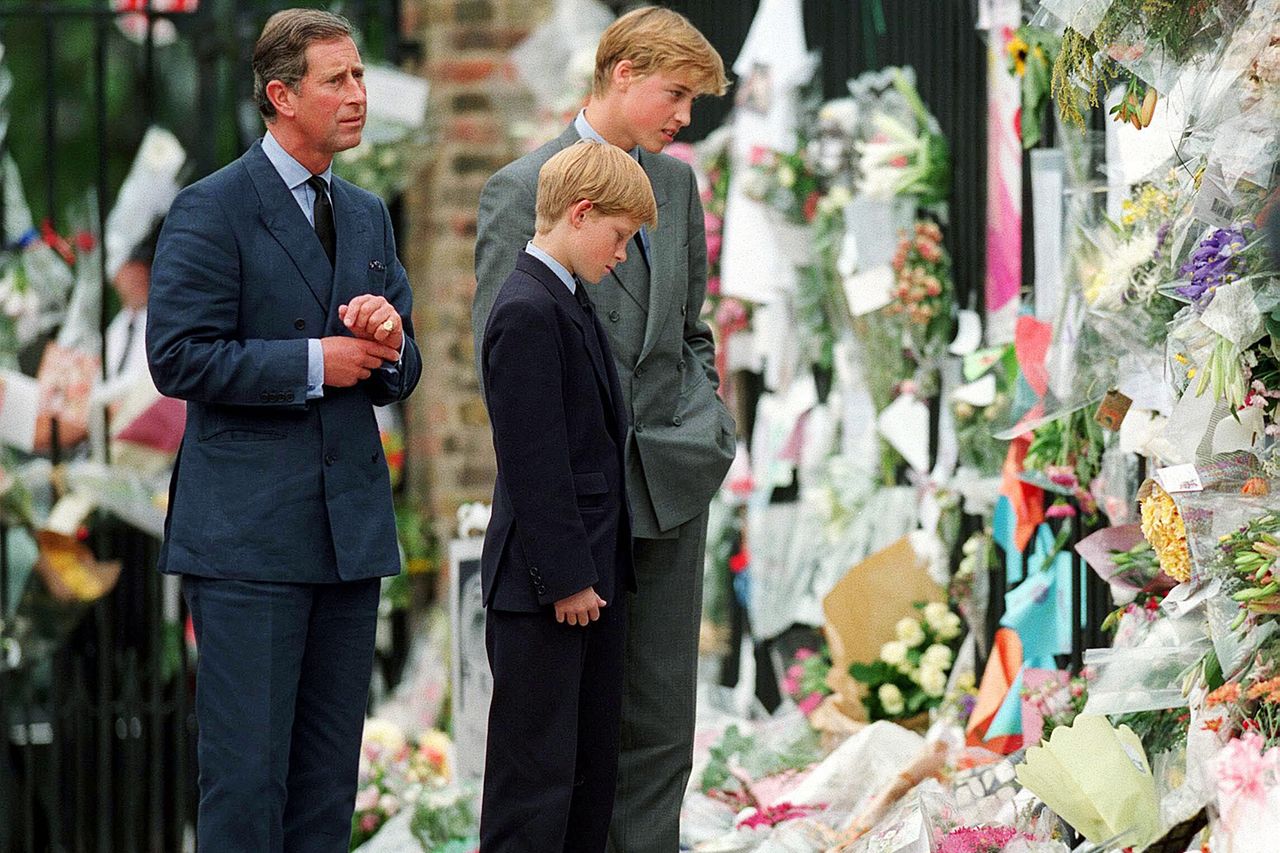
It was very important actually in the book to explain why things turned out as they did. And that conversation [with Charles after Diana’s death] was a problem, and then a later one was more of a problem for me, because I was the sort of liaison of my family with the funeral arrangements. And then I got a call from somebody working at Buckingham Palace, who at the end of our conversation said, “Oh, and the two young princes [William, then 15, and Harry, then 12] will be walking behind their mother’s coffin.” And I said, “Well, no, they won’t.” Just instant, because of course it’s monstrous as a concept, it just doesn’t make sense. And I also had the confidence, because I knew Diana had left me as their guardians. And yes, being a guardian has no legal status when the other parent is alive, but I thought she wants me to stand up for them.
Credit: Anwar Hussein/WireImage
And then this flustered man said, “Well, the Prince of Wales wants it.” And I said, “Well, Diana wouldn’t want it, and that’s all I care about.” And so, he sort of hung up and went on with his life. And then my telephone rang again, and I thought, “Oh, I don’t know what that is.” Picked it up, it’s a dedicated line, which nobody has the number of, and it was Prince Charles, and he said, “I gather you’ve got a problem with the funeral.” And I was thinking, “Not really.” And I said, “No, I think it’s all going okay.” Then he said, “But you don’t want William and Harry to walk behind the coffin?” And I said, “But of course not, sir. Diana wouldn’t have wanted it.” And then he said, “Well, I walked behind [my uncle] Lord Mountbatten’s coffin.” And I said, “Yes, but you were 30 and he wasn’t your mother.” Well, then he went nuts, really, and so had a good rant, and I just held the phone like that and let it go on.
Then he stopped, and then I thought, “Oh, he’s going to pull himself together.” And then he said, “We’ll forget her soon enough.” And I found that really astonishing and so awful, and I just said to him, “I cannot believe you said that,” and hung up on him. So that sets the scene really for why I wrote the eulogy as I did, because there’s a line in there where I didn’t want William and Harry immersed in royal tradition to lose their souls, really, which Diana was nurturing. So I thought it was important to include that interchange with the then-Prince Charles, now King, because it sets the tone of really why I spoke like that, and also why I’m writing this book.
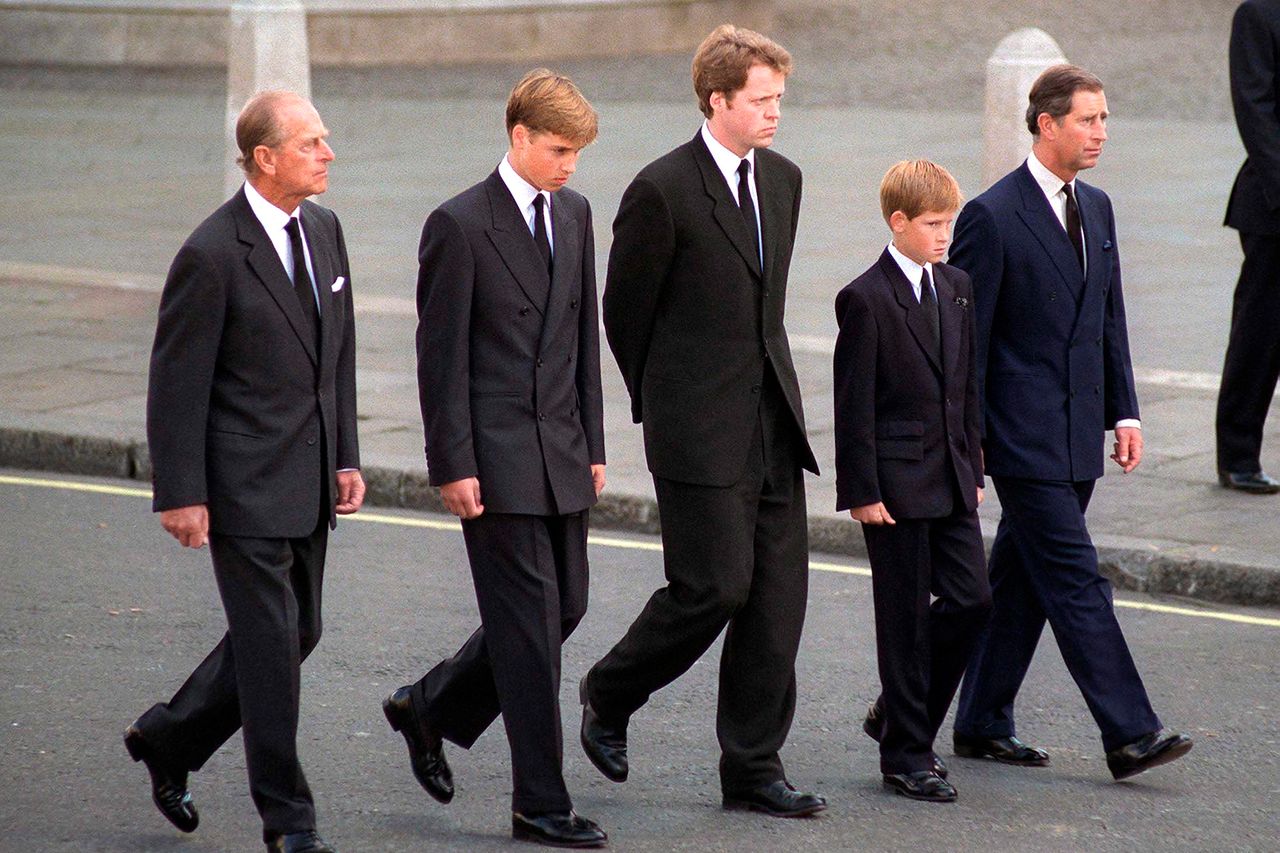
What do you remember of the walk behind Diana’s casket?
I was told that [William and Harry] had decided that they wanted to. I remember saying, “Well, as long as they haven’t been dragooned into it.” Obviously they shouldn’t have walked. Nobody now can possibly think that was the right thing to do.
Credit: Tim Graham Photo Library via Getty
I just remember Harry was so small, this tiny dot of a boy walking in public behind his mother’s coffin. It’s monstrous. It was awful at the time, and there was so little I could do. And I remember there was one bit where I thought, “Right, we’re halfway through or something through this terrible, long walk.” And we went under one of those magnificent arches in London, and I gave Harry a hug, and I said, “You’re doing so well.” And we carried on.
Prince Philip took charge, quite rightly. He was brilliant that day. I mean, he’s a controversial figure, but he did really well that day. He was a military man and he said, “Just look straight ahead. You must not look left and right.” And we did, but that made for a very bizarre experience, actually, because you could feel this tsunami of grief coming in from both sides and the crowd reacting differently as we walked along. So you’d walk through maybe 100 steps and you’d just hear sobbing. And then another stretch where people would be shouting out really lovely but sad things to William and Harry, or about Diana. And it’s very hard to feel that amount of emotion and not to look at it. So I used to have lots of nightmares about that, because it was just too much, too overwhelming for a brain to take that in. So goodness knows what it was like for two young boys.
You say you feel guilty for not stopping William and Harry from walking in the procession. Is that something you have shared with them?
Yeah, I have actually. And about 10 years ago, well, on the 20th anniversary, we sort of chatted a bit about it, but I don’t think there’s anyone alive who thinks that was a good idea now.
Where does your relationship with King Charles stand today? You’re the uncle of his sons.
Yeah, that’s a point. I am. I see him as an ex-brother-in-law, and I’m sure anyone who has had divorce in the family will understand that people who were closer in your life when the parties were married are less close. I have really nothing to do with him at all now. Both his sons are middle-aged. They may not like that description, but they are. And I don’t have anything to do with him. I mean, I’ve seen him at family weddings or whatever. That sounds very dismissive, but he’s just not part of my life and I’m not part of his . . . At the end of the day, family is family, and families have all sorts of energies, tensions, happinesses, and problems. It’s just normal.
Can’t get enough of PEOPLE’s Royals coverage? Sign up for our free Royals newsletter to get the latest updates on Kate Middleton, Meghan Markle and more!
You reveal in the book that you were diagnosed with ADHD as an adult, and you write that Diana likely shared the diagnosis without ever knowing it.
Look, Diana was born in 1961, and certainly the private school system in England was not tuned into children’s needs as they are today. I think Diana suffered from dyslexia. She found spelling and word orders and letter orders quite tricky. I was only found out to have very severe ADHD late in life, and I know it’s exactly what Diana had. It’s so similar. But Diana was as extreme. So I’ve got really upset when people have tried to say, because Diana could get very hurt and emotional, they would say, “Oh, maybe she had bipolar or borderline personality,” and all these. Who knows? I know it’s not those by the way, but these people throw out these theories. I think it’s more humdrum in a way. I think it was ADHD, and rejection for people with ADHD goes very, very deep.
You share several memories in the book of Diana impulsively freezing out people close to her for various reasons.
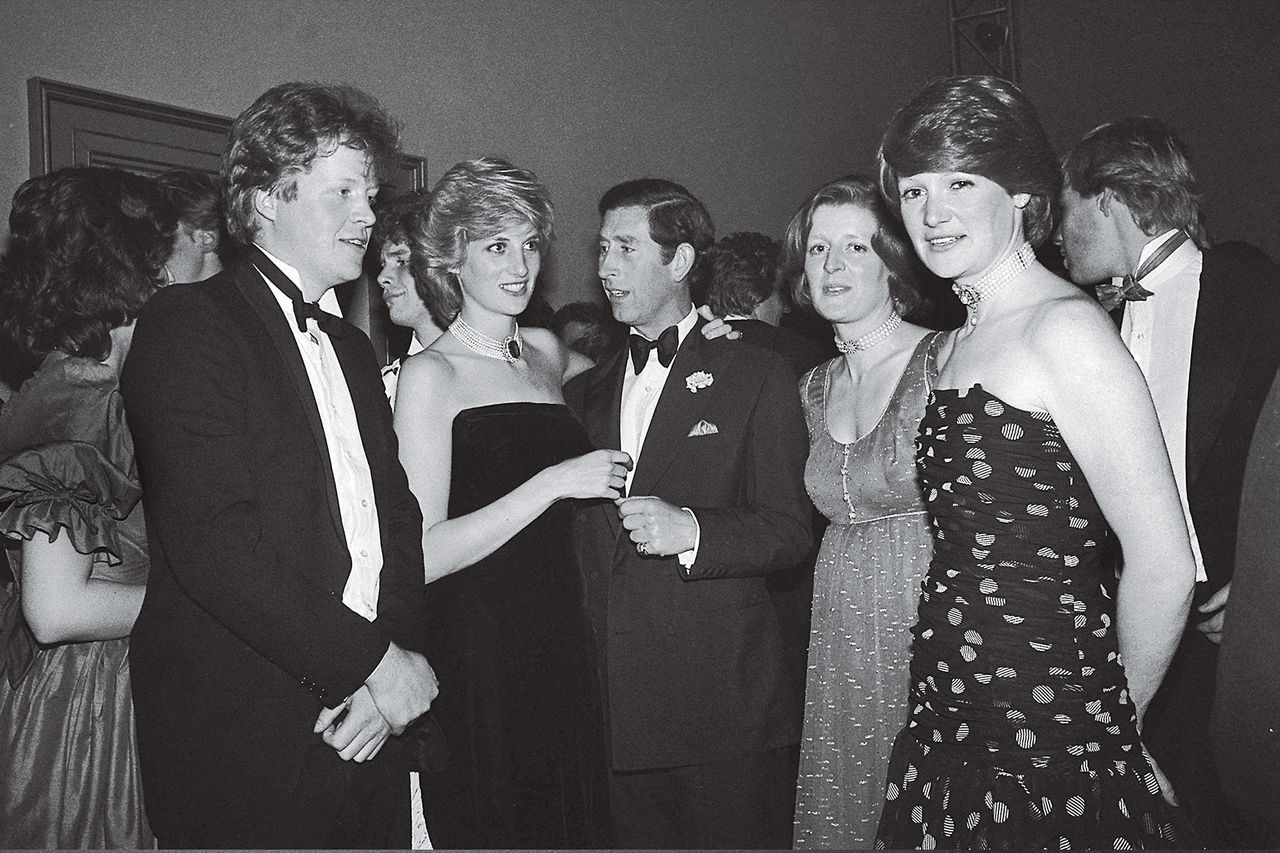
This isn’t a criticism. It’s a recognition that she was struggling with a condition that was totally undiagnosed, and she could turn on a pin. If she felt a friend had let her down, that was a really big deal and it was difficult to come back from that. I’m very straight in the book. There wasn’t a single member of my family who Diana didn’t fall out with and turn her back on for some time. But I suppose as family, we weren’t going anywhere, so we came back into favor or whatever. But understanding the ADHD aspect of that is really helpful. And also the extraordinary pressure she was under.
Credit: Keith Butcher/Shutterstock
What I really came to appreciate when writing this was she was living this unique life of pressure, where she was dissected every day . . . And when she was out the other side of the royal family [after her 1996 divorce from Prince Charles], I think some in the media thought, “Well, she’s turned her back on that. We can pulverize her.”
So when you look at that and how impossible it was, and . . . she was definitely an early victim of phone hacking without knowing it. So people said, “Oh, she was paranoid.” No, she wasn’t. She was sensitive to rejection, and she felt very let down by people. And because of her ADHD, because of her personality and her character, she felt these things very deeply. And I think particularly so because she was giving so much of herself in her public life. I used to feel this extraordinary thing about Diana, that it was almost like people had no idea how much they were taking from her. And I’m talking about innocent members of the public, who adored her, but she felt the need to give. I think it made her feel better about life, but it was draining. When she was at home alone in Kensington Palace, she’d often go to bed by 9:00 because she was just done. And then the next day she’d go and do a public event and be the life and soul of the day and make these peoples’… Give them life memories. This is not done without cost to the individual.
You reveal that in moments of extreme frustration, Diana could be physical.
I can only think of three moments where Diana physically lashed out. One was slapping my father when he told her he was marrying my stepmother [Raine Spencer] because that was a huge shock to us all. Look, we all have experience of step relations, I’m sure, but it can be very tricky and we felt we had made our feelings really clear, but of course my father had to follow his heart. As children, you don’t understand that. We just thought he’s letting us down and you see it from all angles later in life. And then pushing me off my bike for no reason and that could just be a sibling thing, but it was really bizarre actually because it was so out of the blue.
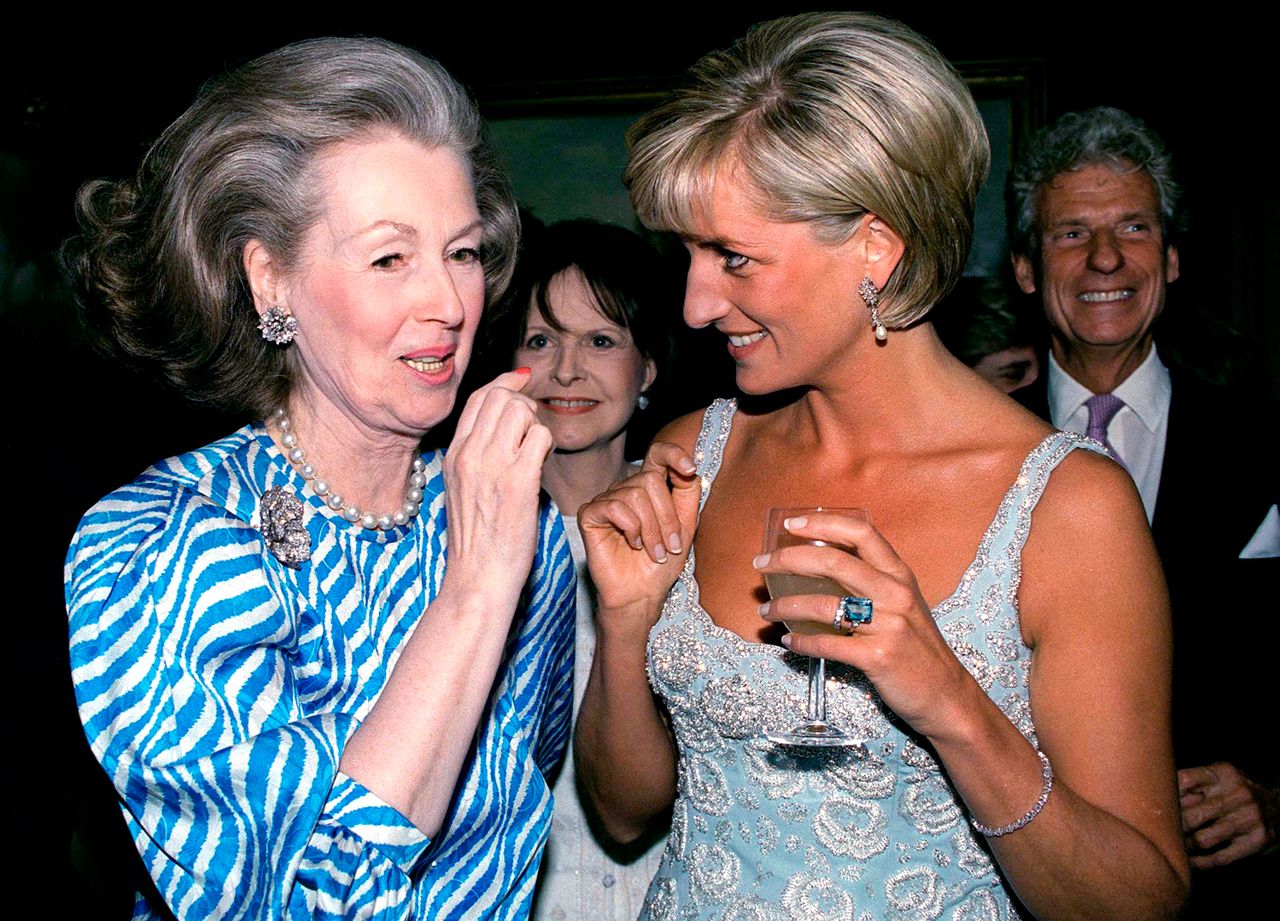
And then pushing Raine down the stairs, I think… Yeah, I’m not saying it’s a good thing in any way to be physically violent, but it was the buildup of an enormous amount of really strong feeling and a flashpoint where I think she thought she was standing up for my mother. It was in 1989 and we’d had a family rehearsal of my first wedding and my stepmother allowed my mother into the house here, but had her taken to a separate room to everyone else so she couldn’t mix with everyone. And I think Diana thought that was so unbelievably rude. And then Raine, my stepmother, was quite insulting to Diana and said she couldn’t believe that Prince Charles had married someone so stupid. So I think that was probably lighting the fuse. I’m not here to say anyone can be physically violent, but it didn’t have no reason.
Take PEOPLE with you! Subscribe to PEOPLE magazine to get the latest details on celebrity news, exclusive royal updates, how-it-happened true crime stories and more — right to your mailbox.
How did your sisters [Lady Sarah, 71, and Lady Jane, 69] feel about the book?
Well, I didn’t tell anyone at all about it, apart from my wife and the people who had to know in the book world. So when I told them, I think they were very surprised. They hadn’t seen it coming. I explained to them, “It’s a pure celebration of our sister.” They’re still digesting it, actually. I think they’ll wait to see what it’s like when it comes out. But they are very different personalities, I would say. One of them is very, very shy, a private person, a wonderful person, but very, very quiet in a quiet world, but very amusing if you met her. Great fun. And the other one is quite a handful of energy and vibrancy and everything.
I think they were hurt that I hadn’t told them, to be honest. I said, “I was going to hurt you either way, because I was either going to tell you and still write it how I wanted it. It wasn’t going to be a committee effort.” I wanted them to be able to put their hand up and say, “Well, we didn’t know he was doing it,” in case there’s backlash or whatever. So they’re totally innocent parties in this. This is very much a brother’s view.
What about telling your nephews [William and Harry]?
I told them at the same time, and all I would say is one was… So all four of them [William and Harry and Sarah and Jane], I told them exactly the same time. And I can say that Harry is completely fine about it. He said, I hope there’s nothing embarrassing about him in it. I said, “There isn’t.” I think they were actually worried where I was going up to with the book. It pretty much ends in 1997 with Diana’s death, and there’s a tiny postscript by the grave. So I think there was this, “Gosh, what’s he written about?” And I think it’s natural that people so in the public eye are concerned how they will come across in the book. But I could reassure both of them that they’re of course in the book, but really as examples of two little boys who had the most exceptional mother, I’m not in any way compromising their privacy at all.
Were you concerned about how they would regard your portrayal of their father?
Yeah, that was a concern. I mean, I don’t want this to sound loaded, but there was an awful lot I could have put in and I didn’t. If I wanted to write a scandalous book about Prince Charles or King Charles as he is now, it would really be a jaw-dropper, but I’m not here to do that.
You write about a shocking conversation when Diana told you she and Charles were going to divorce.
I said, “I’ve got to warn you, I don’t think the public are going to necessarily understand this, and they may resent you for ending their fairy tale.” Then she said, “Well, my husband’s in love with his valet,” which is a member of staff, household staff. To be honest, at the time I thought, well, that’s another reason. That was all it meant right then. I remember thinking, wow, I didn’t know about that. I actually don’t know who she was referring to, individually, but it just sounded like another nail in the coffin of the marriage, really.
Do you have any regrets about your relationship with Diana?
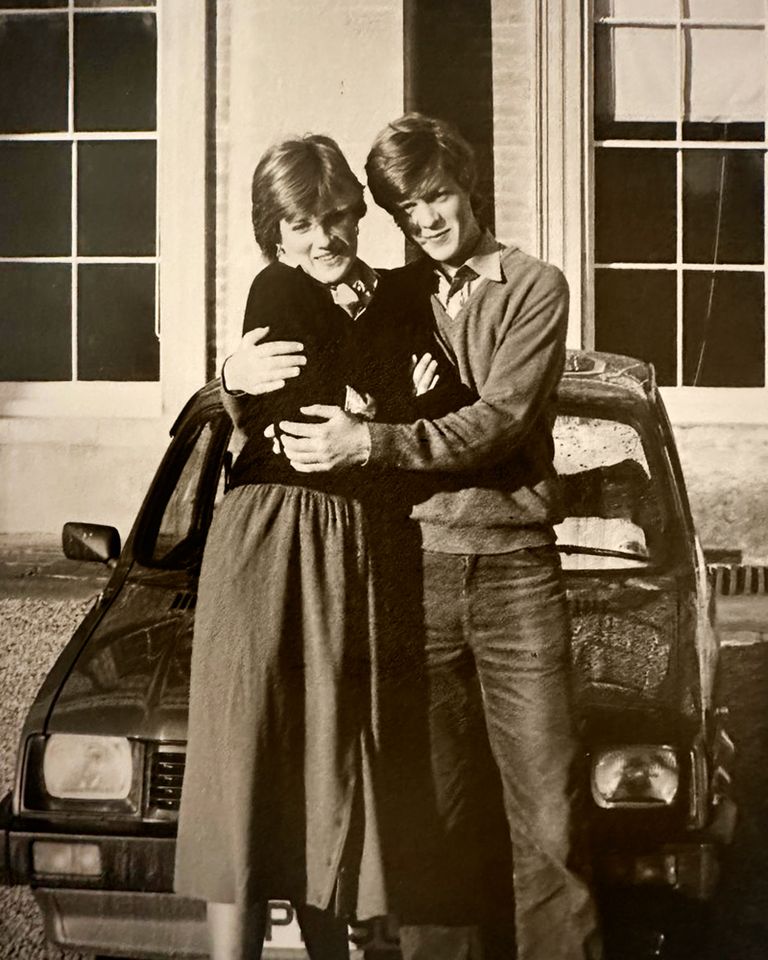
Could I have done more to help her with her public life? I probably could. Towards the end of her life, I did help her a bit. I had had some run-ins with the media. I helped her win a big libel case against a British newspaper. I would fight some battles for her quietly.
Credit: The Spencer Family
One of the things people are throwing at me totally wrongly is that I wouldn’t give her a home. When she was divorced, she did ask me for the Garden House at the back of the park . . . Diana had loved it because our sister Jane lived there with her children, and that was perfect for them. But then the local police went around there with me and they said, they just couldn’t protect William and Harry . . . She could not have lived at the garden house. It was not a viable option.
Is there one memory you’d like to relive with her?
All of the best times were us laughing. We had the same sense of humor, quite sort of, not dark, but quite edgy humor. I would love to laugh with her again. That would be good.
What do you think about the conspiracy theories surrounding Diana’s death in the Paris tunnel?
I’ve never believed in the conspiracy theory, because if somebody was conspiring to kill somebody very high profile like that, I don’t think that would be the manner that it would happen in. First of all, nobody planned for Diana to go through that tunnel that night . . . The fact that it ended up tragically being a car crash, I think, is purely a coincidence. By the way, if I thought otherwise, I would say so. I just don’t see it.
You write about Andrew Morton’s 1992 biography of Diana, which she secretly participated in. Many people draw parallels to the modern-day example of Harry writing his memoir, Spare. What’s your perception of that?
Is it all right if we don’t do too much Harry stuff?
Sure.
Thank you.
You also write about your great-grandmother who died in childbirth when your grandfather was just 14. I’m quoting your book, “There were unresolved traumas that had reverberated down the generations.” How would you characterize the generational trauma within the Spencer family from then through the present day?
When my great-grandmother died in 1906, it devastated her family, obviously. She had six young children. Then if you go forward 91 years to when Diana died, I think we all knew that more help was needed for young people in those situations, but not as much as we do now . . . I know where we’re going with this, and I’m afraid I know I can’t really answer it.
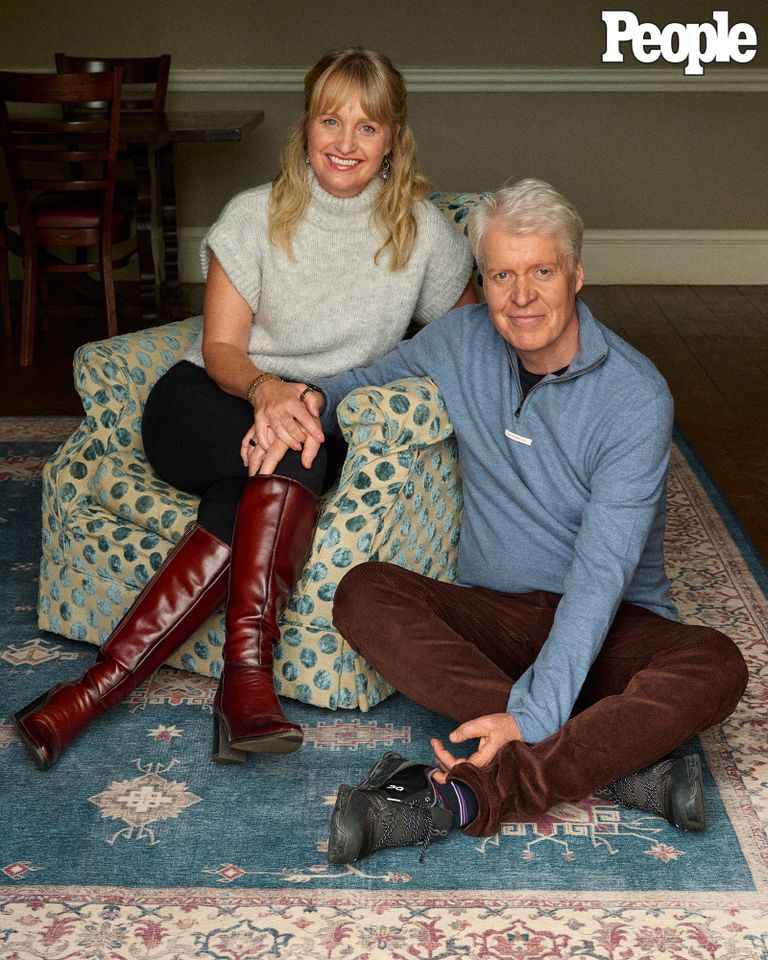
Credit: Matt Holyoak
You note that Diana’s HRH [Her Royal Highness] title was stripped after her divorce. There was a recent statement from the Palace about that title not being used by one of your nephews and his wife [Prince Harry and Meghan, Duchess of Sussex]. What did the title mean to Diana?
When Diana died and we had the funeral, I was taken aside on the royal train coming back [to Althorp] for the burial by somebody working for the Queen very closely. He said that the Queen had just called him and was offering Diana her HRH title back. I said, “Well, it’s too late. She’s dead.” . . . I do sometimes think, should I have just said yes, because maybe it would’ve been nice for her sons? I don’t know what’s possible with these titles. They’re all so archaic. Maybe one day one of her sons can put that right and make her HRH in the history books, but I know to Americans it’s all so bizarre.
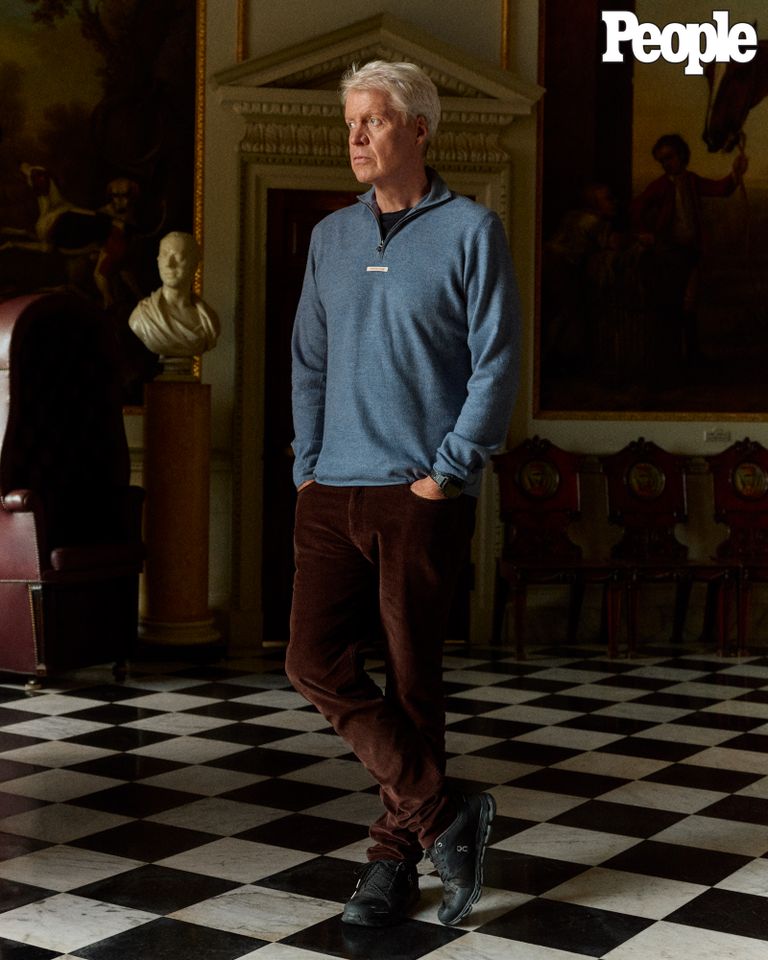
Credit: Matt Holyoak
I was driving here today, and I was thinking we still live in a world where people get up in the morning and people say, “Good morning, Your Royal Highness,” and you just think, it sounds like a sort of 18th-century movie, doesn’t it? I do wonder if that’s good for people. How are you not meant to think that you’re exceptional and different if people are addressing you like that? I mean, I have a title and people call me Lord Spencer here at work, because I see it as a work title, but I don’t write books as Lord Spencer and I didn’t have a TV [journalism] career as Lord whatever. I just think there probably needs to be a little thought about these very old-fashioned terms and what they do to people’s minds.
What is your view of death? Do you think you’ll ever see Diana again?
As to death, I don’t know. I mean, of course none of us do. I have felt the spirit of Diana at times. Maybe it’s wishful thinking. Do I think I’ll see her again? I don’t know, I think… My theory about life and death is that we’re all so terrified of death, but it’s going to be a very, very long time when we’re in that state. I cannot believe that we’re alive and then that there’s nothing left. I do believe that your soul exists. It may be an atom somewhere. It may be something more conventional as in tune with one of the religions. But I do feel that it seems an awful lot of effort for us to be the people we are and then to become literally nothing. So I think there’s something after death, but I just can’t, obviously like most people, I can’t work out what it is.
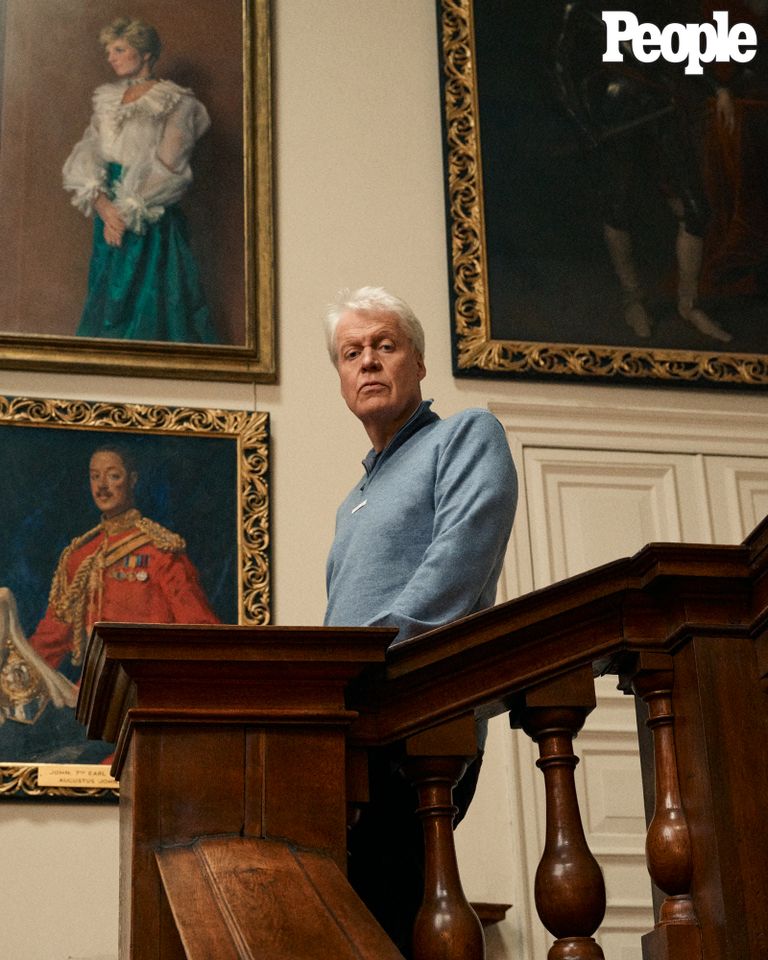
Credit: Matt Holyoak
When you feel Diana’s presence, is it anything specific?
Yeah, there are moments when… I do feel Diana on my side in tricky moments. If I have to really go into something, a meeting where something really important is being sorted out or whatever, I always wear cuff links she gave me in the late ‘80s as a sort of memorial. I had a cousin who died tragically by their own hand last year and I told the parents that I was wearing Diana’s cuff links. Diana’s memory gives comfort to people even now. •
Read the full article here