
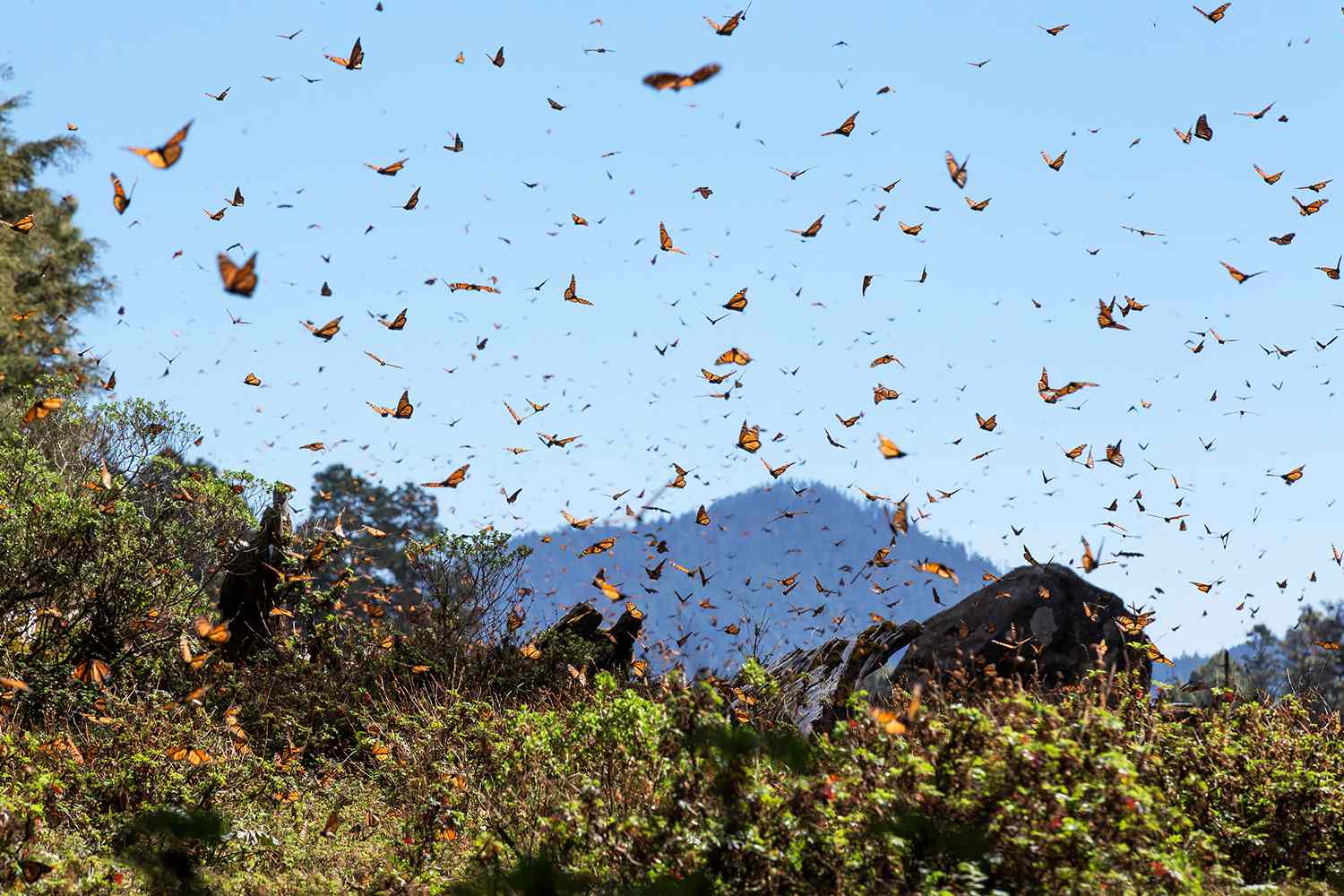
Every fall, monarchs travel thousands of miles from the northern U.S. and Canada to their overwintering grounds, passing through much of the country along the way
Credit: Getty
NEED TO KNOW
- Millions of monarch butterflies are migrating thousands of miles across North America to their wintering grounds
- Eastern monarchs saw a 64% population increase last winter, but numbers remain far below historic levels
- Conservationists urge planting native milkweed and nectar flowers to support the endangered species’ survival
One of nature’s most astonishing journeys is unfolding right now, quietly passing over gardens, highways and backyards across the country.
Every fall, millions of monarch butterflies set off on a migration that can stretch thousands of miles across North America, and if you live in the United States or southern Canada, there’s a good chance the great procession will pass somewhere near you in the coming weeks.
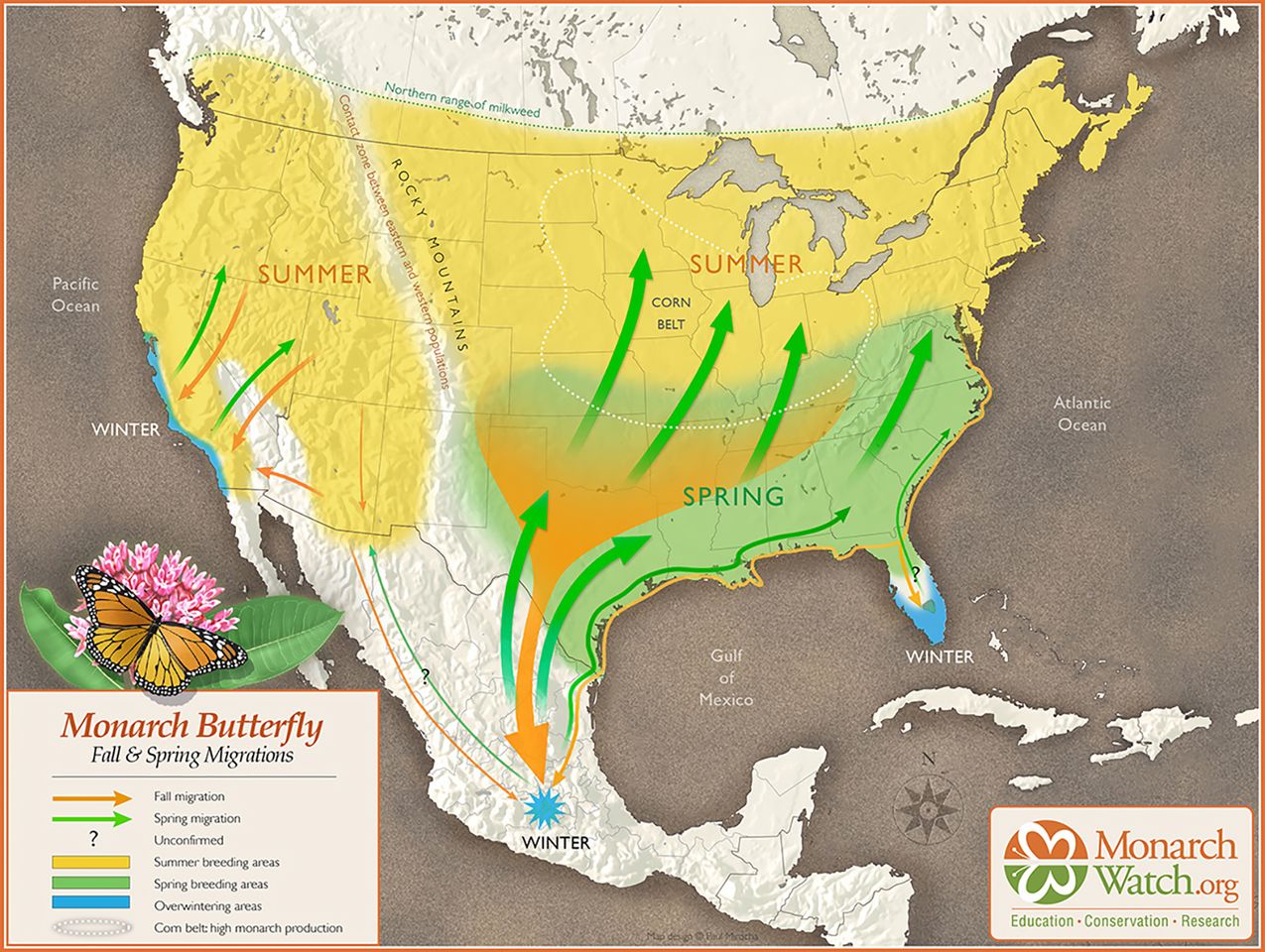
According to the Farmers’ Almanac, the fall migration begins first in the northern reaches of the monarch’s range. Butterflies may start heading south from southern Canada and the northern U.S. as early as August, with the great wave rolling gradually southward through September and October.
Credit: Getty
What makes the feat so remarkable is that the monarchs making the trip have never been to their destination before.
The eastern population undertakes one of the longest migrations known among insects, with some butterflies traveling up to 3,000 miles from the northern U.S. and southern Canada to their wintering grounds in the mountains of central Mexico.
The western population, which lies west of the Rocky Mountains, follows a separate route toward the California coast and into northern Baja California.
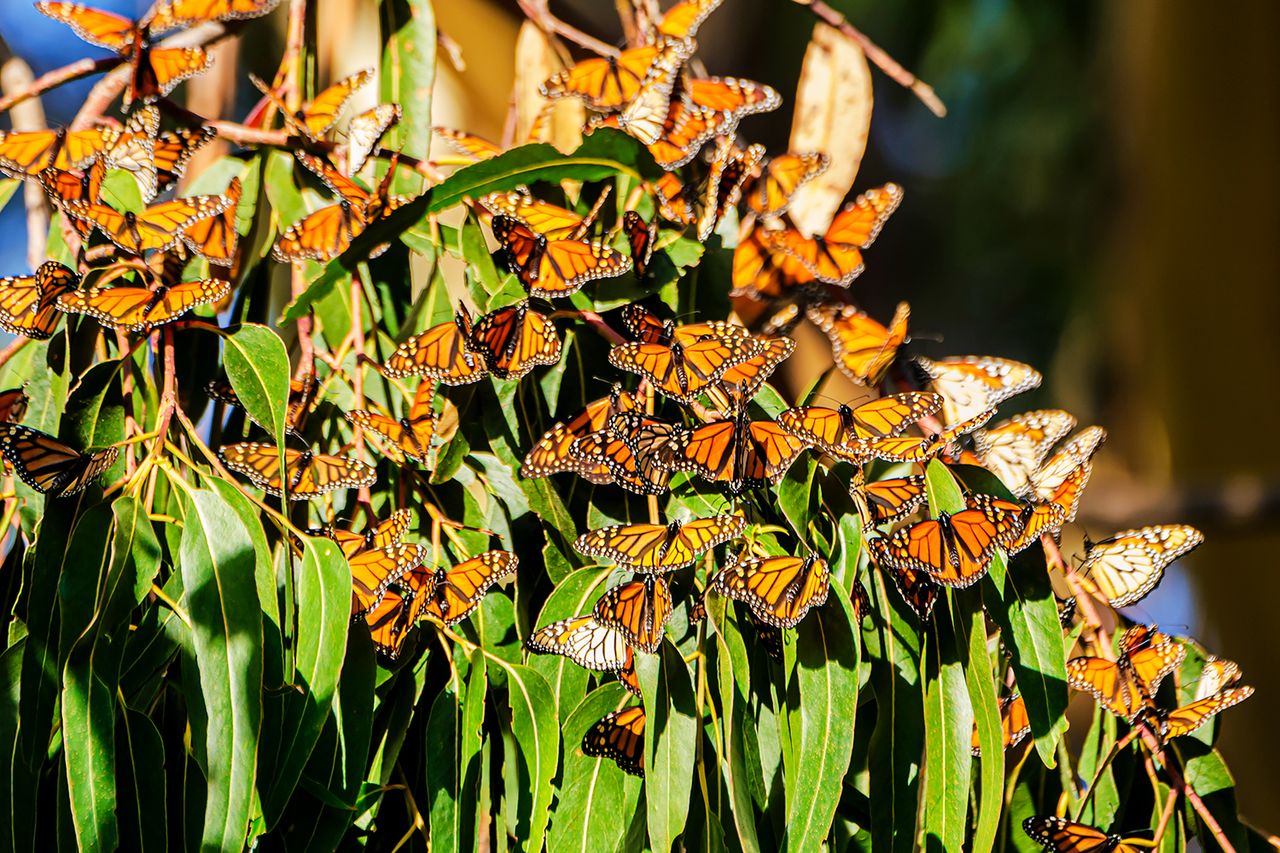
For anyone hoping to catch a glimpse, the best spots are sunny, open areas rich with nectar flowers in meadows, gardens, parks and wildlife refuges. During the day, monarchs travel alone; at night, they gather in trees to form roosts, sometimes clustering by the hundreds.
When monarch migration begins in a given area depends on local conditions, with temperature and day length the two biggest factors, urban entomologist Brandon Runyon told PetHelpful.
Credit: monarchwatch.org
This year’s migration comes with a rare dose of encouraging news. According to an annual survey by the World Wildlife Fund, eastern monarchs overwintering in Mexico found the butterflies occupied 7.24 acres of forest during the 2025–2026 winter, up from 4.42 acres the previous year, which is a 64% increase, according to the annual count.
Rather than counting individual butterflies, scientists measure the area of forest the colonies cover, considering it the most reliable gauge of the population’s overall health.
Still, conservationists caution the rebound doesn’t mean the species is secure.
The population remains well below historic levels: Colonies covered nearly 45 acres at their peak in the late 1990s, and monarch numbers have declined substantially over recent decades due to habitat loss, dwindling milkweed, pesticide exposure and the ongoing ramifications of global warming.
The monarch was listed as endangered by the International Union for Conservation of Nature in 2022, and in 2024, the U.S. Fish and Wildlife Service proposed listing the pretty flying insect as threatened under the Endangered Species Act.
Locals interested in helping the travelers can plant native milkweed, the only plant monarchs lay their eggs on, alongside nectar-rich flowers that bloom from spring through the first fall frost.
Read the full article here