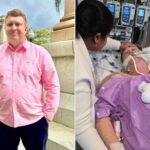

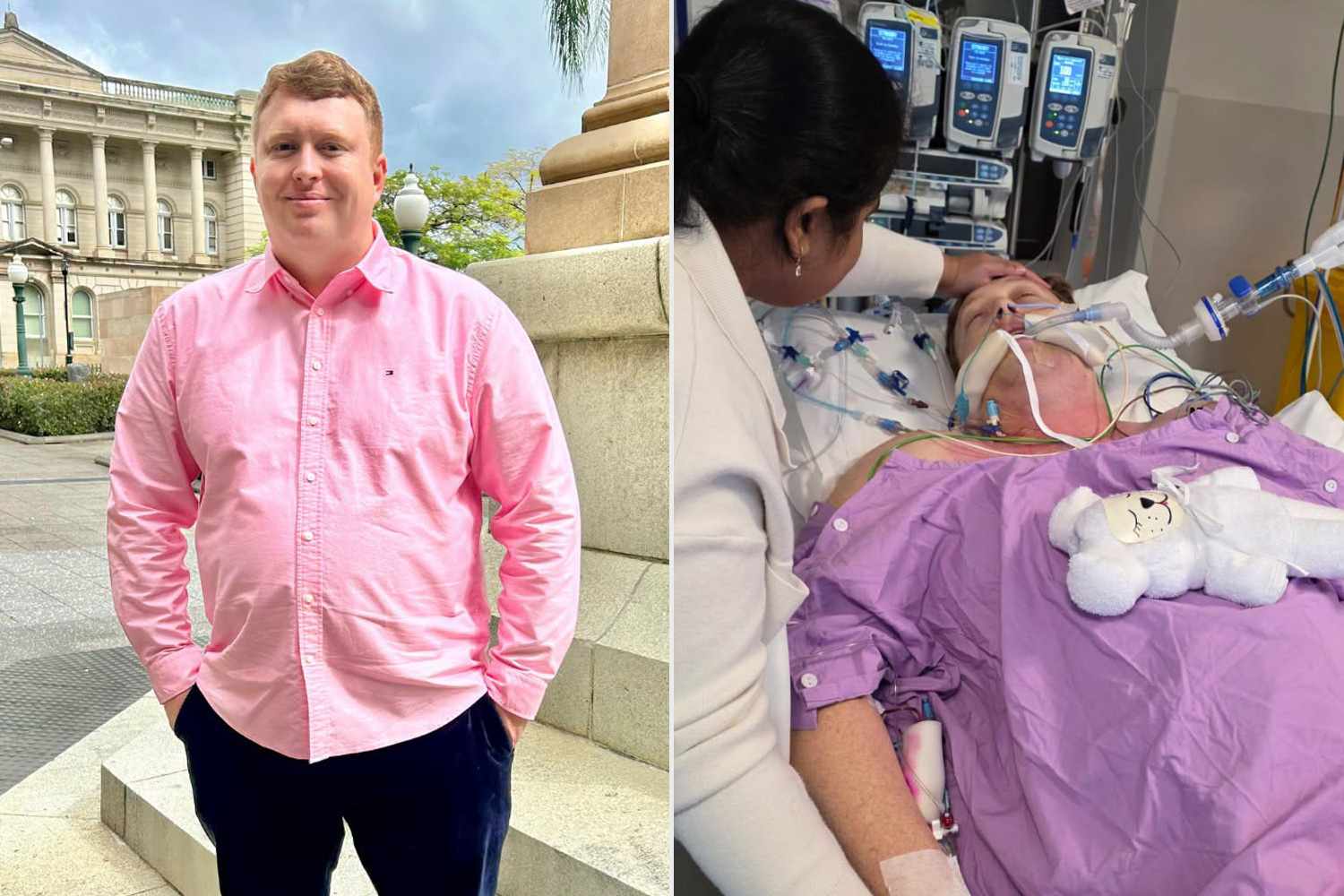
Luke Woodhouse’s toothache turned into life-threatening sepsis, which caused inflammation around his heart
Credit: Queensland Health/Facebook
NEED TO KNOW
- A man in Australia thought his toothache was nothing to worry about. However, days later he ended up fighting for his life after developing sepsis
- Luke Woodhouse, 35, needed open-heart surgery to remove an infected heart valve and replace it with a mechanical one
- Woodhouse now hopes to raise awareness of sepsis a year on from his ordeal, explaining that he didn’t have any prior medical concerns and simply thought he was getting a viral illness when he first developed symptoms
When Luke Woodhouse first developed a toothache, he didn’t think anything of it. However, days later, the 35-year-old was fighting for his life.
Woodhouse, from Moreton Bay in Australia, north of Brisbane, noticed during a Thursday work shift that his toothache was joined by a fever and a wave of illness. But, he just assumed he was getting a viral illness he’d be able to sleep off, per a Queensland Health release.
“That night, I developed chills and was sweating so heavily that by morning, the bed was soaked,” he said, according to the Australian state’s public healthcare system, explaining that by Sunday, he felt tightness in his chest and burning in his head.
Woodhouse’s wife, Jennifer, rushed him to the hospital, where doctors found inflammation around his heart.
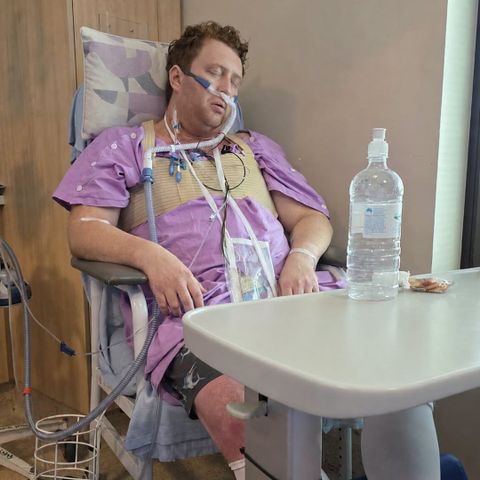
Credit: Queensland Health/Facebook
“I remember being told that my blood was infected, and shortly afterwards the infectious diseases team told me that I had sepsis,” Woodhouse told Queensland Health.
“What struck me was how little I understood about sepsis and trying to come to terms [with] the gravity of the situation,” he added.
Per Cleveland Clinic, sepsis is a reaction to an infection that involves the immune system harming healthy tissues and organs. Among the most common symptoms are a fast heart rate, low blood pressure, fever, chills, a rash, confusion and extreme pain or discomfort.
It can lead to organ failure and death if not treated, and getting medical help as soon as possible is vital. According to World Sepsis Day, the condition causes at least 11 million deaths worldwide each year.
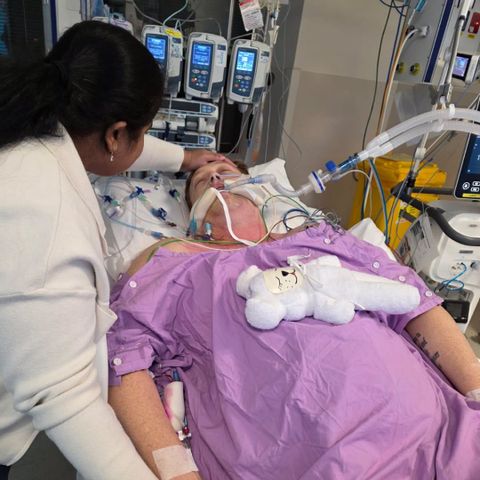
Credit: Queensland Health/Facebook
Sepsis can lead to a number of different complications, and Woodhouse developed infective endocarditis — an infection of the inner lining of the heart chambers and valves.
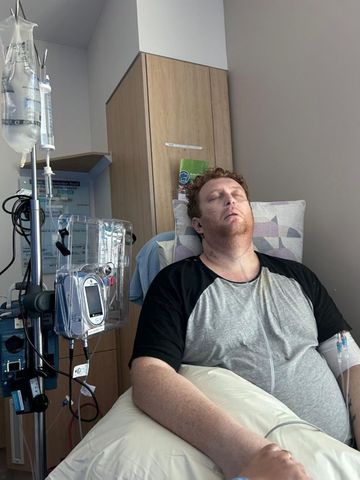
Doctors told him the infection had destroyed one of his heart valves, and that he wouldn’t live much longer without surgery.
Credit: Queensland Health/Facebook
“That week I underwent open-heart surgery to remove the infected valve and replace it with a mechanical one,” Woodhouse told Queensland Health. “I had a weekend to come to terms that I was about to undergo open-heart surgery.”
Jennifer described it as a frightening time. “I remember reaching out to a few friends who are clinicians and asking whether he was going to come home and whether he was going to be okay,” she told the department.
“The seriousness of the situation really set in when the medical team began carrying out scans and tests on his brain, kidneys and heart,” she added.
Credit: Queensland Health/Facebook
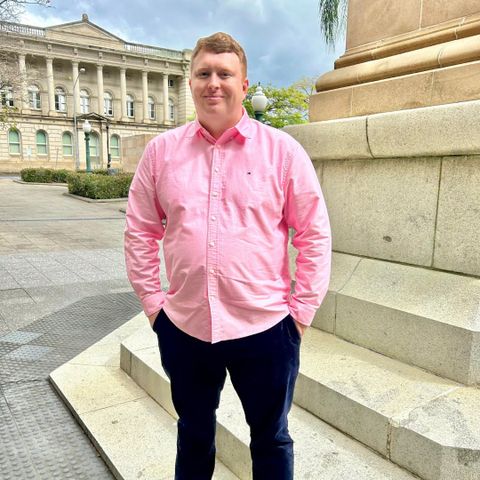
A year on from his surgery, Woodhouse has had to adjust to some new habits, and said he really appreciates simple hobbies like drawing and playing the guitar.
“I have something in my heart that needs to be looked after, and it will be like this for the rest of my life,” he told Queensland Health, thanking the medical staff who helped care for him and offered post-surgery advice.
Never miss a story — sign up for PEOPLE’s free daily newsletter to stay up-to-date on the best of what PEOPLE has to offer, from celebrity news to compelling human interest stories.
Woodhouse also hopes to raise awareness of sepsis, explaining that, having had no prior medical issues, it wasn’t something on his radar.
“You’re not invincible,” he said. “Something can be seriously wrong even when you don’t [realize] it. Trust your instincts, don’t ignore the signs, and ask yourself the question: ‘Could this be sepsis?’ ”
Read the full article here