
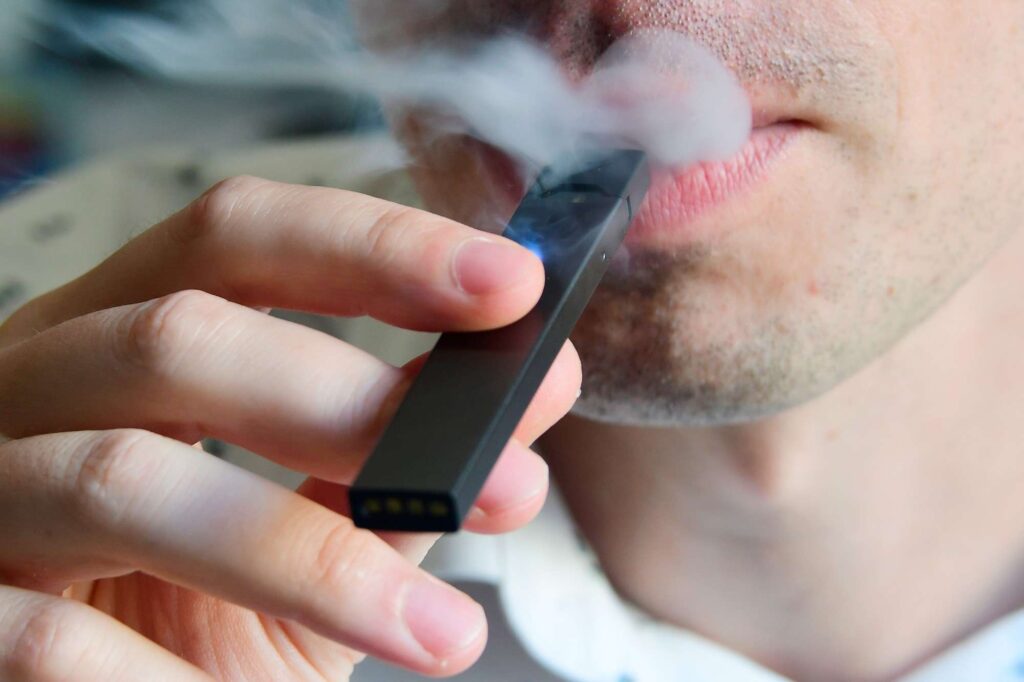
The new device is paired with an app to verify a user’s age before activation
Credit: EVA HAMBACH/AFP via Getty
NEED TO KNOW
- The FDA granted permission for Juul to sell its updated device with optional app-based age verification to prevent underage use
- Juul faced a multibillion-dollar settlement for marketing practices that targeted teenagers, including free samples and social media ads
- Youth e-cigarette use has declined in recent years after Juul removed flavored pods popular with teenagers
Juul Labs has received federal permission to move forward with an age-verification system in an attempt to prevent underage smoking.
On Friday, Aug. 28, the U.S. Food and Drug Administration issued a marketing grant for the JUUL2 System, which includes an optional age-verification technology where the device pairs with an app to verify the user’s age before the e-cigarette can be unlocked and activated.
According to Juul, the new device’s authentication method was developed “to address illicit products, and incorporates age-verification technology capabilities.” The company added that “the new devices will only work if authenticated pods are detected,” in an effort to battle the use of “counterfeit compatible pods.”
The legal age to purchase e-cigarettes in the United States is 21.
In a statement, the agency said that it determined the updated device was “appropriate for the protection of the public health.”

Credit: Scott Olson/Getty
This comes as Juul has been paying off a multibillion-dollar settlement over its sales and marketing practices that targeted teenagers.
In September 2022, it was reported that the company reached a $438.5 million, tentative settlement following a multi-state investigation.
Never miss a story — sign up for PEOPLE’s free daily newsletter to stay up-to-date on the best of what PEOPLE has to offer, from celebrity news to compelling human interest stories.
Nearly three dozen states were behind the investigation that found that the vaping company did in fact appeal to young people through the hiring of young models, giving out free samples and their use of social media.
The U.S. has since made progress in lowering youth e-cigarette use since it peaked at about 20% during the youth vaping epidemic in 2019. At the time, Juul took many of its flavored pods — which appealed to teenagers — off the shelves.
Read the full article here