

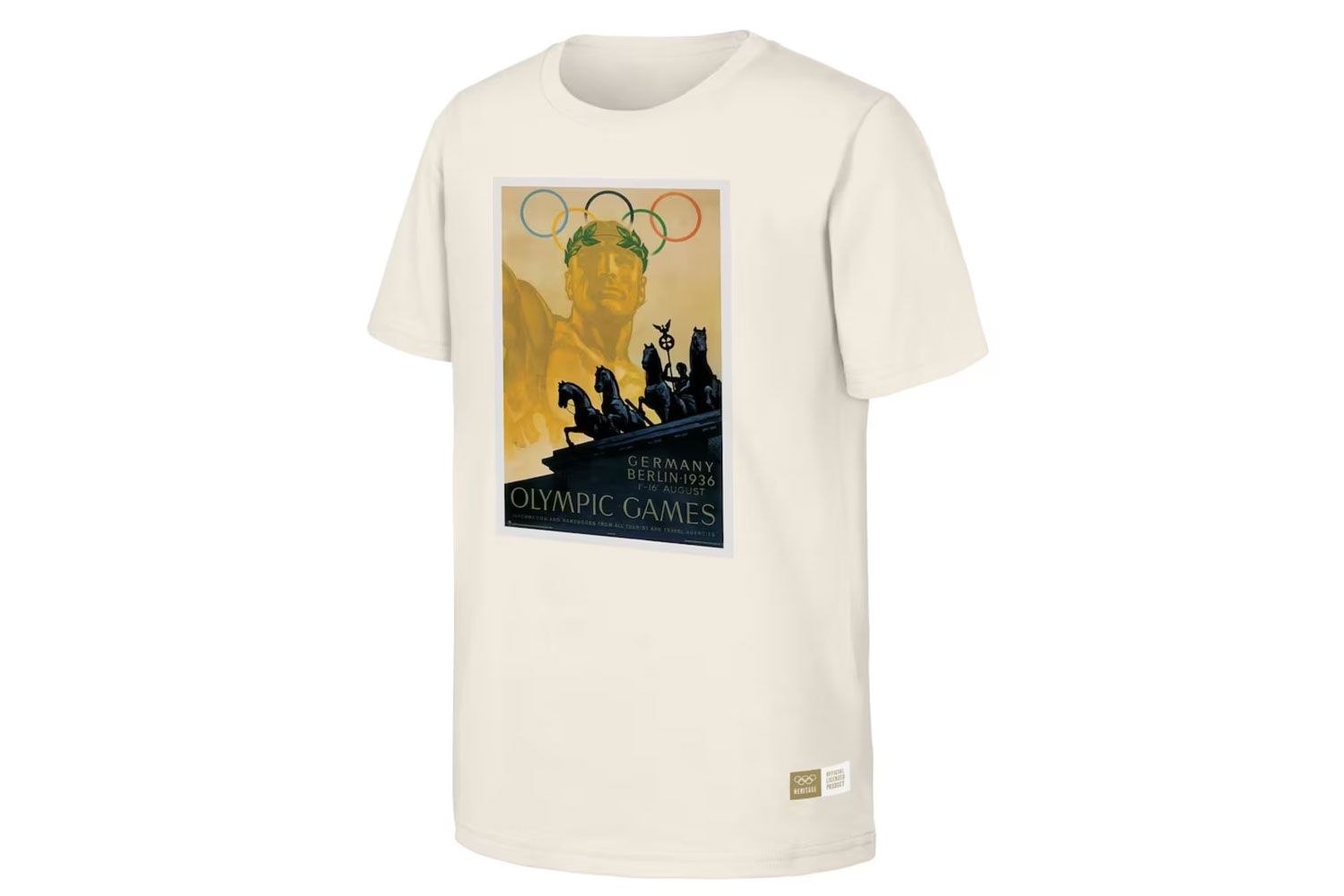
The shirt featured the official poster from the 1936 Berlin Games and was a part of the organization's Heritage Collection
Olympic Shop
NEED TO KNOW
- A shirt commemorating the 1936 Berlin Olympics has sparked controversy online after selling out on the International Olympic Committee’s website
- The 1936 Games took place when Germany was under the control of Adolf Hitler, who used them as an opportunity to promote Nazi ideology
- Although Hitler referred to Black athletes as “non-humans,” track icon Jesse Owens emerged as the undeniable star of the Games that year after winning four gold medals
The International Olympic Committee explained its decision to sell a T-shirt commemorating the 1936 Berlin Games after it came under fire for doing so. The games, which were hosted by Germany under the leadership of Adolf Hitler, were used by the politician as an opportunity to promote Nazi ideology.
The shirt, which was sold on the IOC's website, was a part of the committee's "Heritage Collection," which "celebrates the art and design of the Olympic Games," according to a description on the site. "Each edition of the Games reflects a unique time and place in history when the world came together to celebrate humanity," it reads.
It appears that the shirt has since been removed from the website. However, it was previously available and listed as "out of stock" after selling out, according to CNN. An IOC spokesperson confirmed to The Athletic that the shirt had sold out.
In a statement shared with PEOPLE, a spokesperson for the IOC explained the decision to sell the shirt, saying, "The IOC has a responsibility to safeguard Olympic Intellectual Property (IP) and ensure it is managed respectfully over time."
"This stewardship relies amongst other things, on IP rights, including trademarks, which are held for all editions of the Olympic Games and their respective key assets, including for Berlin 1936," they said. "The validity of these trademarks depends on their actual use. If they are not used by their owner, other parties could use them for their purposes."
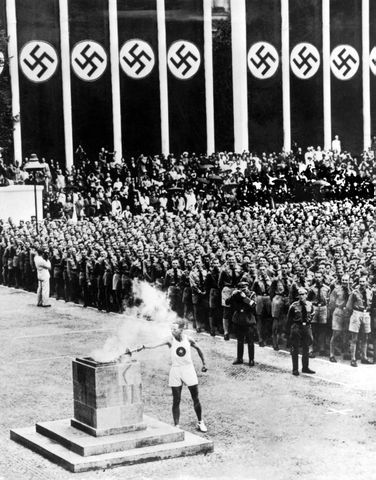
Getty Images
They continued, "As part of this responsibility, the IOC maintains an Olympic Heritage Collection that reflects more than 130 years of Olympic art and design. This collection presents assets such as emblems, pictograms, posters and mascots from every edition of the Games as historical artifacts."
"Maintaining a use of these historical elements also helps ensure they are not abused," the spokesperson said. "In recent years, this stewardship has enabled the IOC to reduce widespread unauthorized third-party use of 1936 Games related assets."
Bearing the official poster for the 1936 Olympics designed by Franz Würbel, the shirt features an image of a man with laurels around his head and his arm raised out of the frame. The Olympic Rings appear behind him, and the Brandenburg Gate is superimposed in front of him.
While Jesse Owens emerged from the 1936 Berlin Olympics as a huge winner, taking home four gold medals in the track and field categories, the Games were marked by the blatant promotion of Nazi propaganda.
Hitler referred to Black competitors such as Owens as "non-humans," while photos from the events show the prominent display of swastikas and people making the Nazi salute.
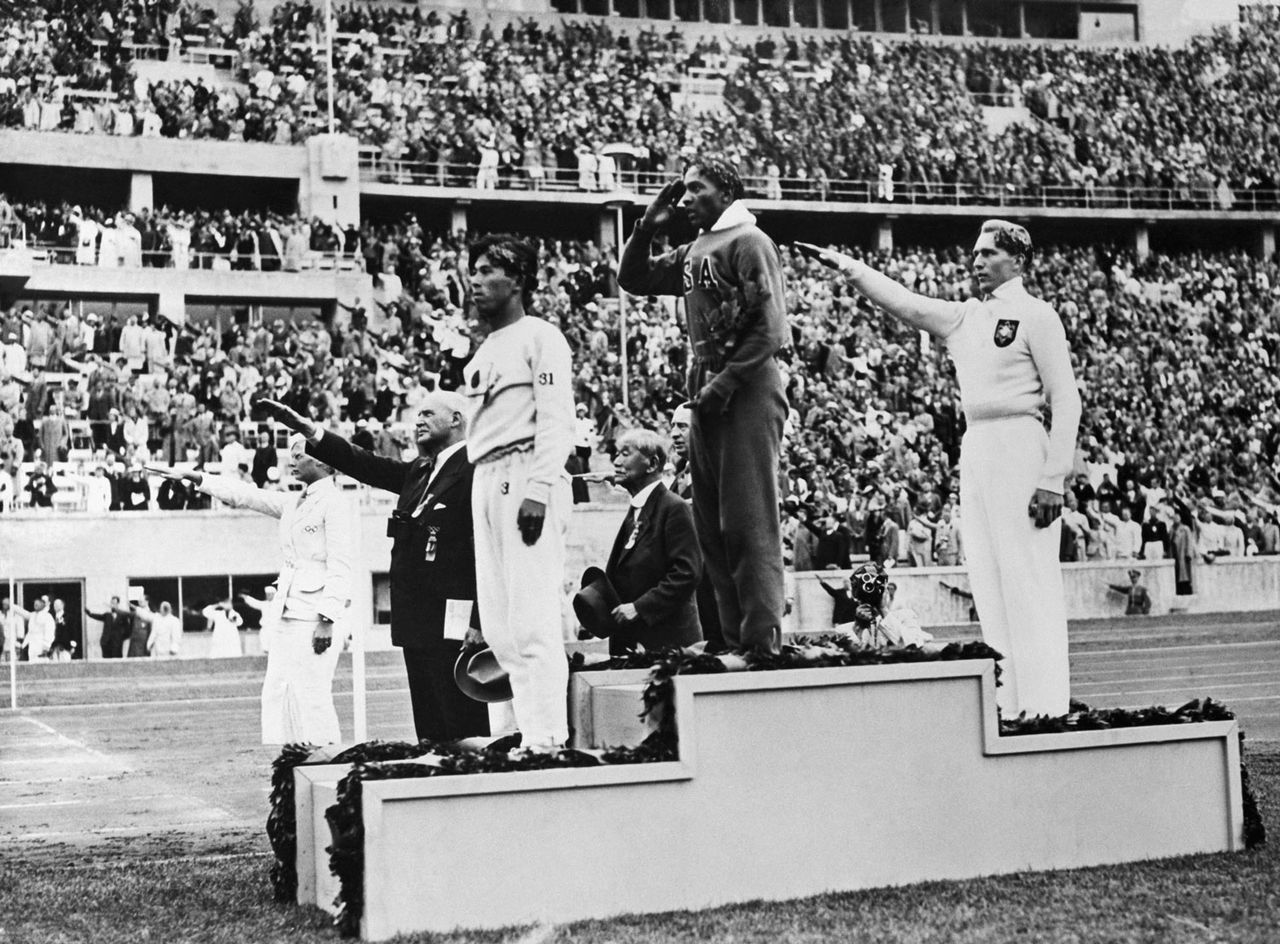
Getty
Speaking to CNN, Christine Schmidt, co-director of the Wiener Holocaust Library in London, commented on the Games that year, saying, “The Nazis’ fascist and antisemitic propaganda infiltrated their promotion of the games, and many international Jewish athletes chose not to compete."
Schmidt added, "The IOC would be minded to consider whether any aesthetic appreciation of these games can be comfortably separated from the horror that followed.”
Never miss a story — sign up for PEOPLE's free daily newsletter to stay up-to-date on the best of what PEOPLE has to offer, from celebrity news to compelling human interest stories.
In their statement shared with PEOPLE, the IOC said they recognize "the profound historical context surrounding the Berlin 1936 Olympic Games."
"The 1936 Games also brought together 4,483 athletes from 49 countries competing in 149 events and included remarkable sporting achievements – among them those of Jesse Owens – that remain an important part of Olympic history," they said. "The broader historical context of these Games is explored in detail at the Olympic Museum in Lausanne."
Read the full article here