
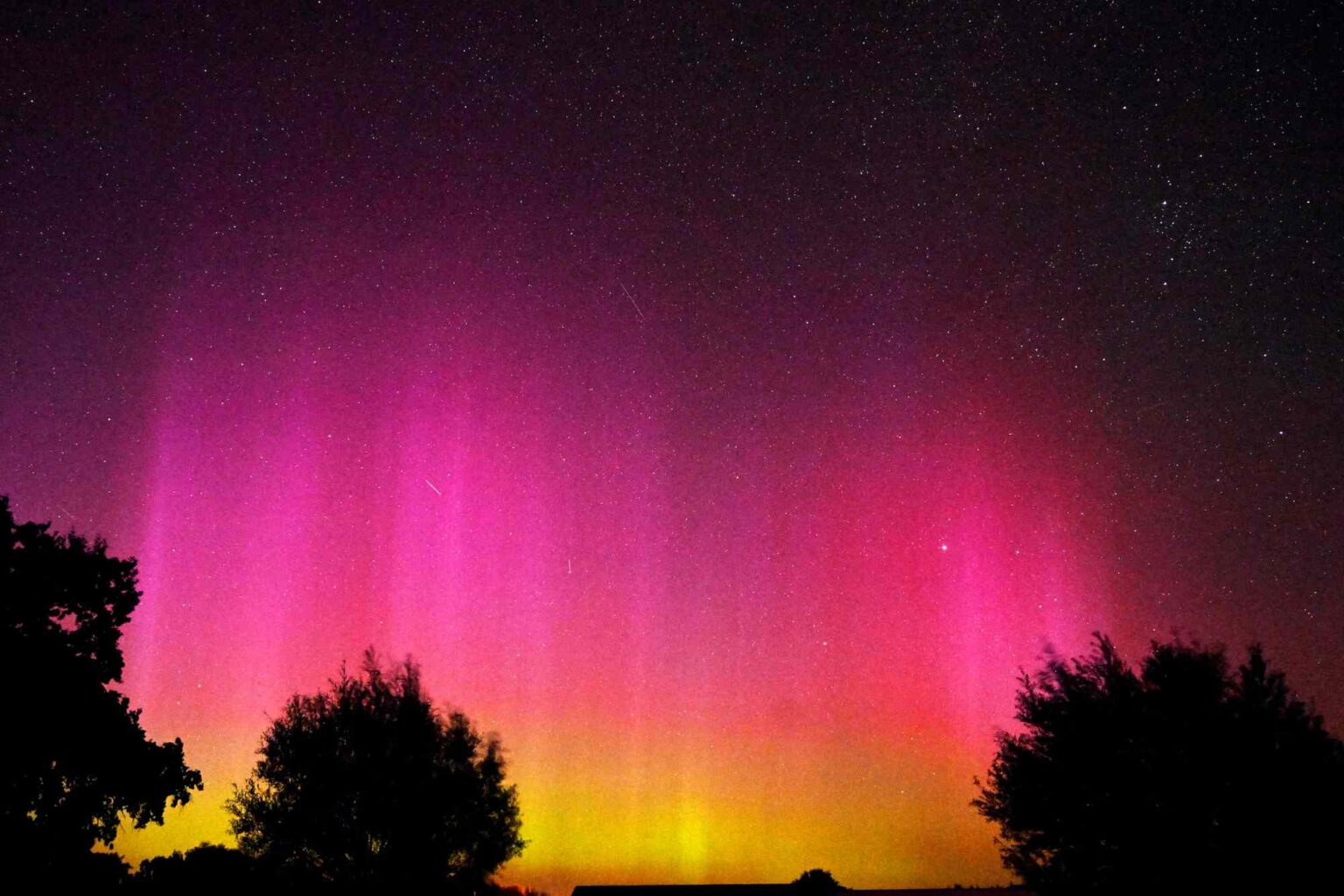
Friday the 13th may have a reputation for bad luck, but the sky’s about to give us something so much more magical!
Credit: RALF HIRSCHBERGER/AFP via Getty
NEED TO KNOW
- NOAA issues a minor geomagnetic storm watch that could spark northern lights from Friday, March 13, into Saturday, March 14
- Fast solar wind from a coronal hole is expected to interact with Earth’s magnetic field and trigger auroras
- Northern U.S. states and Canada could have a chance to see the lights if skies remain clear, weather permitting
Friday the 13th may have a reputation for bad luck, but the sky’s about to give us something so much more magical!
This weekend will be a treat for skywatchers, as potential aurora displays could become visible across parts of North America on Friday, March 14, into the early hours on Saturday, March 14.
According to the National Oceanic and Atmospheric Administration (NOAA), a G1 (minor) geomagnetic storm could be underway this weekend.
The potential display is also linked to a stream of fast solar wind flowing from a coronal hole on the sun, which can interact with Earth’s magnetic field, sparking dazzling ribbons of auroras in the upper atmosphere.
Space Weather forecasters say geomagnetic conditions are expected to increase beginning midday Friday, 13, as Earth moves into an enhanced solar wind stream.
The aurora borealis (northern lights) is a result of geomagnetic storms, which occur when charged particles from the sun collide with gases in the Earth's atmosphere, creating brilliant waves of light in the sky. Still, their visibility depends on several factors, including intensity and location.
Although northern lights are known to strengthen across Canada and other high-latitude regions, minor geomagnetic storms can allow the auroral oval to stretch further south.This means, weather permitting, northern U.S. states along the Canadian border could catch a glimpse of the light dancing low on the horizon.
There’s also some seasonal perks working in every stargazer’s favor, as the weeks surrounding the spring equinox — known as the “equinox effect” — are known to spark geomagnetic disturbances that contribute to the aurora borealis.
In the meantime, here’s everything you need to know about when, where and how to watch.
When will the northern lights be visible?

Credit: Jeremy Hogan/Getty
Auroras are most often seen between about 10 p.m. and 2 a.m. local time, when Earth's magnetic field is best aligned with incoming solar particles.
However, NOAA forecasts geomagnetic activity to increase to G1 (minor storm) levels Friday afternoon into evening hours, with conditions potentially continuing through Saturday, March 14. The most likely viewing window will be late Friday night into the early hours of Saturday morning.
Where will the northern lights be visible?

Credit: Alex Nicodim/Anadolu via Getty
During G1 magnetic storms, the auroral oval can sometimes expand far enough for viewers in the northern U.S. to see faint activity near the horizon.
States with the best chance of viewing include Alaska and (northerly parts of) Washington, Idaho, Montana, North Dakota, South Dakota, Minnesota, Wisconsin, Michigan and Maine.
How to watch the northern lights?
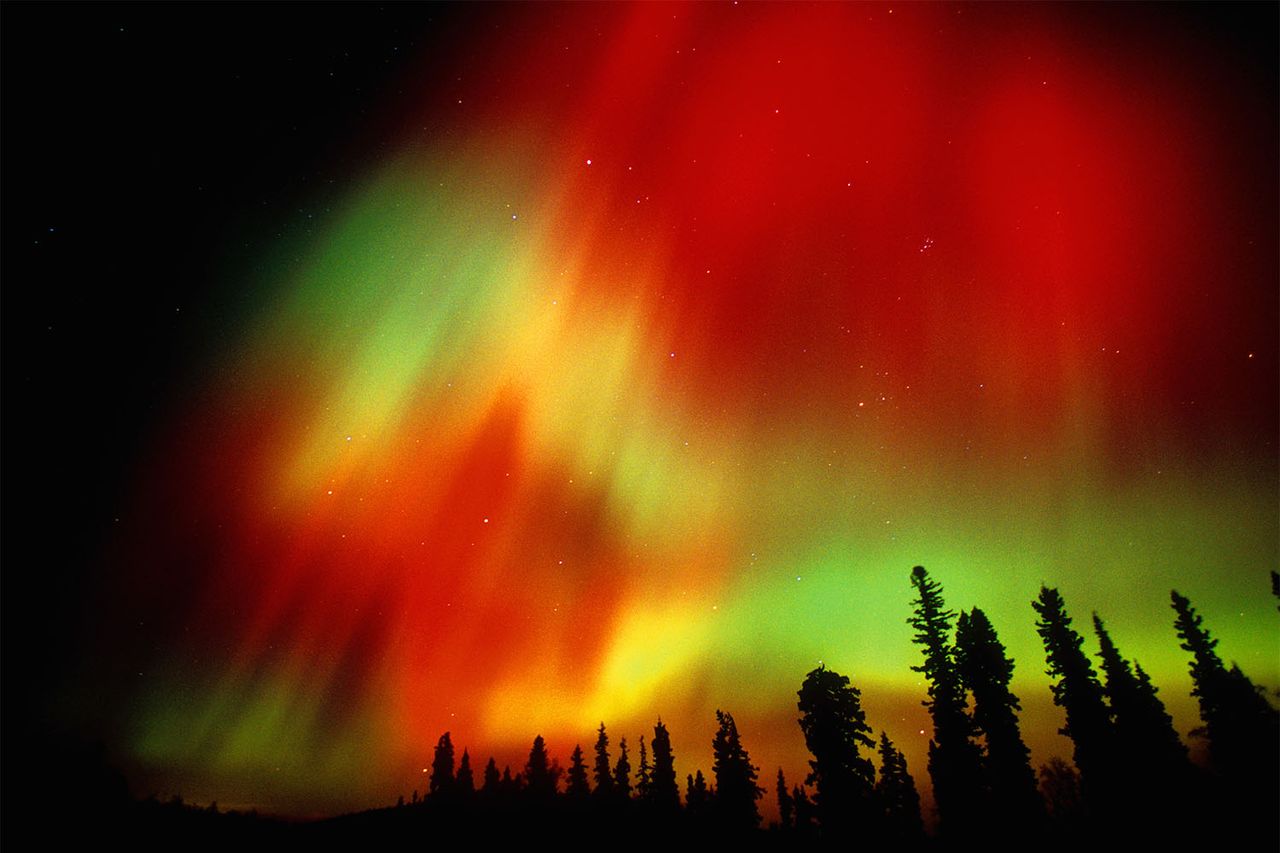
Credit: Getty
Just so you know, you'll always want to be prepared to witness this cosmic spectacle.
First, choose a location far away from city lights with a wide, unobstructed view of the northern horizon. Elevated spots with minimal light pollution offer the clearest views.
You'll also want to wait at least 20 minutes for your eyes to adjust to the dark.
How to photograph the northern lights?
If you’re lucky enough to spot it, you’ll want proof.
To photograph the northern lights, it's important to keep your setup as steady as possible, since the auroras are best captured with long exposures. But if you have a smartphone handy, that works just fine! All you have to do is head to your device's settings and tap the "Night Mode" option or “Pro Mode."
Read the full article here