

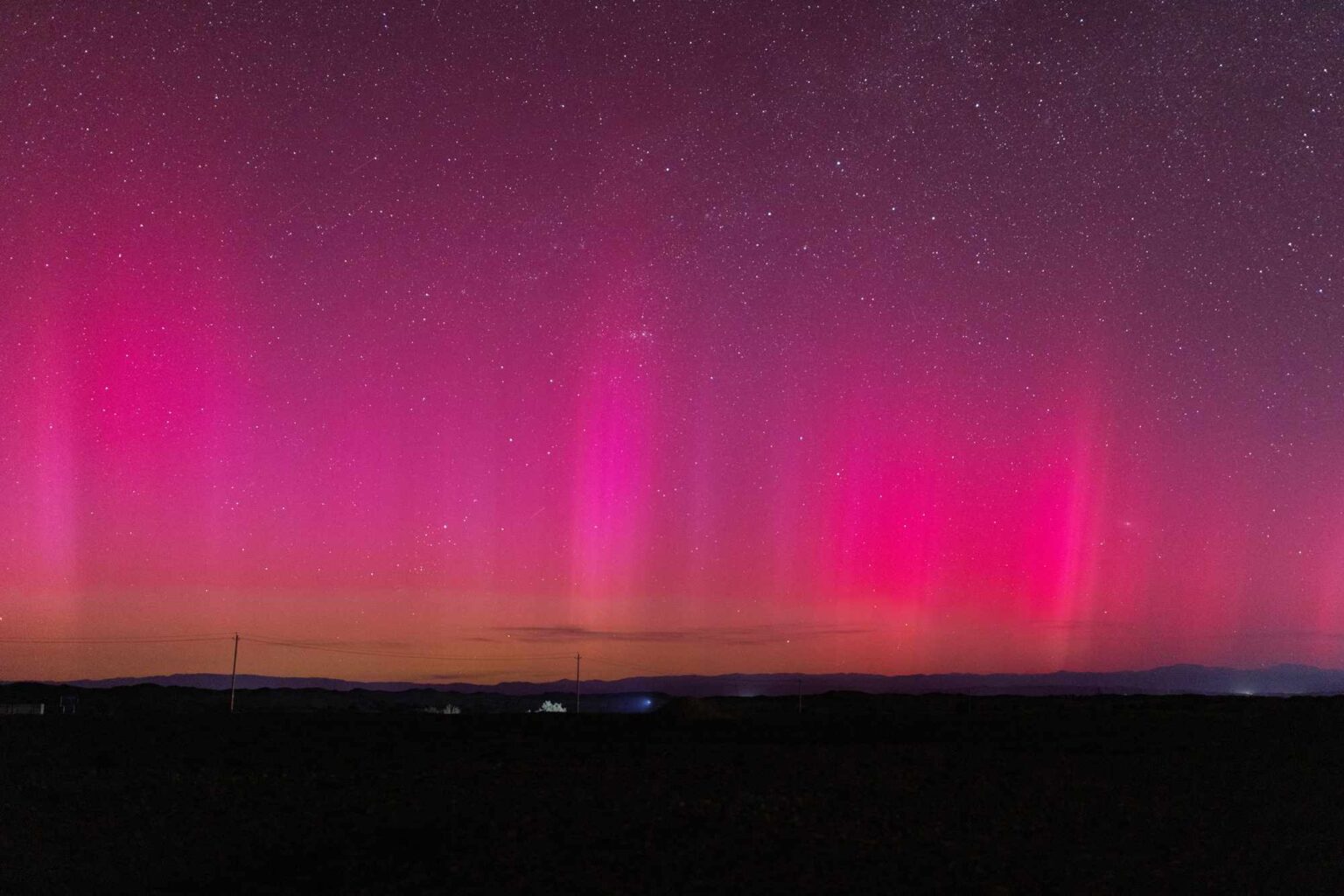
After a surge of geomagnetic activity, the northern lights might still be visible overnight from Tuesday, March 24, into Wednesday, March 25
Credit: Li Hongjun/VCG via Getty I
Just when it seemed like the dazzle of auroras might start to fade, the night sky surprises us with another cosmic show!
After a surge of geomagnetic activity, the northern lights might still be visible overnight from Tuesday, March 24, into Wednesday, March 25, though activity is expected to be much calmer than the storm that lit up the sky over the weekend.
The aurora borealis (northern lights) is caused by geomagnetic storms, which occur when charged particles from the sun collide with gases in Earth's atmosphere, creating brilliant waves of light in the sky. Still, their visibility depends on several factors, including intensity and location.
Space weather forecasters at NOAA say conditions will likely remain unsettled to active, with a chance of isolated minor geomagnetic storms early this evening as lingering fast solar wind sweeps past Earth.
There’s also a slim possibility that a coronal mass ejection released from the sun on March 22 could brush past Earth overnight. That said, if it arrives in time, even a small jolt to Earth’s magnetic field could briefly intensify auroras. Keep your smartphones handy!
Here's everything you need to know about when, where and how to watch this stellar event.
When will the northern lights be visible?
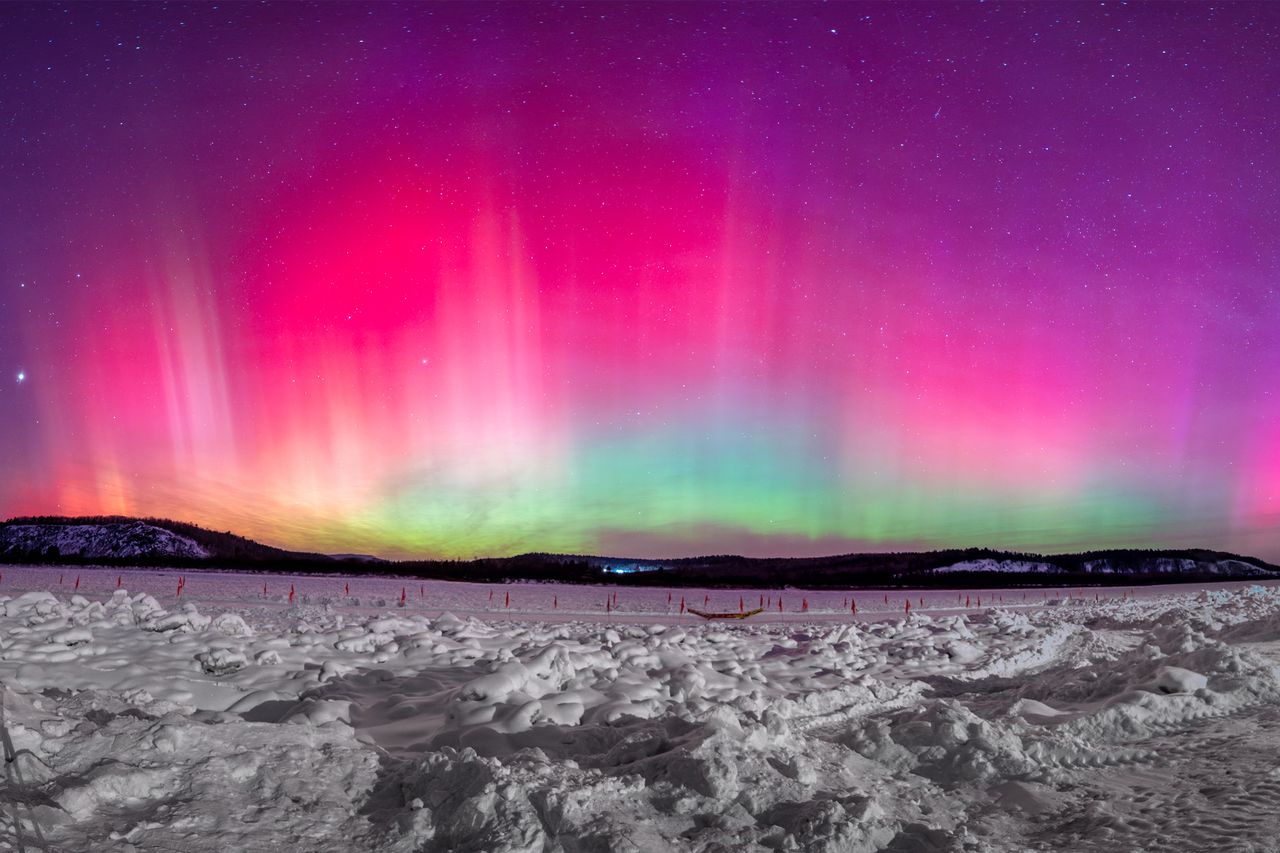
Credit: Chi Shiyong/VCG via Getty
Aurora activity is expected overnight from late this evening, March 24, into the early hours of Wednesday, March 25.
Forecast models suggest geomagnetic conditions could remain mildly active, with the greatest potential for auroras occurring during the darkest hours around local midnight and into the pre-dawn period. However, if the suspected coronal mass ejection reaches Earth at the right moment, a short-lived uptick in activity could occur during this window.
Where will the northern lights be visible?
The best chances of viewing will remain in higher latitudes, including much of Canada and Alaska, as well as northern U.S. states near the Canadian border.
If geomagnetic activity reaches minor storm levels tonight, the aurora could be visible in Washington, Idaho, Montana, North Dakota, Minnesota, Wisconsin and Michigan. Under favorable conditions, however, faint auroras may also appear low on the horizon in nearby states such as South Dakota, Wyoming, Iowa, New York, Vermont, New Hampshire and Maine.
How to watch the northern lights?
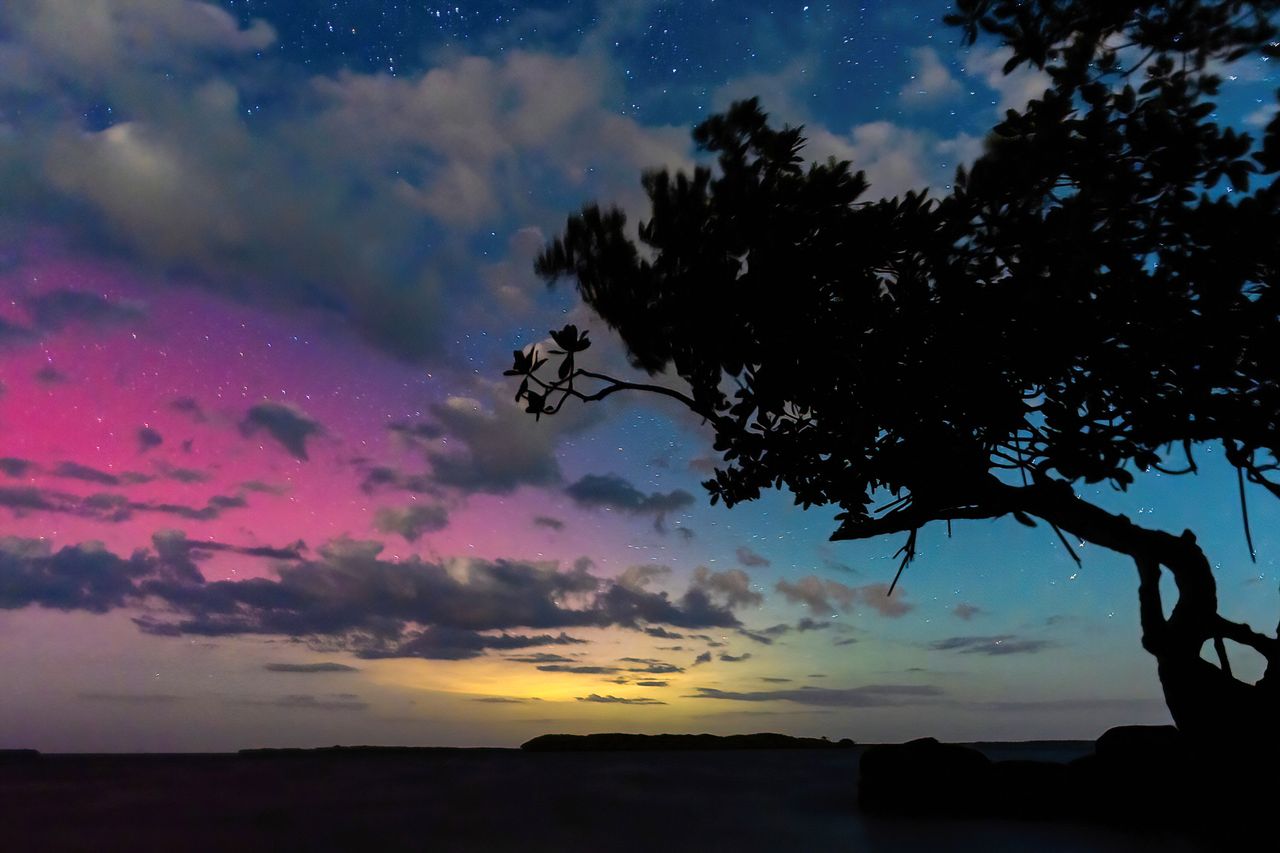
Credit: Jen Golbeck/SOPA Images/LightRocket via Getty
Space weather is notoriously difficult to predict, as everything depends on the speed and orientation of the solar wind.
In addition to the Kp forecast, catching a glimpse of the northern lights depends on several factors, including weather, as cloudy skies can block the aurora's colorful hues. NOAA suggests traveling to a north-facing, high vantage point between 10 p.m. and 2 a.m. local time.
For real-time updates, be sure to monitor NOAA’s 30-minute aurora forecast, SpaceWeatherLive.com or aurora-tracking apps such as Aurora Now, My Aurora Forecast, SpaceWeatherLive or Glendale Aurora.
How to photograph the northern lights?
The best part about the northern lights is that you can also make fun memories in the process. Your smartphone is more than enough, too!
All you have to do is go to settings, turn on Night Mode and point your camera lens towards the sky.
If you’re a more seasoned skywatcher and happen to have a DSLR or mirrorless camera, grab a tripod and set your camera to manual mode.
Read the full article here