
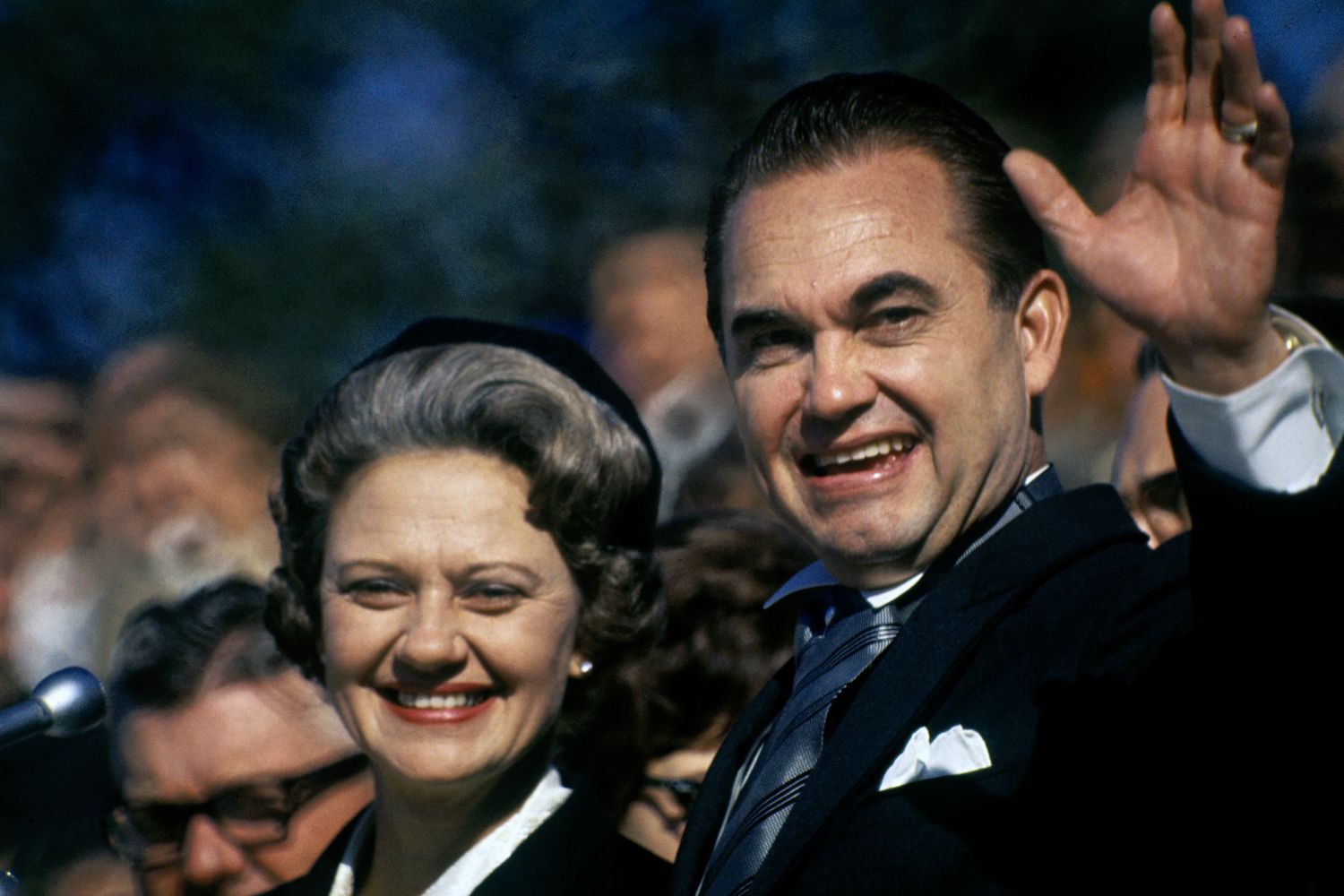
Alabama Gov. George Wallace was an infamous figure in American politics, even inspiring a lyric in Lynyrd Skynyrd's "Sweet Home Alabama"
Bettmann/Getty
NEED TO KNOW
- The story of George and Lurleen Wallace is one of the most peculiar in U.S. political history, involving a failed divorce, a two-for-one gubernatorial campaign and a deadly case of deceit
- When Alabama Gov. George Wallace was on the verge of hitting his term limit in the 1960s, he propped up his wife, Lurleen, to run as his successor and let him continue the work he started
- During Lurleen’s campaign for governor, she discovered that she had untreated cancer. Her husband, who learned of the diagnosis years earlier, had kept her in the dark about her own health as he sought to cling to power
- George later received a shout-out in Lynyrd Skynyrd’s 1974 hit “Sweet Home Alabama,” memorializing him as an infamous political figure from the American South
It's a karaoke standard and a beloved anthem in dive bars everywhere. But the American classic that is Lynyrd Skynyrd's "Sweet Home Alabama" also includes a confusing dichotomy about the American South that leads to an even more baffling piece of political history.
Just over a minute and a half into the now-infamous 1974 hit, lead vocalist Ronnie Van Zant — who, like the rest of his bandmates, did not actually grow up in Alabama — declares, "In Birmingham, they love the governor, boo, boo, boo."
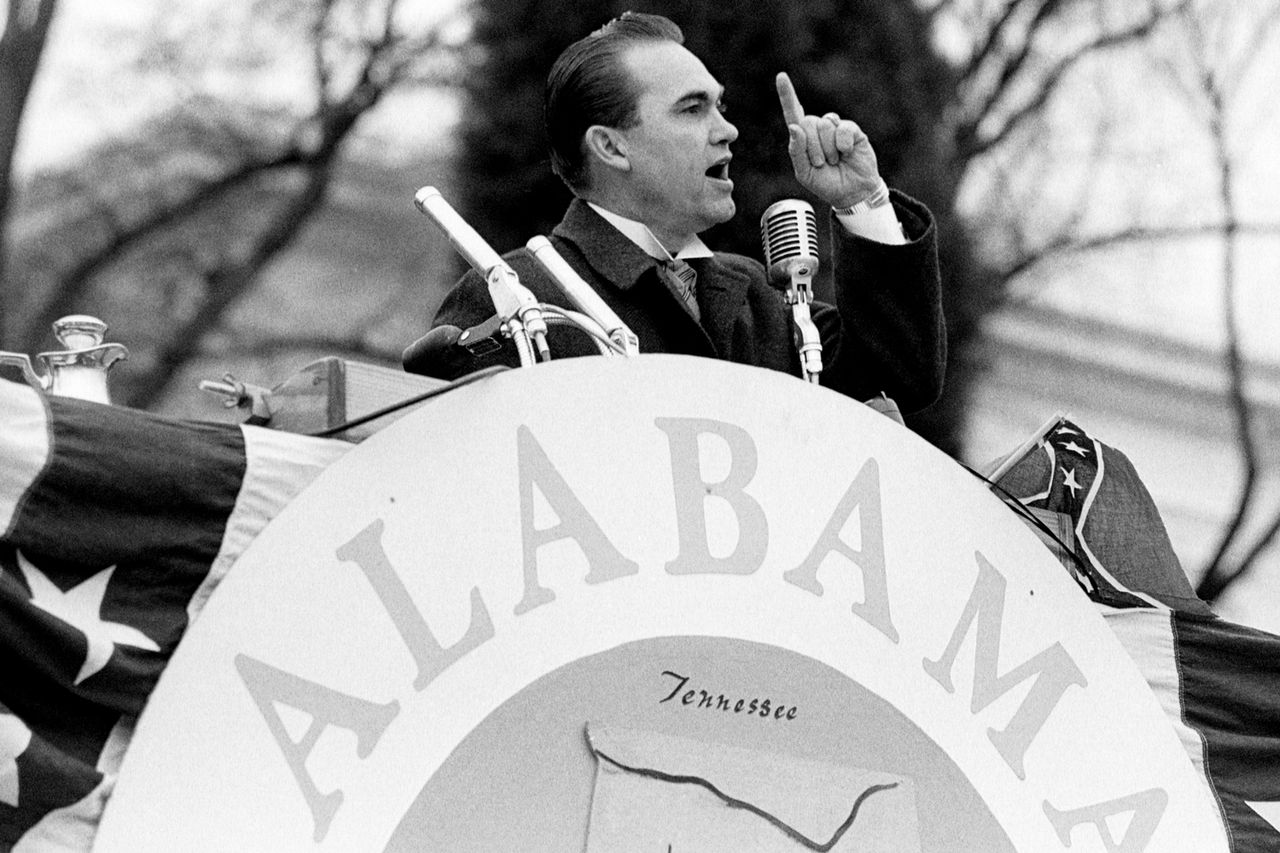
The "governor" in question was, of course, George Wallace, the infamous segregationist Democrat who served four total terms as governor of Alabama. He took his first oath of office in January 1963, standing on a gold star that marked the spot where, just over a century earlier, Jefferson Davis had been sworn in as provisional president of the Confederate States of America.
In his inauguration speech, George spoke an infamous line, penned for him by Ku Klux Klan organizer Asa Earl Carter: "In the name of the greatest people that have ever trod this Earth, I draw the line in the dust and toss the gauntlet before the feet of tyranny, and I say segregation now, segregation tomorrow, segregation forever."
Bettmann/Getty
At the time, Alabama law prevented George from running for a second consecutive term as governor. When his time in office was nearing its end in 1966, he found a workaround to remaining in power, convincing his wife, Lurleen, to run as a figurehead under whom he could continue to govern.
It was a tough sell. As Alabama legislator Steve Flowers wrote for the Tuscaloosa News in 2023, "Lurleen Wallace was content to be a behind-the-scenes mother. George Wallace’s passion was politics. Lurleen Wallace’s passion was being a mother and going fishing."
Lurleen had tried divorcing George over his suspected infidelity after his failed 1958 gubernatorial campaign, but he begged her to stay in the marriage at the time to avoid bringing scandal to his name. Now she would agree to her husband's wishes once again.
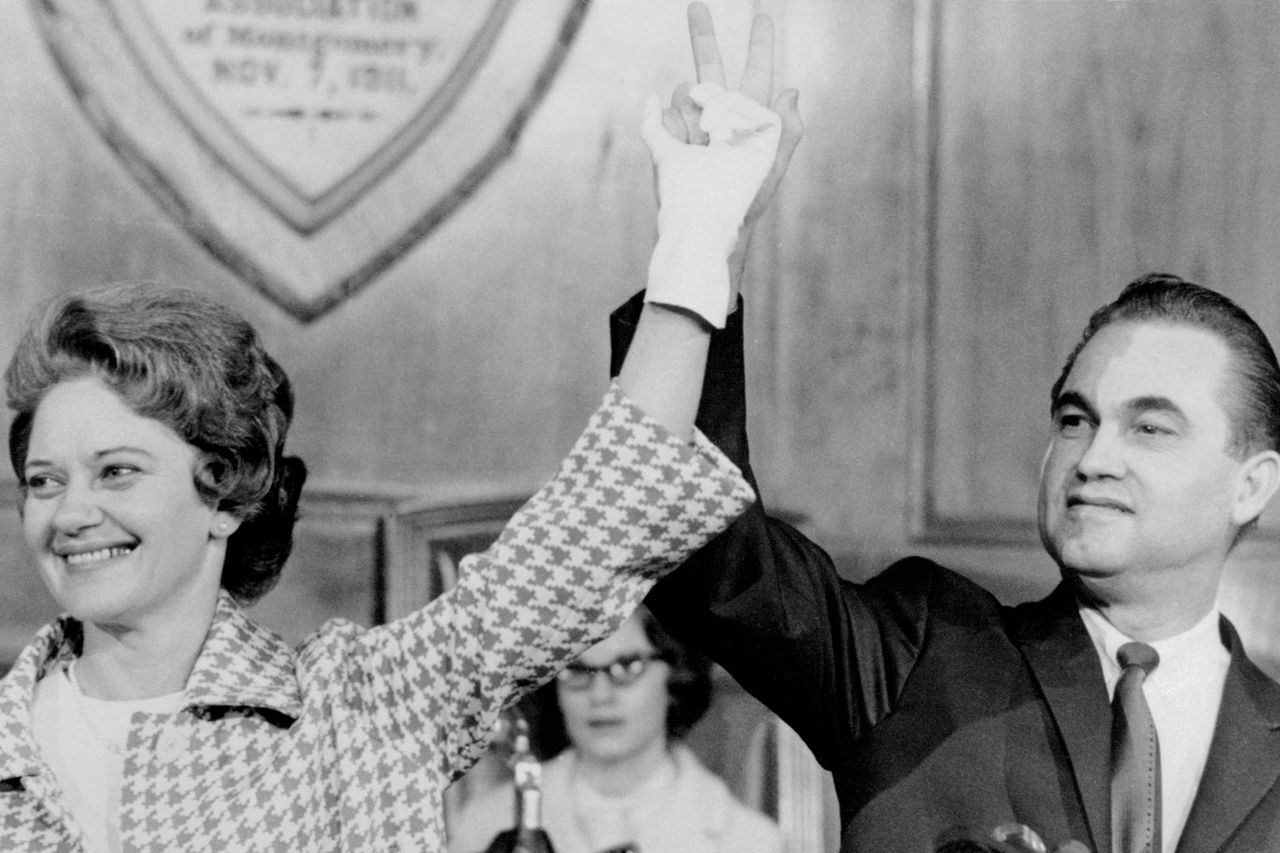
Lurleen launched her 1966 gubernatorial campaign as "Mrs. George C. Wallace" and earned the Democratic nomination over nine opponents, including two former governors, a congressman and a state attorney general.
Lurleen campaigned in the general election under the slogan "Two Governors, One Cause," unabashedly promising that her husband would continue to lead legislation for the state. Ultimately, the Wallace campaign won every county in Alabama except two, earning 63.4% of the votes in a decisive victory over Republican James D. Martin.
While her road to the governor's office was fairly simple politically, thanks to the state still being staunchly anti-desegregation, it was taxing on Lurleen's physical and mental state.
Shortly before the 1966 election, she learned that she had uterine cancer. Then she learned that her husband had known of her diagnosis since at least 1961, when she gave birth to their fourth and final child.
Bettmann/Getty
Following common medical policy at the time, Lurleen's doctor had discovered cancerous tissue after her childbirth, but told only her husband about her condition. George insisted that his wife not be informed and did not seek treatment for her.
By the time Lurleen knew what she was facing, it was too late. She took office in January 1967 as her husband's proxy; he held no official state position but worked right across the hall from the official governor's office. In her inaugural speech, she introduced herself as the "instrument" through which her husband would continue to govern, according to a New York Times article from the time.
Despite the fact that she was regularly traveling to Houston for cancer treatments, the Times noted, "In her first six months as Governor, Mrs. Wallace has arrived regularly each day at the Governor's office, but her duties have been largely ceremonial." Her largest undertaking in the leadership role was to increase funding for the state's mental health facilities after visiting and being shocked by their condition.
Lurleen died on May 7, 1968, while her husband was running for president. He frequently lied about her condition in campaign speeches, telling crowds that his wife had "won the fight" against cancer. Shortly after her death, George sent the couple's three underage children to live with friends and family while he returned to the campaign trail.
He lost the 1968 presidential election, but less than three years later, he would serve as governor of Alabama once again, this time with a different first lady by his side: his second wife, Cornelia.
Like George, Lynyrd Skynyrd often performed in front of Confederate flags. However, the meaning behind their display was less clear than the governor's, with some members claiming the flags were prompted by their record label to sell the "good ol' boy" image.
"Everybody thinks we're a bunch of drunken rednecks … and that's correct," Van Zant quipped in a clip from the 2018 documentary If I Leave Here Tomorrow.
However, guitarist Gary Rossington, who also helped write "Sweet Home Alabama," said that, from his perspective, the "boo, boo, boo" line that backs up the song's reference to Wallace made it clear that the band wasn't calling him out in reverence.
"A lot of people believed in segregation and all that," Rossington said. "We didn't. We put the 'boo, boo, boo' there saying, 'We don't like Wallace.' "
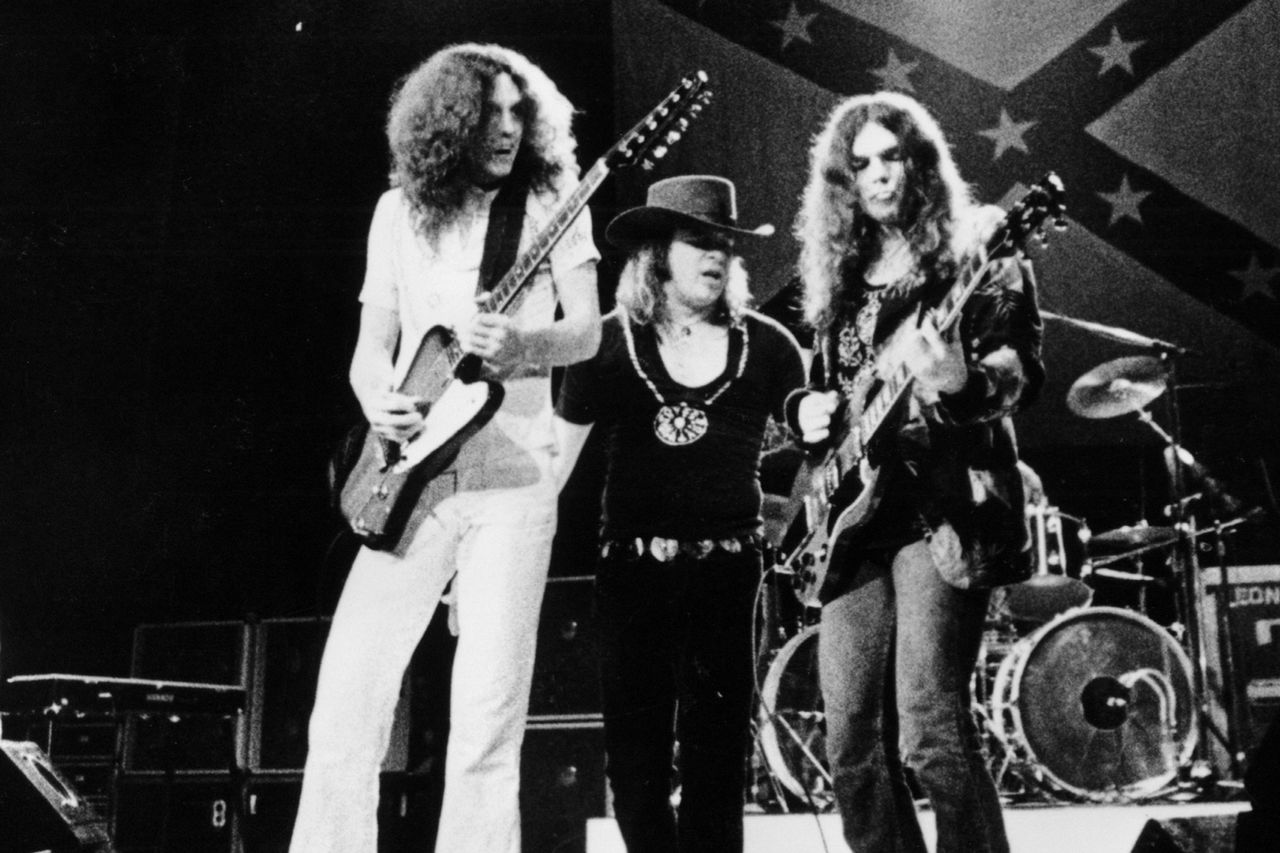
Michael Ochs Archives/Getty
Some of the history of the iconic track, however, will have to remain up to speculation. Van Zant, guitarist Steve Gaines and his sister, Cassie Gaines, a backup singer, were killed on Oct. 20, 1977, when the band's chartered airplane crashed near Gillsburg, Mississippi.
Rossington admitted that the loss of a key member of the "Sweet Home Alabama" lore means the song could be open to "a lot of different interpretations."
"I'm sure if you asked the other guys who are not with us anymore and are up in rock and roll heaven, they have their story of how it came about," he said.
Read the full article here