

NEED TO KNOW
- Scientists have matched a North Atlantic right whale seen in Ireland in the summer of 2024 to one recently spotted near Boston
- The cross-Atlantic journey marks a first for the critically endangered species
- Researchers say the finding highlights the rare movement and global collaboration between the large marine mammals
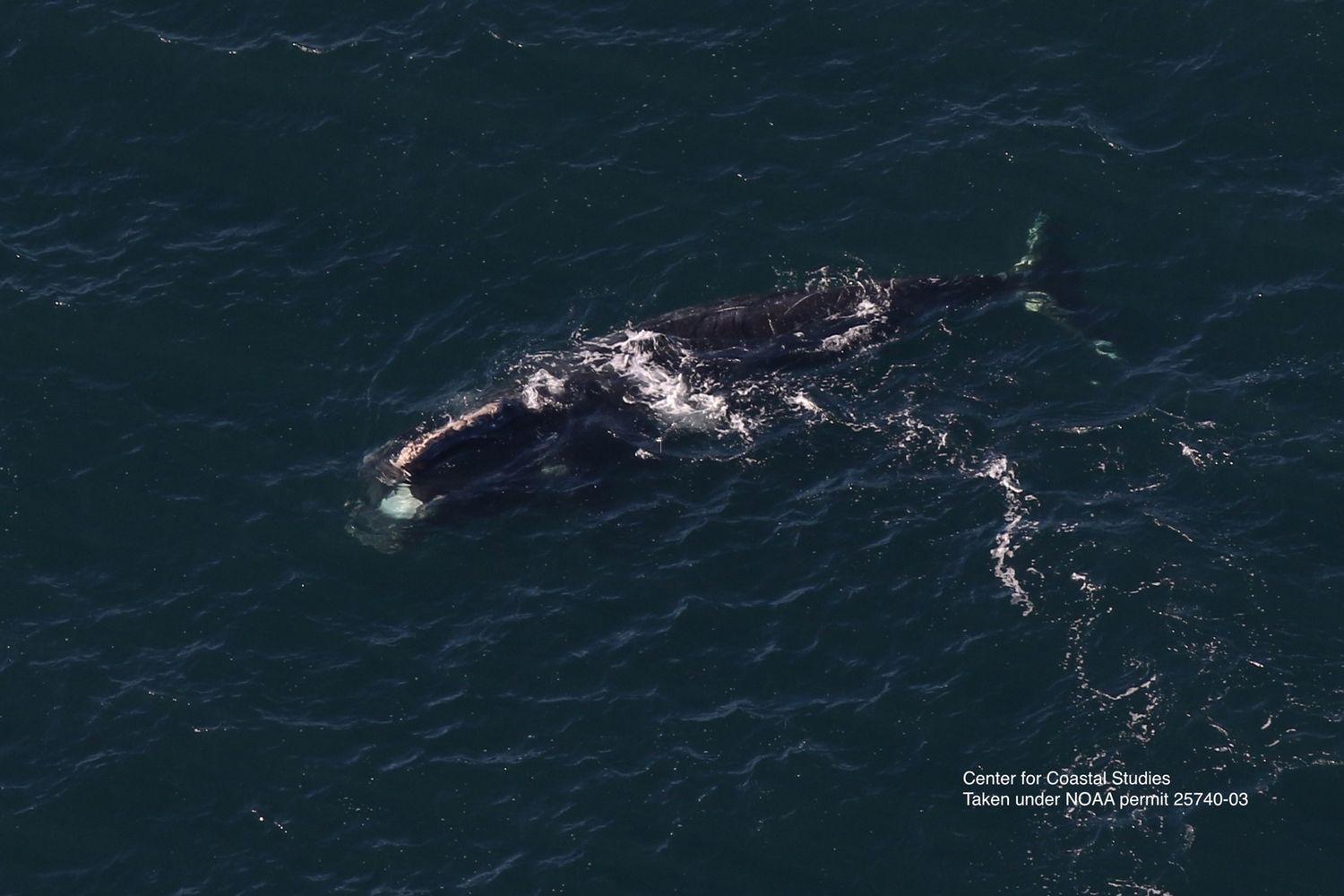
Scientists have confirmed that a critically endangered North Atlantic right whale recently spotted off the coast of Massachusetts near Boston is the same animal photographed in Ireland in the summer of 2024.
The match marks the first evidence of the species traveling 3,000 miles, amazing experts, and providing new information about the species, which has a population of under 400.
News of the whale’s impressive trip was announced on Wednesday, Dec. 3, in a press release from the Center for Coastal Studies (CCS), after researchers encountered the whale during an aerial survey on Nov. 19. According to the notice, the discovery marks the first documented case of a right whale first seen in the eastern North Atlantic and later resighted in the western North Atlantic.
Center for Coastal Studies, taken under NOAA permit 25740-03
CCS observers Ryan Schosberg and Annie Bartlett were more than four hours into their flight east of Boston when they abandoned their survey path to photograph a group of humpbacks. While circling, they spotted a lone right whale feeding at the surface — the Center’s first right whale sighting of the 2025–2026 season.
“The first sighting of the year is always exciting, but we didn’t yet realize just how remarkable this one would turn out to be,” said Schosberg per the release.
According to the National Oceanic and Atmospheric Administration (NOAA), right whales are critically endangered, with an estimated population of 370. CCS researchers document roughly half the known population each year in Cape Cod Bay, making it rare for the team to find an animal not already present in the North Atlantic Right Whale Catalog. After returning from the flight, the team noticed the whale didn’t match any known individuals and reached out to the New England Aquarium in Boston, which manages the catalog.
Naomi D’arcy and Center for Coastal Studies, taken under NOAA permit 25740-03
The aquarium, which has spent more than four decades studying the species, compared the images to millions of archived photographs. Scientists there recognized the whale’s features (such as natural markings and suspected callouses) from a July 2024 sighting in Donegal Bay, Ireland, documented by the Irish Whale & Dolphin Group. The earlier photos had been considered too limited to confirm identity — until the match came through.
Researchers noted that the transatlantic movement offers a rare glimpse into how widely right whales may travel in search of suitable living conditions. Six other right whales photographed in North America have later appeared in European waters, but this is the first time the connection has worked in reverse.
Franca Van Der Veer
International researchers called the match a surprising and meaningful step for a species struggling to recover. “Seeing a whale photographed in Ireland reappear off Boston is extraordinary,” said Dr. Daniel Palacios, director of the Right Whale Ecology Program at CCS. “Encounters like this highlight both their resilience and the importance of international cooperation to support their recovery.”
Never miss a story — sign up for PEOPLE’s free daily newsletter to stay up-to-date on the best of what PEOPLE has to offer, from celebrity news to compelling human interest stories.
Aerial monitoring in Massachusetts runs from December through mid-May, with additional fall flights added in recent years to track early arrivals. The program is conducted with support from the Massachusetts Division of Marine Fisheries, NOAA, and other partners.
Read the full article here