
NEED TO KNOW
- Eva Lu Damianos, a 90-year-old painter in Pennsylvania, painted 18 portraits of the caregivers who supported her after she broke her leg in June
- “They said they couldn’t believe I did it,” she says
- In response to Damianos’ gift, nurse supervisor Diane Dudek tells PEOPLE that “no words can truly express how privileged I feel”
After a 90-year-old painter in Pennsylvania fell and broke her leg over the summer, she figured out the perfect way to thank the caregivers who helped her recover — by painting their portrait.
Eva Lu Damianos, who injured herself in June, tells PEOPLE she “didn’t trip over anything” and that doctors think her fall “could have been because of some of the medications I was taking.”
Regardless of what caused it, she couldn’t put any weight on her leg for 10 weeks.
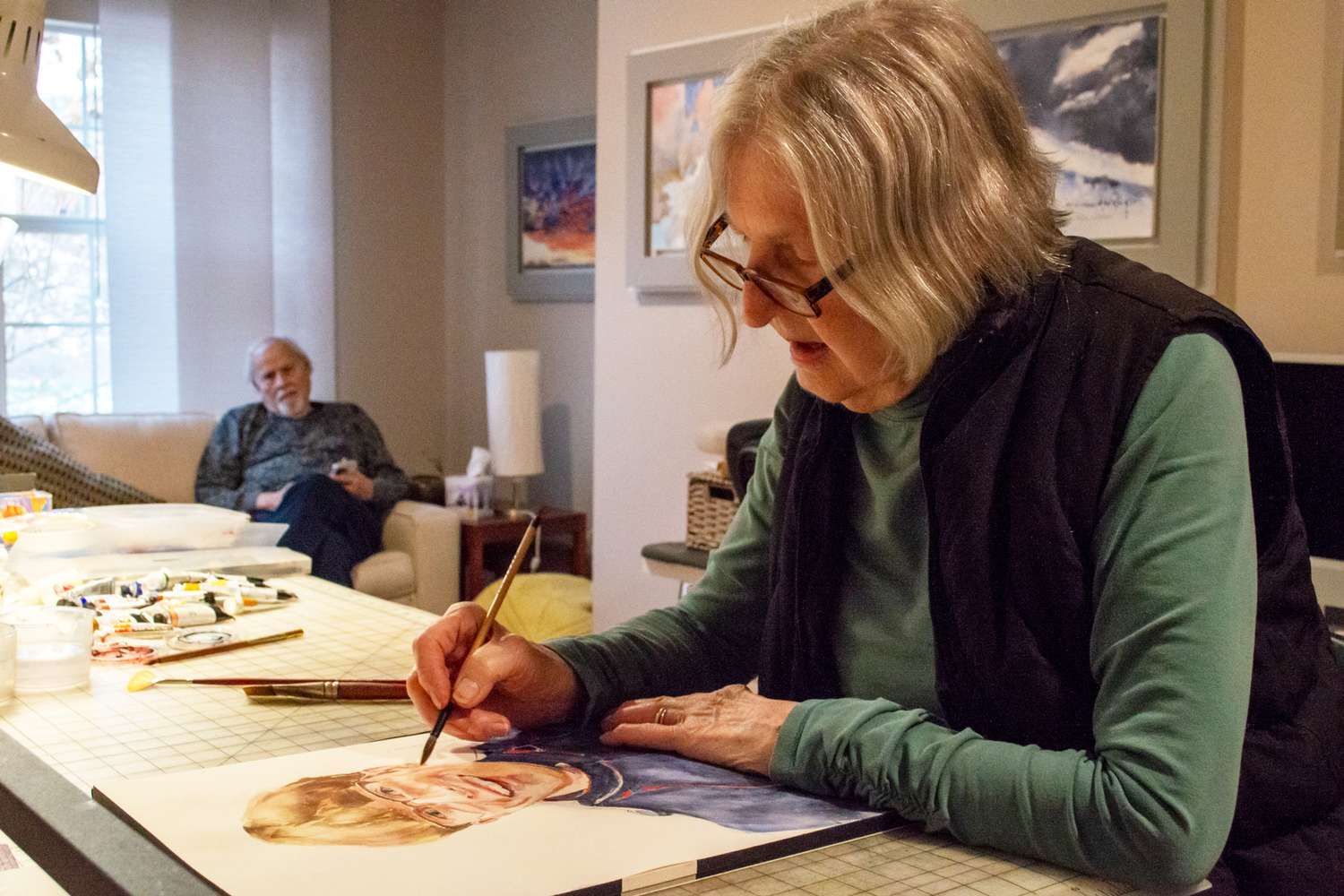
Although she felt fortunate she didn’t need surgery, having to be off her feet kept her away from her love of painting, something she was used to doing every day at her home at Longwood at Oakmont retirement community in Plum.
“I kept thinking, ‘I really want to be painting,’ ” she says. “And I couldn’t because I couldn’t carry water to my desk, and I didn’t have the space to actually paint.”
Throughout her career, Damianos, who majored in fine arts at Carnegie Tech (now Carnegie Mellon University), concentrated her talents in “painting rather large canvases, mostly in acrylic, and mostly abstract,” she explains.
She sold the majority of her work to local corporations in Pittsburgh and she’s shown her work on numerous occasions, including at a one-woman show at the Carnegie Museum of Art as well as a wire jewelry exhibit at a gallery in New York City. “It’s been a long career,” she says.
Although she’s retired from the gallery scene, her passion hasn’t dwindled. Now, she paints watercolors from her home in Longmont, where she lives with her husband of roughly 70 years, Sylvester, a 92-year-old artist and architect.
Courtesy of Jonathan Szish
It was a setback for Damianos when she learned that she would have to take a break as she recuperated — but she was already planning to use her talents to honor the aides, nurses and physical and occupational therapists who took care of her.
For the moment, she settled on taking pictures of them, which she could use as a reference when she was able to paint again.
“And that’s what I did,” she says. “They all said yes.”
Once she returned home after her nearly two-and-a-half-month recovery at the nearby Hanna Healthcare Center on the retirement community’s campus, she was finally able to begin her “thank you” project.
Completing the paintings “rather quickly” was important for Damianos — a testament to the brief, but important, role they all had in her life.
“Some of these caregivers would be with me maybe five days out of a week, and then they would move on to another caregiving unit,” she says. “So I wouldn’t see them again, or maybe I’d see them once more. And then they would send other new people in.”
All in all, she ended up asking 18 of her caregivers to let her paint their portraits.
Never miss a story — sign up for PEOPLE’s free daily newsletter to stay up-to-date on the best of what PEOPLE has to offer, from celebrity news to compelling human interest stories.
For the lucky 18, Damianos’ kind gesture, which took just two months to complete, has left a deep impact on them.
“Most days, you don’t even get so much as a thank you from the ones you are caring for,” nurse supervisor Diane Dudek tells PEOPLE. “To receive this extraordinary gift of Eva painting a portrait of you, no words can truly express how privileged I feel.”
Courtesy of Diane Dudek
Recognizing Damianos’ achievement, Longwood at Oakmont put her artwork on display at the end of the year, even holding a reception on Dec. 28, after which each caregiver got to take their portrait home.
“They were all excited,” the artist says. “They all were thankful. They said they couldn’t believe I did it, that I caught the look of them.”
Courtesy of Jonathan Szish
Thanks to the portraits, Damianos shares that she has a commission she’s currently working on, and eventually, she plans to go back to her abstract work, too.
More than anything, painting didn’t just help her give back, she says it also played an active role in her recovery process.
“It takes your mind off anything else when you’re working creatively,” Damianos says. “When you’re painting, you forget all your aches and pains. And that’s a good thing.”
Read the full article here